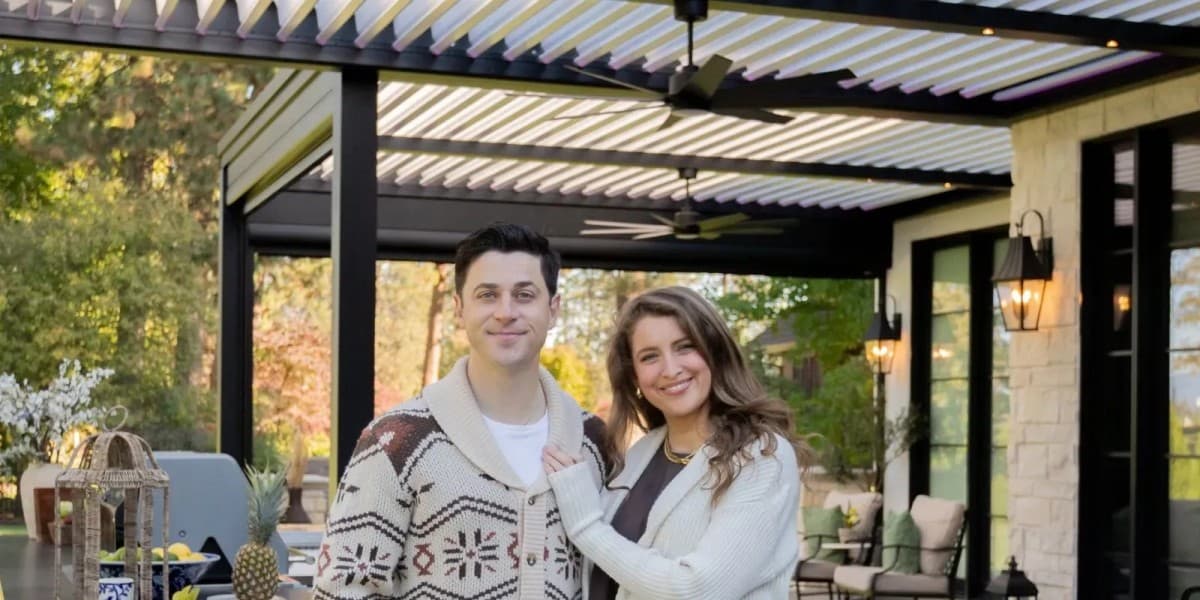
The installation of a custom motorized pergola at actor David Henrie's Idaho property represents more than a celebrity home improvement project—it illustrates a fundamental shift in how Americans conceptualize and utilize their outdoor living spaces. As outdoor environments transition from seasonal amenities to year-round extensions of the modern home, engineered structures that provide climate adaptability are becoming essential components of residential design.
Located in a region characterized by significant temperature fluctuations, heavy snowfall, and unpredictable weather patterns, Henrie's pergola was specifically engineered to support consistent outdoor use throughout all seasons. The structure features a motorized louvered roof system that allows precise control over sunlight exposure, natural ventilation, and weather protection, enabling the space to seamlessly transition between open-air and fully covered configurations based on current conditions. "It's quickly become our family's favorite spot to unwind, eat, and enjoy the view," Henrie said. "It really changed how we use our outdoor space day to day."
This project exemplifies how outdoor living has evolved into a meaningful priority for homeowners nationwide, with expectations shifting decisively away from single-season design toward structures that deliver reliable performance regardless of environmental conditions. Azenco Outdoor, the company that designed and manufactured Henrie's pergola, notes that this evolution in expectations is directly driving demand for engineered outdoor structures built with long-term performance and structural durability as core objectives. "Outdoor environments today are expected to deliver comfort, adaptability, and long-term reliability," the company stated. "They are no longer secondary spaces, but an integral part of how people use and experience their homes."
The implications of this shift extend beyond individual residences to broader industry and lifestyle patterns. Engineered aluminum systems like those produced by Azenco Outdoor are becoming central to this transformation, offering structural stability, minimal maintenance requirements, and consistent performance across diverse climates. These qualities are proving relevant not only in residential settings but also in commercial applications, particularly within the hospitality sector where year-round outdoor usability can directly impact guest satisfaction and operational efficiency.
Henrie's Idaho installation demonstrates how climate-responsive outdoor structures are being adopted across a much wider range of geographic markets, confirming that demand for adaptable outdoor living solutions extends well beyond traditionally warm-weather regions. This trend suggests a redefinition of outdoor space from occasional-use areas to fully functional extensions of interior living areas, with significant implications for property values, architectural design, and daily lifestyle patterns.
More details on the specific Idaho project are available at https://azenco-outdoor.com/david-henries-pergola-in-idaho-smart-outdoor-living/. The growing emphasis on engineered outdoor structures reflects changing homeowner priorities toward spaces that offer both aesthetic appeal and practical functionality throughout the entire year, marking a significant evolution in residential design philosophy with implications for construction standards, material innovation, and daily living patterns across diverse climate zones.