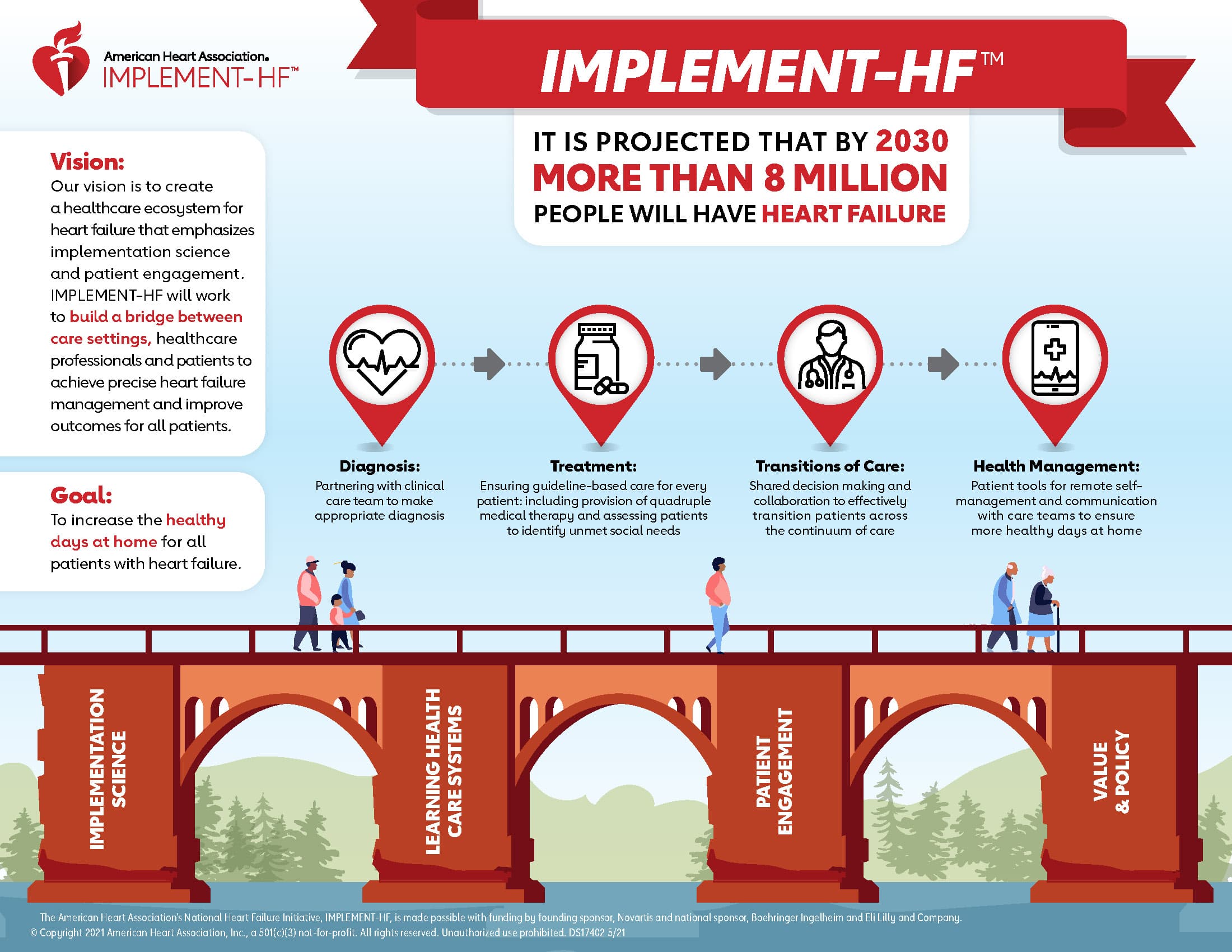
A comprehensive three-year quality improvement initiative by the American Heart Association has yielded substantial improvements in heart failure treatment, with participating hospitals dramatically increasing their adherence to recommended medical therapies.
The IMPLEMENT-HF™ initiative focused on improving treatment for heart failure with reduced ejection fraction (HFrEF), a condition affecting nearly half of heart failure patients and carrying a 75% five-year mortality rate. By creating a collaborative learning environment across more than 100 U.S. hospitals, the program successfully increased the use of quadruple medical therapy from just 4.7% to 44.6% at hospital discharge.
Researchers analyzed data from over 43,000 patients across 67 hospitals and discovered significant advancements in treatment consistency. The improvements were particularly noteworthy because they were uniform across different racial, ethnic, and gender groups, addressing longstanding disparities in cardiovascular care.
Quadruple medical therapy involves a combination of four evidence-based drugs proven to reduce mortality: angiotensin receptor–neprilysin inhibitor, specific β-blocker, mineralocorticoid antagonist, and sodium-glucose cotransporter 2 inhibitor. Despite clinical trials demonstrating the therapy's effectiveness, nationwide adoption had remained low before this initiative.
The American Heart Association's approach of creating a structured, collaborative environment allowed hospitals to identify care gaps, share best practices, and monitor performance systematically. This method not only improved medical treatment but also integrated health-related social needs assessments into routine care.
With heart failure patient numbers expected to increase from 6.7 million to over 8 million by 2030, this initiative represents a critical advancement in cardiovascular healthcare. By standardizing and improving treatment protocols, the program has the potential to save thousands of lives and reduce the long-term impact of heart failure across diverse patient populations.