

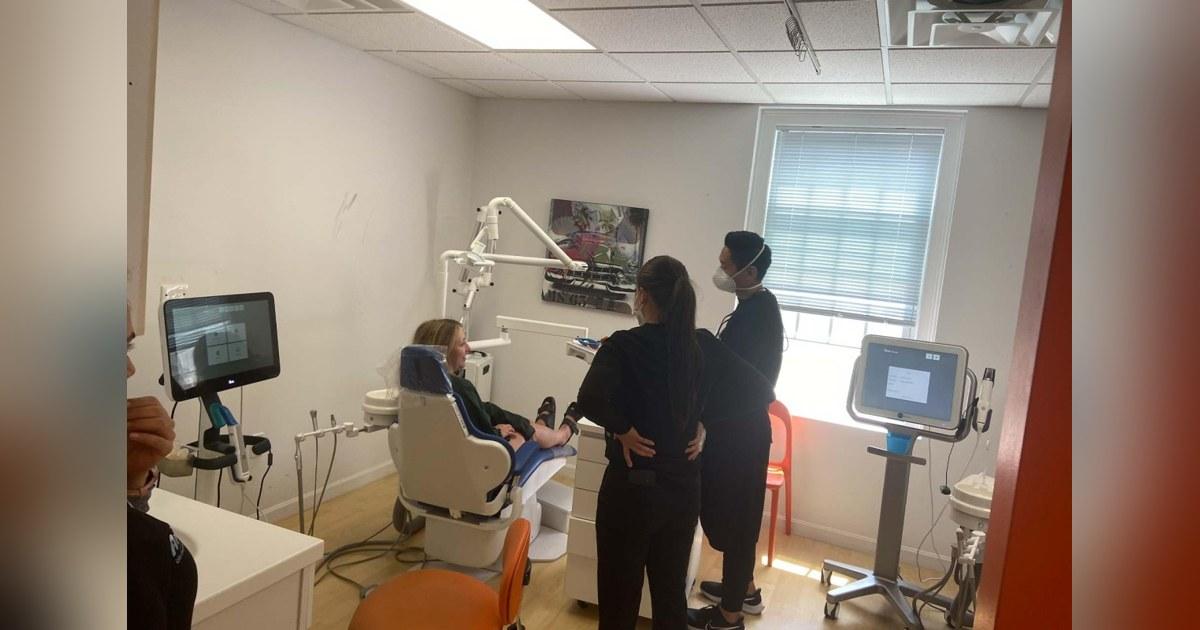
ARCH Orthodontics, located at 124 South St in Bridgewater, MA, has released a detailed patient education overview explaining how clear aligner treatment works from the initial digital scan through post-treatment retainer use. The resource is aimed at families across Bridgewater and the broader South Shore region who are considering orthodontic care for themselves or their children.
The process at ARCH Orthodontics begins with a digital scan of the patient's teeth, replacing the traditional impression trays that many patients remember from past dental visits. The scan produces a three-dimensional model of the mouth, which the treating orthodontist uses to map out a precise sequence of tooth movements. Each set of aligners in the series is fabricated to match a specific stage in that planned progression, moving teeth gradually toward the target alignment. The digital scan allows the orthodontist to visualize the planned course of treatment before the aligners are made, giving patients a sense of what to expect at each stage.
The practice serves patients from its Bridgewater location as well as offices in Canton, Westwood, Hyde Park, Hyannis, and Orleans, MA, giving South Shore and Cape Cod families several access points for care.
Clear aligners are designed to be worn for approximately 20 to 22 hours per day. Unlike fixed braces, aligners are removable, which means patients take them out before eating and drinking anything other than water. This aspect of the treatment is frequently cited as a practical benefit for patients who want to maintain their normal diet without restrictions. After meals, patients rinse or brush before reinserting the aligners to keep them clean and to avoid trapping food or bacteria against the teeth. Each set of aligners is typically worn for a prescribed period before the patient advances to the next set in the sequence.
As an invisalign provider in Bridgewater, MA, ARCH Orthodontics treats a range of bite and spacing issues using this method, including crowding, gaps between teeth, overbite, underbite, crossbite, and open bite. Not every case is suited to clear aligner treatment, and the orthodontists at the practice evaluate each patient individually to determine whether aligners are the appropriate approach.
Clear aligner treatment is available to both teenagers and adults at the Bridgewater practice. Invisalign for teens includes compliance indicators built into the aligners -- small blue dots that fade with wear -- giving parents and orthodontists a practical way to gauge whether the aligners are being worn consistently. Invisalign for adults addresses the same spectrum of bite and spacing issues treated in younger patients. Adults who did not receive orthodontic treatment earlier in life, or whose teeth have shifted since a previous course of treatment, are among those who seek clear aligner care at the practice. The discreet appearance of the aligners is often noted as a factor in adult patients choosing this format over traditional braces.
ARCH Orthodontics is staffed by a team of orthodontists, including Dr. Andrew Chase, across its Massachusetts locations.
Once a patient completes the active phase of invisalign in Bridgewater, MA, retainer use follows. Teeth have a natural tendency to shift after orthodontic treatment, and retainers are prescribed to maintain the corrected positions. Retainers may be removable or bonded, depending on the patient's needs and the orthodontist's recommendation. Patients are typically instructed on how long and how frequently retainers should be worn, with guidance on how long and how often to continue wearing them. The patient education materials from ARCH Orthodontics emphasize that completing the full aligner series and following through with retainer wear are both considered essential parts of treatment, not separate stages.
For families weighing orthodontic options, the overview clarifies that clear aligner therapy is not a one-size-fits-all solution and requires consistent compliance. The practice's multi-office footprint across southeastern Massachusetts means patients can access follow-up care at locations convenient to home or school, which may support adherence to wear schedules and retainer protocols. More information about the practice is available at ARCH Orthodontics.
