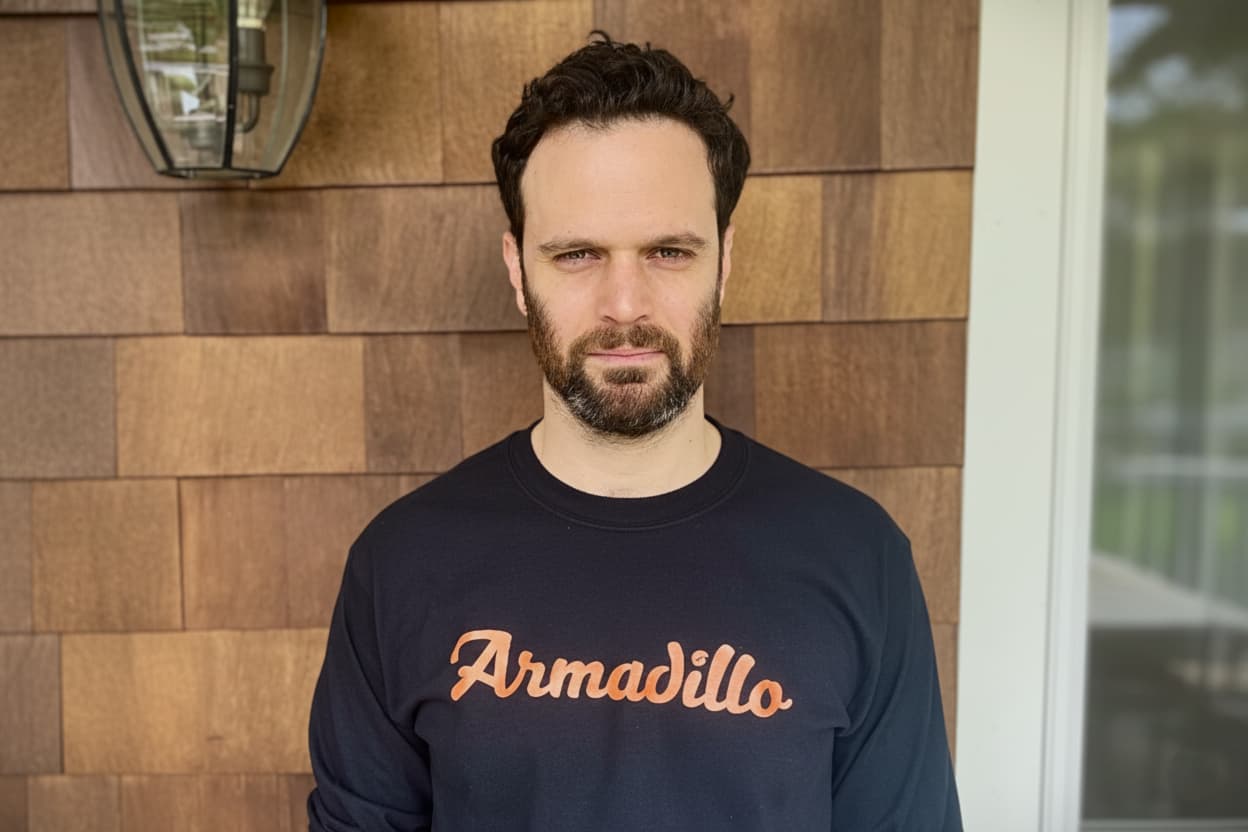
The home warranty industry faces a fundamental credibility crisis rooted in decades of prioritizing cost structures over customer experience, according to Matan Slagter, CEO and Co-Founder of Armadillo. While homeowners' insurance maintains over 90% attachment rates due to mortgage requirements, home warranty remains optional and widely distrusted, with negative consumer experiences documented extensively in online reviews.
Slagter, with a background in traditional insurance at AIG, applies actuarial discipline to create sustainable pricing models that support both long-term profitability and high-quality service. This mathematical rigor ensures products are priced to reflect real risk and service needs, deliberately building capacity for genuine customer care rather than focusing solely on cost efficiency.
Transparency serves as a core strategy for Armadillo, inspired by tracking systems like those used by Domino's Pizza. The company recognizes that communication quality often determines customer satisfaction more than coverage amounts alone. "Two homeowners can receive the same thousand dollars for a refrigerator replacement, yet have completely different experiences," Slagter noted, emphasizing the importance of clear communication, reasonable wait times, and transparent decision-making.
Perhaps the most significant departure from industry norms is Armadillo's approach to service providers. The company allows homeowners to choose between its vetted technician network or their own trusted contractors—an option no other major player offers upfront. While the traditional model negotiated lower rates with exclusive networks to control costs, this approach frequently resulted in customer complaints about long wait times and unprofessional service. Some newer companies offered only reimbursement for customer-selected contractors, but Armadillo provides genuine choice from the beginning, with data showing significant claim utilization of the self-service option.
The company built its entire technology stack around this dual model, creating systems that adapt based on customer choice while navigating the complexity of integrating with contractor systems and parts suppliers in a fragmented industry. This technological foundation supports what Slagter describes as "disciplined growth"—building quickly but responsibly with sustainable processes, scalable technology, and sound economics designed to endure beyond any single individual.
With market projections suggesting the home warranty sector could reach $13.6 billion by 2030—roughly triple its current size—the opportunity for transformation is substantial. Evolution likely extends beyond repair and replacement to include preventive maintenance, helping homeowners maintain systems before they fail rather than only responding to breakdowns.
Slagter observes a recurring pattern across industries where organizations grow accustomed to existing practices without questioning whether they still make sense. In a sector burdened by poor reputation, simply asking that question—and being willing to change in response—represents meaningful transformation. The home warranty industry requires more than incremental improvements; it needs companies willing to acknowledge past failures, reimagine core assumptions, and build with both profitability and genuine customer value in mind.