

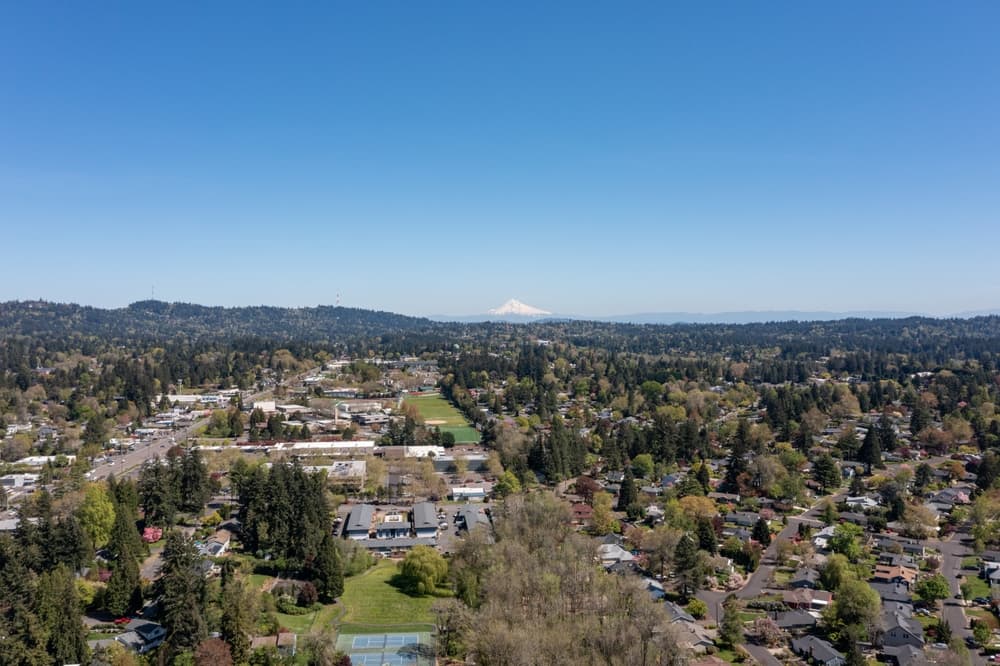
Beaverton, Oregon, a suburb of Portland and home to major employers such as Intel, Nike, and Columbia Sportswear, is experiencing a housing market that responds as much to corporate employment cycles as to national trends like interest rates and inventory. This localized dynamic, observed by real estate professional Carey Hughes of Carey Hughes Homes over two decades, means that when bonuses land and stock prices rise, showing activity picks up almost immediately. Conversely, when layoffs loom, the market slows before any listings hit the market.
The current market sits at three to four months of inventory, up from sub-one-month levels during the pandemic, with multiple offers now rare. Homes priced at or slightly below market value sell quickly, while others linger. "It's a tale of two markets," Hughes said, describing how buyers are educated on costs and unwilling to stretch for properties needing work or carrying aspirational pricing. The average sale price is in the mid-$600,000 range, with established neighborhoods selling into the $700,000 and $800,000 range. Resale sellers face direct competition from new construction communities offering financing incentives, lower interest rates, and upgrades that can't be matched.
The connection between tech employment and Beaverton real estate is concrete. With Nike's stock price down from its highs, employees who once used equity gains for larger down payments have stayed put. "People have lost some of their nest egg," Hughes said, noting that the market now runs on need, not confidence. The neighborhoods most sensitive to these cycles—Bethany, Forest Heights, Murrayhill, and Cooper Mountain—are the same ones attracting relocating tech workers. When hiring slows, the effect appears quickly, even before formal layoff announcements, as conversations about job insecurity circulate and suppress buyer activity.
The move-up buyer segment is conspicuously absent. Homeowners with low mortgage rates face a financial penalty for moving into a more expensive home at current rates, creating softness in the $750,000 to $1 million range. For buyers who can absorb the higher rate, Hughes sees opportunity in that price band, as well as in condos, which have "really fallen out of favor" and offer lower entry points for first-time buyers.
Looking ahead six to twelve months, Hughes sees the market's trajectory as almost entirely rate-dependent. A brief period in early 2026 when rates dipped into the low sixes and briefly below 6% saw buyer activity pick up noticeably. "If interest rates get to 6%, high 5%, I think we could easily see an increase in volume sales of 10% or 20%," she said, though such a jump would look large only because the baseline has been depressed for several years. Price reductions have become routine, with 40% to 50% of listings in some neighborhoods carrying at least one reduction. Hughes advises sellers to adjust quickly if a home doesn't sell in the first two weeks. Homes are currently selling roughly 5% below their 2020–2022 peaks, a gradual correction rather than a collapse. For buyers, she emphasizes homeownership as a long-term investment, cautioning that the years of quick appreciation are not guaranteed to return.
The next catalyst for Beaverton's market may depend less on Federal Reserve policy than on whether Nike's next earnings call gives its employees enough confidence to start shopping again.
