

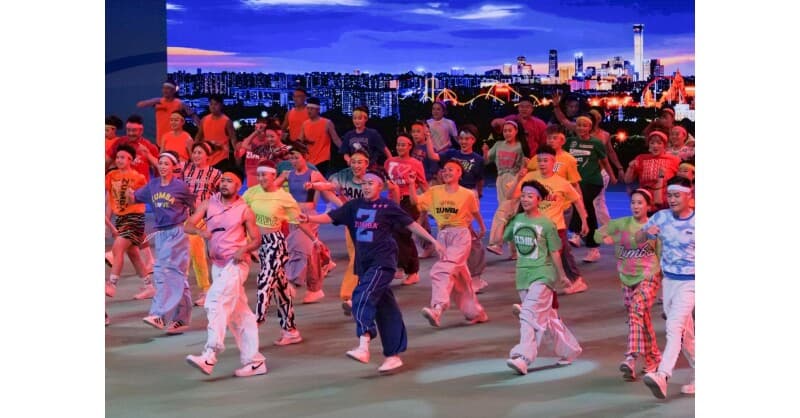
On August 8, China's 18th National Fitness Day, the 17th Beijing Sports Games commenced with a grand opening ceremony at the National Indoor Stadium, drawing thousands of spectators and champion athletes. This year's edition, themed around the city as an arena and its citizens as athletes, aims to foster a culture of fitness and competition across all age groups.
The Games, running through October, feature a diverse array of events, from traditional disciplines like athletics and swimming to emerging sports such as pickleball and breakdancing. Organizers anticipate around 35,000 participants, including teenagers, college students, and the general public, setting new records in both participation and event count. This city-wide extravaganza underscores Beijing's ongoing integration of sports into everyday life.
According to the Beijing Municipal Sports Bureau, the city boasts 3.27 square meters of sports venue space per capita, with 53.1% of its population regularly engaging in physical exercise. These figures highlight a significant shift towards fitness as a lifestyle in the 'Dual Olympic City,' a title earned from hosting both the 2008 Summer and 2022 Winter Olympics.
The opening ceremony featured 14 champion athletes trained in Beijing, including Ma Long, Zhang Yining, Ding Ning, Wang Chuqin, Xiao Ruoteng, Teng Haibin, Li Na, Cao Yuan, Zhang Jiaqi, Chang Hao, Yang Ling, Liu Xiaotong, Zhang Zesen, and Zhang Ruiyang. Their presence aimed to inspire more citizens to take up sports. Zhang Yining, a table tennis legend, expressed gratitude to Beijing for realizing her dreams and encouraged children to persist in their athletic aspirations, noting that 'Beijing is a place where dreams come true.'
The Games' inclusive approach resonated with attendees like 20-year-old football enthusiast Yin Shen, who found the mass participation events more relatable than purely competitive ones. 'It's great to see so many sports that ordinary people usually play. Sports are actually all around us,' Yin remarked.
The event highlights Beijing's commitment to promoting national fitness, as outlined in China's broader health initiatives. By blending elite competition with grassroots involvement, the Games serve as a platform to encourage regular physical activity and healthy living. The record participation numbers underscore a growing public enthusiasm for sports, which could have lasting implications for public health and community engagement in the capital.
As the Games continue through October, they are expected to not only showcase athletic talent but also strengthen social bonds and promote a more active lifestyle among residents. This aligns with national goals to increase regular exercise participation and improve overall well-being.
The Beijing Sports Games exemplify how urban centers can leverage sporting events to enhance quality of life, and their success may serve as a model for other cities aiming to boost community health and fitness.
