

Beijing's status as the only city to have hosted both the Summer and Winter Olympics is being parlayed into a powerful economic engine, as a cluster of high-profile sports events during the National Day holiday transformed the Chinese capital into a sprawling festival of sport and consumption. According to a press release distributed by Media OutReach Newswire, the convergence of the China Open tennis tournament and the World Table Tennis (WTT) China Grand Smash, among other events, created what officials are calling a "Golden Week of Sports Events," drawing massive crowds and stimulating spending across multiple sectors.
The China Open men's singles final on October 6 provided a dramatic centerpiece when Novak Djokovic won his seventh title after opponent Alex de Minaur retired due to injury following the first set. But the tournament's impact extended far beyond the court. The National Tennis Center's "second venue" featured big-screen viewing, officially licensed merchandise, and food and beverage outlets that blended competitive passion with a relaxed holiday atmosphere. Yin Xufei, head of the China Open officially licensed merchandise store, reported that each of the two stores at the north and south ticket gates received over 10,000 visitors per day during the holiday, with nearly a thousand products offering fans a tangible memento of the event.
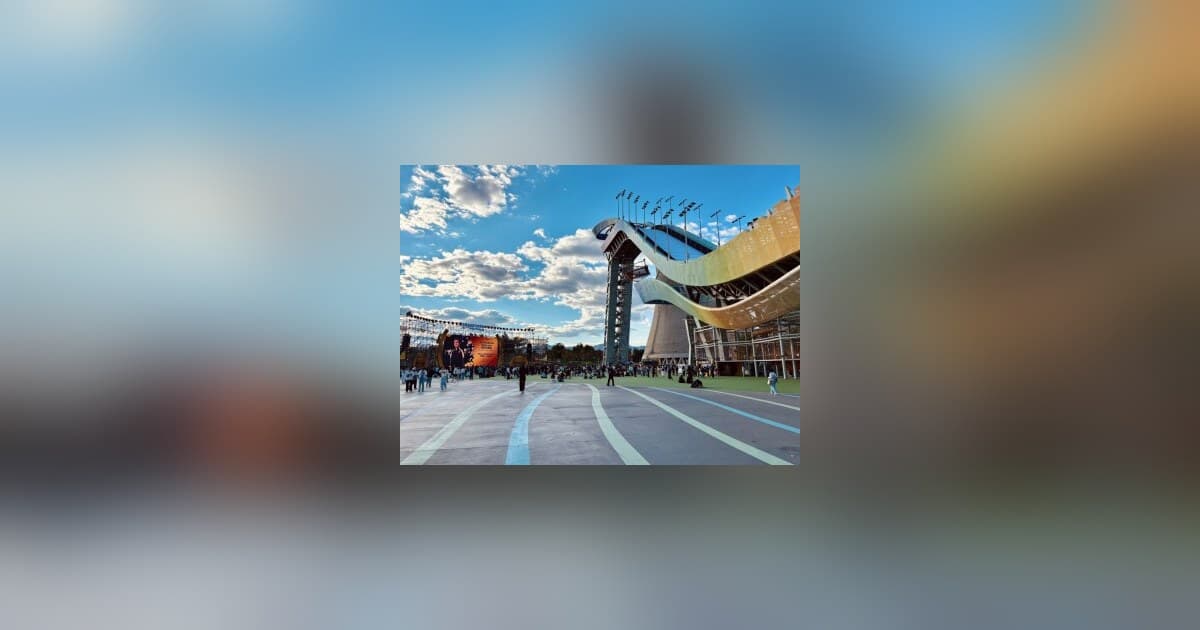
Simultaneously, Shougang Park in Shijingshan hosted the WTT China Grand Smash for the third consecutive year, echoing the China Open and reinforcing the "Golden Week" concept. The industrial-style park became a destination where visitors like Gao Yize, a fan from Xinjiang, could spend an entire day dining, browsing markets, and soaking in the festive blend of table tennis and National Day celebrations. The WTT official licensed store promoted a tournament-themed T-shirt that doubles as a "walking ticket stub," granting wearers exclusive discounts at hundreds of partner merchants across Shougang Park, Yongdingheji, Moshikou Historical and Cultural Street, and other locations—a clear example of the "ticket stub economy" in action.
The economic ripple effects were felt citywide. The Beijing Yizhuang GT World Challenge attracted over 26,000 spectators, with an automobile-themed carnival driving growth in surrounding dining, retail, and accommodation spending. In Miyun, the China Men's 3x3 Basketball League Championship linked cultural tourism resources and key commercial districts, opening the "Chao San" Market that brought together over 30 merchants offering local specialties. These events, spanning competitive, mass, and youth sports, integrated into Beijing's streets and alleys, demonstrating how sports can animate urban spaces and generate broader commercial activity.
This strategy matters because it showcases a replicable model for cities seeking to leverage major sporting events beyond the stadium. By embedding holiday cultural tourism scenarios into event planning, Beijing is expanding consumption scenarios and enhancing the visitor experience, further proving the enormous potential of the sports event economy. As the "Dual Olympic City" continues to capitalize on its unique legacy, the implications for urban economic development, tourism, and community engagement are significant, offering a blueprint for other municipalities aiming to turn athletic spectacle into sustained economic vitality.
