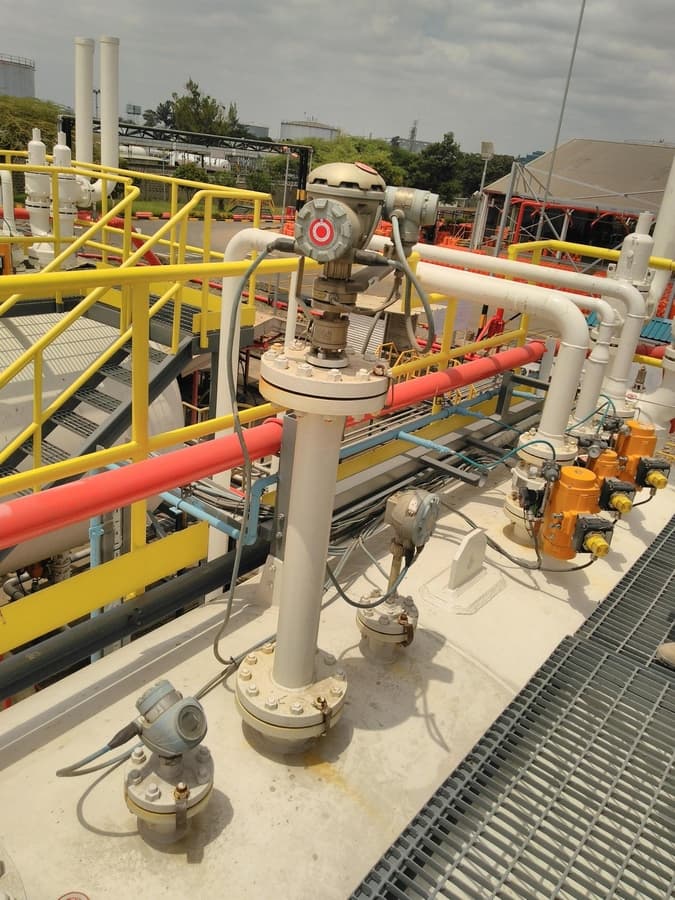
In a significant development for Kenya's oil and gas sector, Burhani Engineers has successfully completed a major upgrade project at an LPG plant in Nairobi. The project, which involved replacing older REX gauges with state-of-the-art Rosemount 5900 series, marks a substantial improvement in the plant's measurement accuracy, operational efficiency, and long-term reliability.
The upgrade addressed several operational challenges faced by the client due to limitations of the older REX gauges. These outdated gauges, which relied on basic analog communication protocols and rudimentary HART integration, were hindering seamless interaction with modern control systems. Additionally, their mechanical components led to frequent maintenance needs, resulting in increased downtime and higher operational costs.
Burhani Engineers' solution involved a comprehensive lifecycle management approach, covering all aspects from initial planning and procurement to installation and commissioning. The transition to the Rosemount 5900 series was strategically implemented to minimize disruption to ongoing operations. This advanced technology incorporates digital communication protocols such as Foundation Fieldbus, Modbus, WirelessHART, and HART, enabling seamless integration with the client's modern control systems.
A key advantage of the new system is its operation without moving parts, significantly reducing maintenance requirements and associated costs. This feature ensures more consistent and reliable measurements, enhancing the plant's overall efficiency and safety profile. The high-precision measurements provided by the Rosemount 5900 series also contribute to better process optimization, even under challenging environmental conditions.
The successful completion of this project has far-reaching implications for the oil and gas industry in Kenya and potentially across Africa. It demonstrates the feasibility and benefits of upgrading legacy systems to modern, more efficient technologies. The improved accuracy and reliability of the new gauging system not only enhance operational efficiency but also contribute to better safety standards in the handling of LPG, a crucial energy source in the region.
For the wider industry, this upgrade serves as a case study in the potential for technological advancement in existing infrastructure. It showcases how targeted investments in modern instrumentation can lead to significant improvements in plant operations, potentially setting a new standard for LPG facilities across the continent.
The project also highlights the growing capacity of local engineering firms like Burhani Engineers to deliver complex, high-tech solutions in the oil and gas sector. This capability is crucial for the development of local expertise and the reduction of dependence on international firms for such specialized work.
From an environmental and safety perspective, the upgrade contributes to more precise inventory management and potentially reduces the risk of leaks or spills. This aspect is particularly important given the increasing focus on environmental safety in industrial operations globally.
As the demand for LPG continues to grow in Kenya and neighboring countries, partly driven by efforts to reduce reliance on traditional biomass fuels, the efficiency and reliability of LPG plants become increasingly critical. This upgrade positions the Nairobi plant to better meet this growing demand while maintaining high standards of safety and efficiency.
The success of this project may encourage other LPG plants in the region to consider similar upgrades, potentially leading to a broader modernization of the LPG infrastructure in East Africa. This could have positive implications for energy security, operational efficiency, and safety standards across the region's LPG sector.