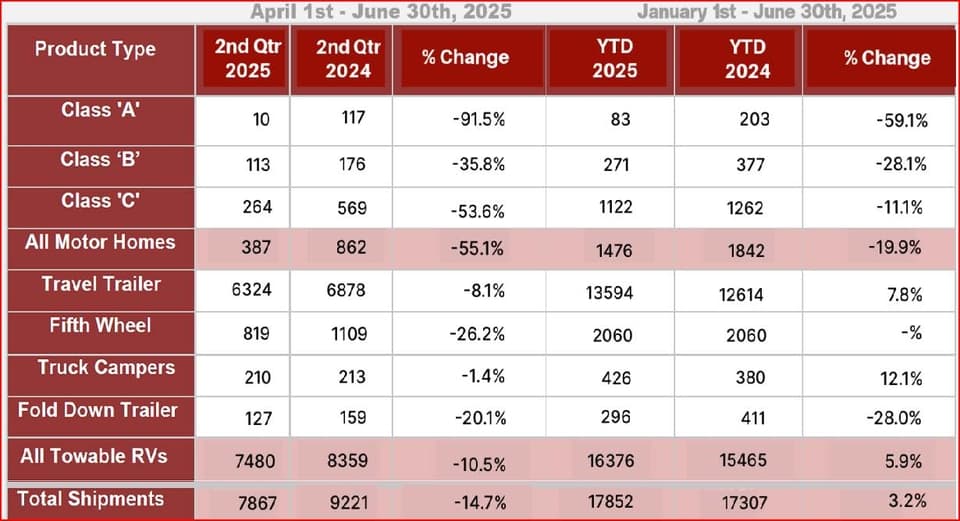
The Canadian Recreational Vehicle Association reported a 14.7% decline in RV wholesale shipments to Canada for the second quarter of 2025, with 7,867 units compared to 9,221 units in the same period last year. This decline occurred despite retail sales reaching 13,129 units during the quarter, resulting in significant dealer inventory drawdowns, particularly in the motorized segment.
Two primary factors drove the quarterly decline: Canadian RV dealers pulled forward Q1 orders to anticipate proposed federal countermeasure tariffs, boosting first-quarter activity while setting up a softer Q2. Additionally, Canada's counter-tariffs on motorhomes from April through June weighed heavily on motorized shipments, deepening the year-over-year decline in that segment. These countermeasures have since been lifted, and Canada currently applies no tariffs on RVs imported from the United States.
Shane Devenish, President of CRVA, stated that the data reveals Canadian consumers remain engaged, but Q2 was shaped by policy timing rather than demand. The association reiterated its call for tariff-free, reciprocal trade across North America, emphasizing that current U.S. tariff policies on Canadian-built units create uncertainty and unfair disadvantages for Canadian manufacturers exporting southward.
The RV industry supports campgrounds, dealers, service technicians, suppliers, and tourism businesses across all provinces and territories. With over 2.1 million Canadian households owning an RV, this form of travel represents one of the most affordable ways to explore the country—costing up to 50% less than traditional fly-and-stay vacations. A 2023 economic impact study showed the Canadian RV industry contributes $16.1 billion to Canada's GDP, $7.6 billion in taxes, and employs 141,000 Canadians.
This news matters because stable trade conditions are essential for maintaining the health of an industry that supports thousands of jobs and contributes significantly to local economies. The fluctuation in shipments demonstrates how policy uncertainty can disrupt supply chains and dealer operations, ultimately affecting consumer choice and affordability. As more Canadians choose domestic travel and RV vacations, ensuring fair trade practices becomes crucial for sustaining the tourism and outdoor economies that depend on this sector.