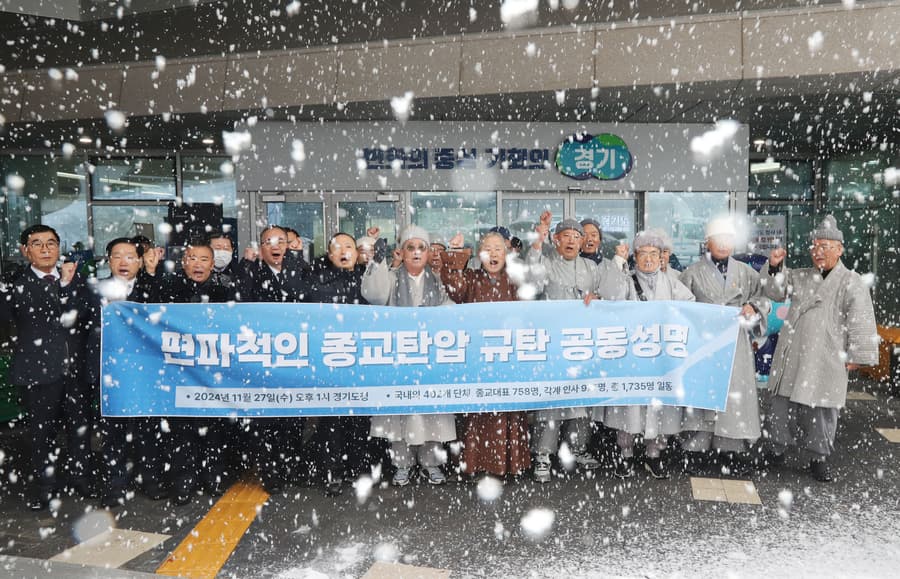
In a significant development highlighting tensions between religious freedom and government action, over 2,000 religious leaders, organizations, and individuals have issued a joint statement condemning the South Korean government's last-minute cancellation of a venue for a major international religious event. The cancellation, which occurred on October 30, 2024, in Paju, South Korea, has sparked a global outcry and raised serious questions about religious liberty and human rights in the country.
The event, which was expected to draw more than 30,000 participants from 78 countries, including 1,000 religious leaders, was abruptly halted when the Gyeonggi Tourism Organization (GTO) revoked the venue rental on the morning of the gathering. This action has been widely criticized as an act of biased religious oppression, with far-reaching implications for religious freedom not only in South Korea but potentially setting a concerning precedent internationally.
The joint statement, delivered to the South Korean government on November 27, 2024, bears the signatures of 402 organizations, 758 religious representatives, and 977 individuals. It underscores the severe psychological and financial impact of the venue cancellation on the organizers and attendees, many of whom had traveled from around the world for the event. The statement calls for an official apology from the government and demands disciplinary action against the officials involved in the decision.
The timeline leading to the cancellation raises questions about the motivations behind the government's actions. Despite multiple confirmations and a full safety inspection completed by the GTO, the event was canceled citing security concerns related to potential North Korean provocations. However, organizers allege that pressure from opposing groups, including vested religious interests, may have influenced the decision, as other events in the same area proceeded without disruption.
This incident has broader implications for religious freedom and international relations. The fact that 88 global leaders have sent protest letters demanding appropriate measures be taken underscores the international community's concern over this issue. It highlights the delicate balance governments must maintain between security concerns and protecting fundamental rights such as freedom of religion and assembly.
The cancellation's impact extends beyond the immediate financial and logistical consequences for the event organizers. It raises concerns about the potential chilling effect on religious expression and assembly in South Korea and potentially in other countries. The incident may prompt other governments to reassess their policies regarding large-scale religious gatherings, particularly those involving international participants.
Furthermore, this situation underscores the complex interplay between religion, politics, and security in modern societies. The alleged influence of opposing religious groups in the government's decision-making process points to the challenges of maintaining neutrality in matters of faith, especially in diverse societies with multiple religious stakeholders.
As the controversy unfolds, it serves as a reminder of the ongoing global struggle to balance security concerns with the protection of fundamental human rights. The international community's response to this incident may set important precedents for how similar situations are handled in the future, potentially influencing policies on religious freedom and assembly rights worldwide.
The continued protests and rallies by religious leaders and members of the Shincheonji Church of Jesus since November 15 demonstrate the deep impact of this decision on religious communities. These actions reflect a growing movement to safeguard religious freedoms and prevent similar incidents from occurring in the future, not just in South Korea but globally.
As this situation continues to evolve, it will be crucial to monitor the South Korean government's response to the joint statement and international pressure. The resolution of this conflict could have far-reaching implications for religious freedom, international diplomacy, and the relationship between governments and religious organizations worldwide.