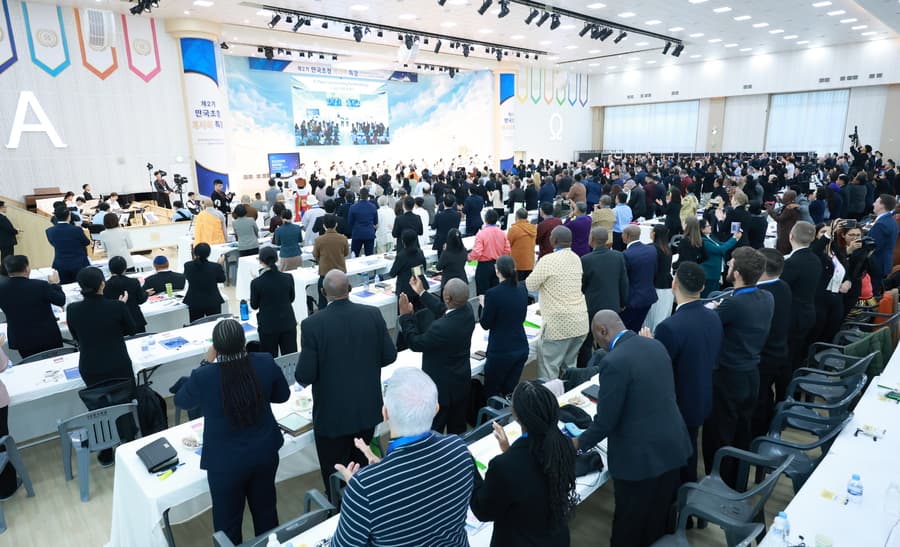
In a significant move towards fostering interfaith dialogue and global peace, the Shincheonji Church of Jesus recently concluded its second Special Lecture on Revelation, open to religious leaders from all nations. The event, held at Shincheonji Cheongju Church in South Korea, saw a tenfold increase in attendance compared to its predecessor, with approximately 1,000 religious leaders from 57 countries participating at their own expense.
The lecture series, designed to bridge religious divides and promote mutual understanding through scriptural analysis, included a comprehensive exploration of the Book of Revelation. Participants not only attended the 115th graduation ceremony of the Zion Christian Mission Center but also engaged in in-depth discussions on the fulfillment of Revelation's prophecies.
A notable aspect of the event was the active participation of leaders from various faiths. A Buddhist monk, who delivered a speech on Revelation 1:1-8, expressed a newfound appreciation for the biblical text, stating, "I realized the greatness of the Book of Revelation while I was learning about it. I think the Book of Revelation is great because I can see a new world through it, and because of that world, I have gained insight into the new world." This sentiment underscores the potential for interfaith dialogue to foster new perspectives and mutual respect among diverse religious traditions.
The pinnacle of the event was a special lecture delivered by Shincheonji Church Chairman Man-Hee Lee. In his address, Chairman Lee emphasized the importance of unity and open dialogue among religious communities. "Heaven and God are one. To become one, we must have conversations and introduce ourselves," Lee stated, extending an open invitation for scriptural comparison at Shincheonji Church of Jesus.
The significance of this event lies in its potential to reshape interfaith relations on a global scale. By bringing together leaders from dozens of countries and various religious backgrounds, the Shincheonji Church has created a unique platform for cross-cultural and inter-religious exchange. This initiative could serve as a model for future efforts to promote religious harmony and global peace.
The overwhelmingly positive response from attendees, who unanimously expressed interest in continuing scriptural exchanges with Shincheonji Church, suggests a growing appetite for interfaith cooperation. This development could have far-reaching implications for religious diplomacy and conflict resolution in regions where religious differences have historically been a source of tension.
Furthermore, the event's focus on the Book of Revelation—a text often subject to varied interpretations and controversy—demonstrates a willingness to tackle complex theological issues in a spirit of openness and mutual learning. This approach could pave the way for more nuanced and respectful discussions of religious texts across faith traditions.
As religious conflicts continue to play a role in global tensions, initiatives like the Shincheonji Church's lecture series gain added importance. By fostering a deeper understanding of different religious perspectives, such events can contribute to reducing misunderstandings and prejudices that often fuel inter-religious conflicts.
The success of this event may inspire other religious organizations to pursue similar initiatives, potentially leading to a more interconnected and tolerant global religious community. As a Shincheonji Church official noted, "We believe that the foundation for international religious harmony is being built as religious leaders from around the world serve as a catalyst for the exchange of scriptures and the realization of peace."
As the world grapples with various challenges that often have religious dimensions, the Shincheonji Church's effort to create a space for open dialogue and scriptural exchange could mark a significant step towards building a more peaceful and understanding global society. The long-term impact of such initiatives remains to be seen, but the enthusiastic participation of diverse religious leaders suggests a growing recognition of the need for interfaith cooperation in addressing global issues.