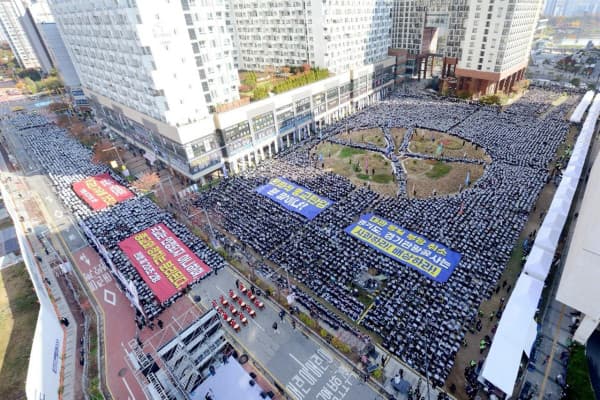
The recent cancellation of a Shincheonji Church event by Gyeonggi Province authorities has ignited a fierce controversy, raising questions about religious freedom and government accountability in South Korea. The 'Religious Leaders Forum and Completion Ceremony,' scheduled for October 30 at Paju Imjingak Peace Nuri, was abruptly called off by provincial authorities just one day before it was set to take place, citing unspecified security concerns.
The decision has led to mass protests, with over 25,000 Shincheonji Church members and supporters rallying against what they perceive as unconstitutional and discriminatory action. The church has vowed to continue demonstrations until they receive an official apology and all accountabilities are addressed, highlighting the growing tension between religious organizations and government bodies in the country.
Gyeonggi Province and the Gyeonggi Tourism Organization expressed regret over the short notice but maintained that the cancellation was necessary to prevent potential security risks. However, Shincheonji Church officials have contested this explanation, arguing that the decision was politically motivated and influenced by external pressure from other religious groups, particularly the Metropolitan Christian Council of Korea (MCCK), which has historically been critical of Shincheonji.
The controversy has broader implications for religious freedom in South Korea. Shincheonji Church representatives argue that the cancellation violates Article 20 of the South Korean Constitution, which guarantees freedom of religion. This incident has sparked a debate on the extent of government authority in regulating religious events and the potential for discrimination against minority religious groups.
On November 15, Shincheonji Church organized a peaceful protest rally outside the Gyeonggi Provincial Office, presenting a formal letter of protest and meeting with officials from Gyeonggi Province and the Gyeonggi Tourism Organization. During this meeting, Chief Public Relations Officer Song Jae-Woong expressed dissatisfaction with the lack of a public response from government bodies and called for an official statement of responsibility from the governor.
The church is also seeking compensation for financial damages incurred due to the event's cancellation, adding an economic dimension to the controversy. This aspect of the dispute highlights the potential financial repercussions that religious organizations may face when government decisions interfere with planned events.
The incident has attracted significant attention from both domestic and international observers, raising concerns about the state of religious freedoms and civil liberties in South Korea. It underscores the delicate balance that governments must maintain between ensuring public safety and protecting constitutional rights, particularly in a country with a diverse religious landscape.
As the protests continue and Shincheonji Church pursues its demands for accountability and compensation, the outcome of this controversy could have far-reaching implications for religious organizations, government policies, and civil liberties in South Korea. The incident serves as a reminder of the ongoing challenges in maintaining religious freedom and the importance of transparent communication between government authorities and religious groups.
The controversy also highlights the need for clear guidelines and protocols for canceling large-scale events, especially those organized by religious groups. It raises questions about the criteria used by authorities to assess security risks and the level of evidence required to justify such decisions.
As the situation unfolds, it will be crucial to monitor how the South Korean government addresses these concerns and whether this incident leads to any changes in policies or practices regarding religious events and freedom of assembly. The resolution of this controversy could set an important precedent for the relationship between religious organizations and government authorities in South Korea and potentially influence similar situations in other countries.