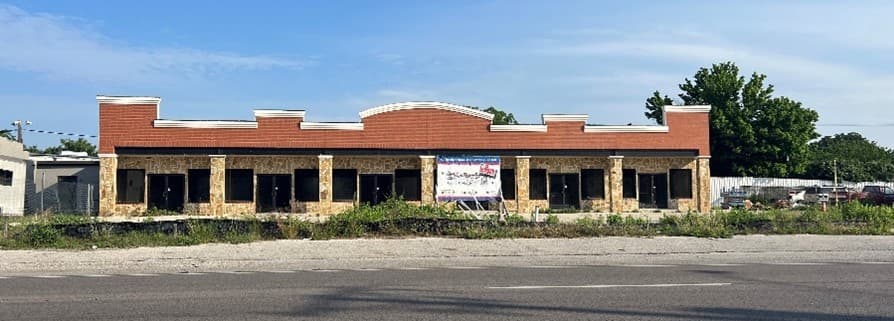
The Haltom United Business Alliance (HUBA) is calling on city officials to implement strategies that would encourage urban renewal in the south and central areas of Haltom City, Texas. The non-profit group has been advocating for code and policy changes to make these areas more attractive to private investors and small businesses, citing a lack of public funds available for revitalization efforts.
HUBA has drawn inspiration from Strong Towns, a national non-profit organization that promotes financial stability and neighborhood livability in American cities. The alliance has compiled a list of research-backed ideas that have proven successful in other municipalities, focusing on common-sense reforms to achieve these goals.
One of the primary issues identified by HUBA is the existence of stringent building codes and regulations that act as significant barriers to progress in older areas of Haltom City. These requirements, which can include costly upgrades such as installing sprinkler systems or adding parking spaces, often deter potential investors from renovating or repurposing existing buildings.
Joe Palmer, HUBA's Communications Director, explained that the current approval process for building renovations or use changes is time-consuming, costly, and risky for investors. This uncertainty often leads businesses to seek opportunities elsewhere, resulting in vacant buildings that remain unused for extended periods.
Ron Sturgeon, a founding member of HUBA, shared his personal experience with the city's lengthy approval process, noting that it took over a year to gain approval for a low-cost events center and another year to complete the necessary improvements. Sturgeon emphasized the impracticality of such timeframes for small businesses looking to establish themselves in the area.
The alliance is proposing the creation of an overlay district encompassing key areas of the city, including Denton Highway, Carson, NE 28th Street, and Belknap. Within this district, HUBA advocates for code reforms that would lower the barriers to entry for businesses and investors. The group cites studies showing that small businesses are crucial drivers of revitalization in inner-city areas.
HUBA's vision extends beyond just attracting new businesses. The organization aims to position Haltom City as "the friendliest city in Tarrant County for small businesses." This goal, however, faces challenges due to existing zoning obstacles, rigid code requirements, unnecessary parking mandates, and bureaucratic red tape.
The push for urban renewal in Haltom City reflects a broader issue faced by many American cities struggling to balance development regulations with economic growth and revitalization efforts. As cities across the country grapple with aging infrastructure and changing economic landscapes, the debate over how to best encourage urban renewal while maintaining safety standards and community character continues to evolve.
The situation in Haltom City serves as a case study for other municipalities facing similar challenges. It highlights the need for cities to regularly evaluate their development policies and consider innovative approaches to urban renewal that can attract investment while preserving the unique character of older neighborhoods.
As HUBA continues its advocacy efforts, the outcome of this local initiative could provide valuable insights for other cities seeking to revitalize their older districts. The balance between maintaining necessary safety standards and creating a business-friendly environment remains a critical challenge for urban planners and policymakers across the nation.