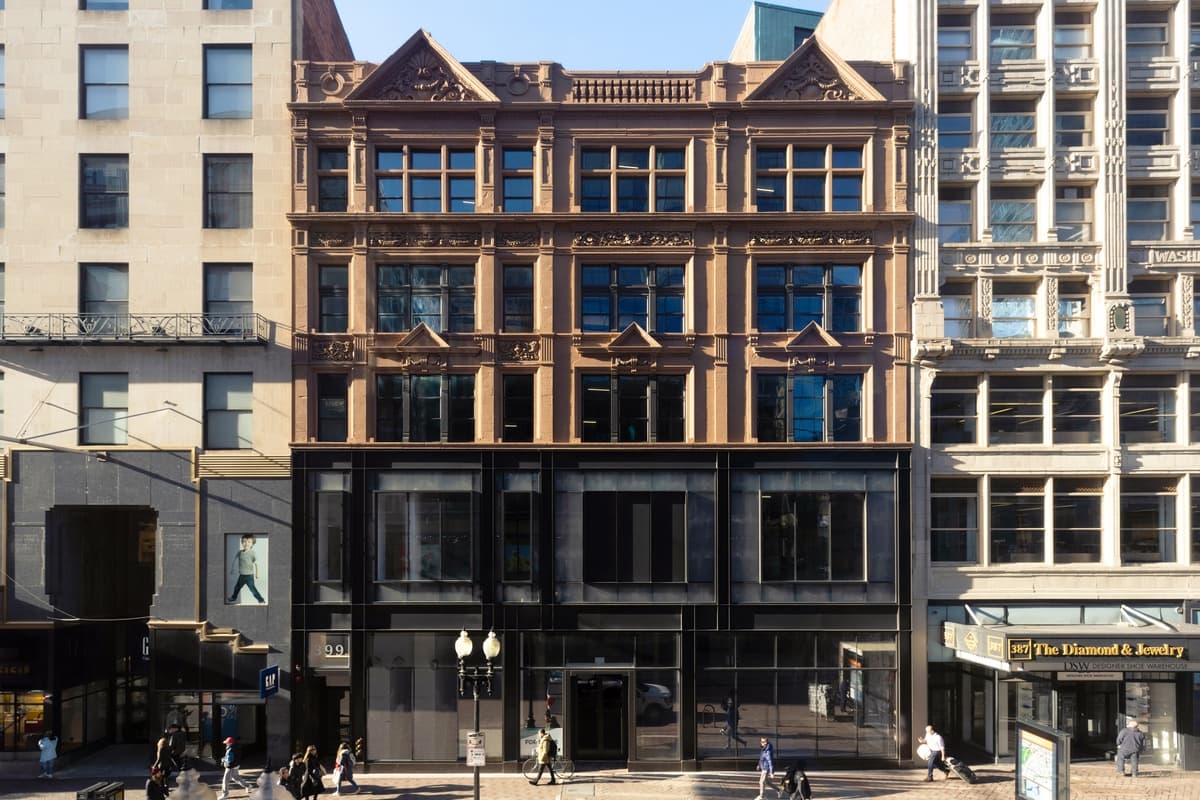
A prominent five-story downtown Boston property at 399 Washington Street has been sold for $63 million, marking a strategic investment in the city's urban landscape. The transaction, completed by a joint venture between Hudson Group and Assembly Investments, represents a significant opportunity for urban revitalization in one of Boston's most historic districts.
The 76,000-square-foot building, which had remained vacant since 2006 when Barnes & Noble closed its doors, was previously purchased in 2017 and underwent substantial renovations estimated between $7 million and $10 million. The property includes LEED-certified base building systems and features a two-story facade that preserves its historic architectural integrity.
Boston Realty Advisors managed the sale, with Managing Director Whitney Gallivan noting the transaction exceeded pricing expectations. The sale reflects growing confidence in downtown Boston's commercial real estate market, particularly in the Downtown Crossing area.
The property's strategic location provides extraordinary commuter access, situated immediately adjacent to Park Street and Downtown Crossing MBTA stations with connections to Green, Orange, and Red Lines. Its architectural significance is further enhanced by its design from noted Bostonian architect Nathaniel J. Bradlee.
Noam Ron of Hudson Group emphasized the positive momentum in downtown Boston, highlighting the city's commitment to large-scale development and historic preservation. The Downtown Boston Alliance's focus on public art and streetscape improvements has also contributed to increased investor interest in the area.
Evan Papanastasiou of Assembly Investments brought a unique personal perspective to the transaction, having previously represented the family that sold the property in 2017. He expressed excitement about restoring the building's prominence in the Downtown Crossing retail and office market.
The sale signals potential economic recovery and renewed interest in urban commercial properties, particularly in historic districts with strong infrastructure and architectural heritage. It represents a strategic investment that could catalyze further development and revitalization in downtown Boston.