

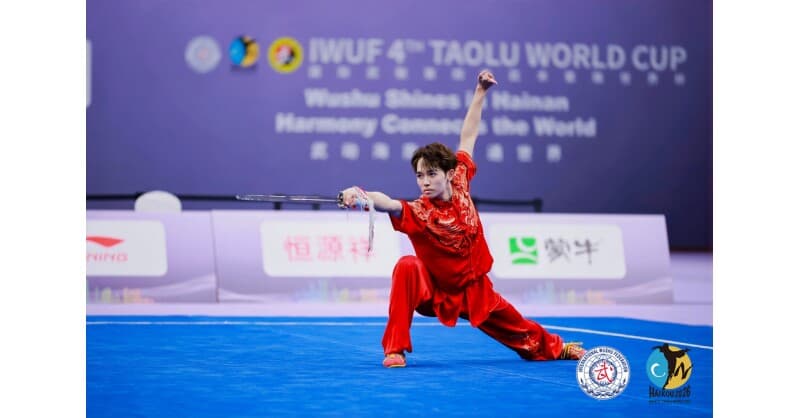
The IWUF 4th Taolu World Cup successfully wrapped up in Haikou, Hainan, China, on July 8, 2026, marking a significant milestone for the sport as wushu prepares for its historic debut as an official medal sport at the Dakar 2026 Youth Olympic Games this November. The event, organized by the International Wushu Federation (IWUF), featured 11 men's and 11 women's events across four major categories: fist routines, long weapons, short weapons, and duilian. Over two days, a total of 22 gold medals were contested among 117 elite competitors from 29 countries and regions, with athletes from 18 nations securing medals.
The Taolu World Cup is one of six flagship official events of the IWUF and stands as the highest-level and most influential elite professional competition in global taolu discipline. This year's edition was particularly notable as it was the first high-level international wushu single-discipline competition hosted by Hainan since the inception of the Hainan Free Trade Port. Leveraging the port's unique geographical and policy advantages, including visa-free access for citizens of 86 countries and the 240-hour transit visa-exemption policy, overseas participants, technical officials, and media personnel enjoyed fast-track customs clearance. Additionally, specialized competition equipment benefited from zero-tariff treatment and simplified cross-border customs clearance procedures, facilitating the smooth execution of the event.
The competition attracted 206 athletes, team leaders, and coaches from 29 countries and regions worldwide. The strong international participation underscores wushu's growing global appeal, especially with its upcoming inclusion in the Youth Olympic Games. The Dakar 2026 Youth Olympic Games will mark the first time this traditional Chinese martial art has been incorporated into the Olympic sports program, a development that could significantly boost the sport's profile and participation worldwide.
Hainan's rich wushu culture added depth to the event. Through centuries of inheritance and development, the island has integrated various martial arts schools and blended them with local folklore to form a unique "Qiong-style" wushu system. Two counties and one city—Tunchang, Qiongzhong, and Wanning—have been designated as "National Wushu Hometowns," reflecting a deep-rooted tradition of martial arts appreciation. Indigenous fighting styles such as the Li ethnic group's Li Family Fist, Tunchang Pochen Five-Form Stakes, and Wanning Mazai Kung Fu have been passed down through generations, standing as treasured gems of Hainan's folk culture.
During the event, Hainan concurrently hosted the inaugural Hainan International Wushu Culture Month, featuring multiple "wushu + tourism" travel routes. These activities allowed domestic and international guests to enjoy Hainan's island scenery and duty-free shopping benefits while taking in high-level wushu competitions. Looking ahead, Hainan will continue to integrate wushu elements into its sports-tourism product system, developing wushu-themed tourist destinations, study and research bases, and signature events. This strategy aims to make "spectator travel" a new model for Hainan's cultural tourism. The island also plans to promote hosting various international wushu competitions, training camps, professional development programs, and cultural exchange activities, with the goal of establishing Hainan as a global hub for wushu development and cultural exchange.
Separately, the 43rd Executive Committee Meeting of the IWUF has decided that Haikou City in Hainan Province will host the 12th Sanda World Cup, further solidifying Hainan's role as a key destination for international wushu events.
