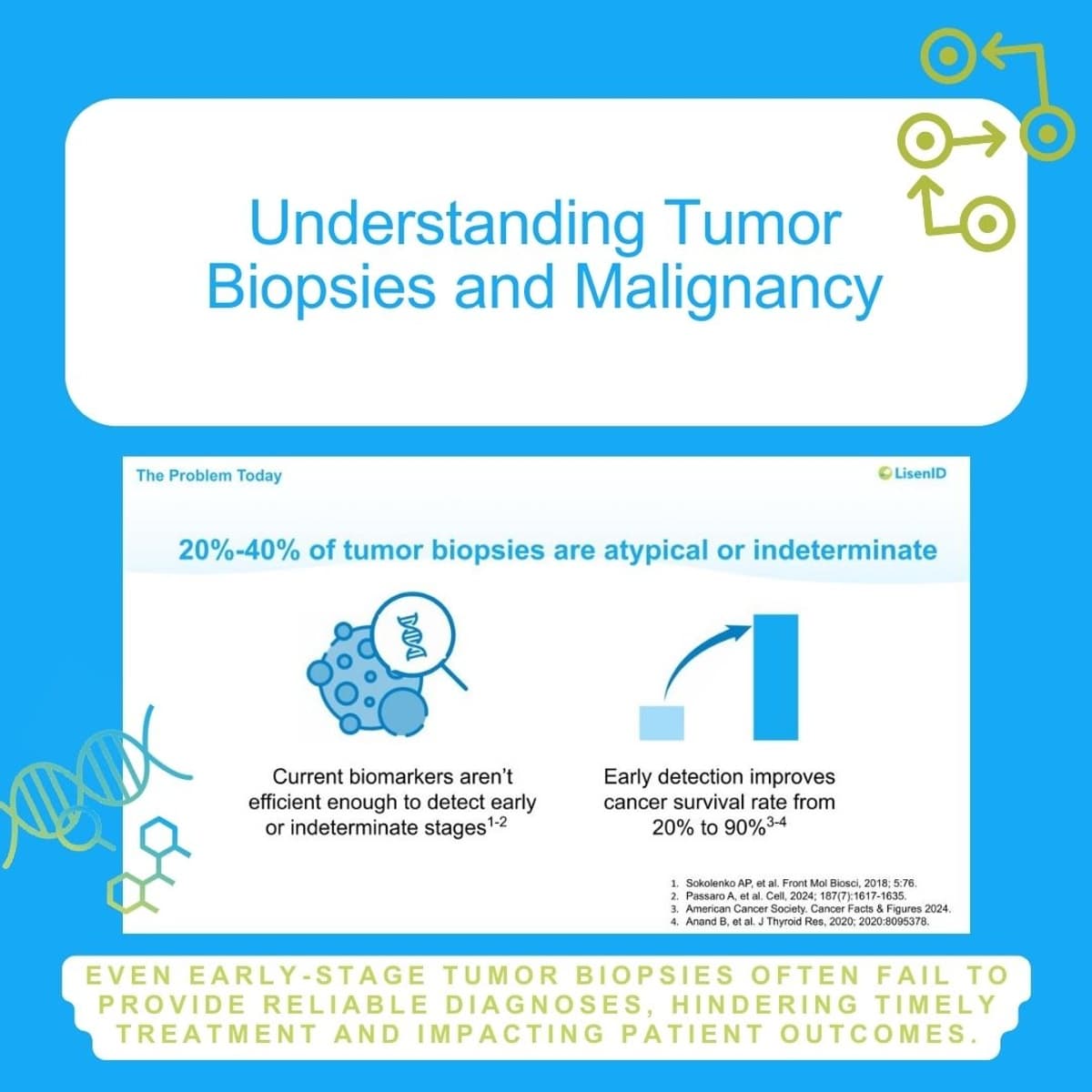
Medical diagnostics may be on the cusp of a significant advancement as LisenID and Mayo Clinic announce a strategic collaboration focused on developing groundbreaking early cancer detection technology. The partnership aims to create a laboratory-developed test for lung cancer using a novel epigenetic imprinting approach that could dramatically improve diagnostic accuracy and patient care.
The collaboration centers on Quantitative Chromogenic Imprinted Gene In-Situ Hybridization (QCIGISH), a technology capable of detecting cancer at its earliest stages by identifying abnormalities in epigenetic imprinting biomarkers. Unlike traditional genetic mutation-based diagnostics, this method offers substantially higher sensitivity and specificity in cancer detection.
Initial research will concentrate on developing a diagnostic test for lung cancer using transbronchial needle aspiration samples. Current cytology-based methods struggle to accurately diagnose peripheral pulmonary lesions, making this potential breakthrough particularly significant for patients and healthcare providers.
LisenID's technology has demonstrated impressive preliminary results, with over 95% sensitivity and 90% specificity in detecting early-stage cancers across multiple types, including lung, thyroid, cervical, and other malignancies. By identifying cancer at its inception, this approach could fundamentally transform cancer treatment strategies, enabling earlier interventions and potentially improving patient survival rates.
The collaboration represents a strategic effort to bridge advanced diagnostic technology with clinical expertise. Mayo Clinic's extensive research and clinical experience combined with LisenID's innovative technological platform create a powerful framework for advancing cancer diagnostics.
Following clinical validation, LisenID plans to introduce the diagnostic test as a Laboratory Developed Test, which could serve as a critical step toward broader regulatory approval and widespread implementation. This approach could potentially revolutionize how medical professionals approach early cancer screening and diagnosis.
While the technology is still in development, its potential implications are profound. Earlier and more accurate cancer detection could lead to more targeted treatments, reduced unnecessary medical procedures, and ultimately, improved patient outcomes across multiple cancer types.