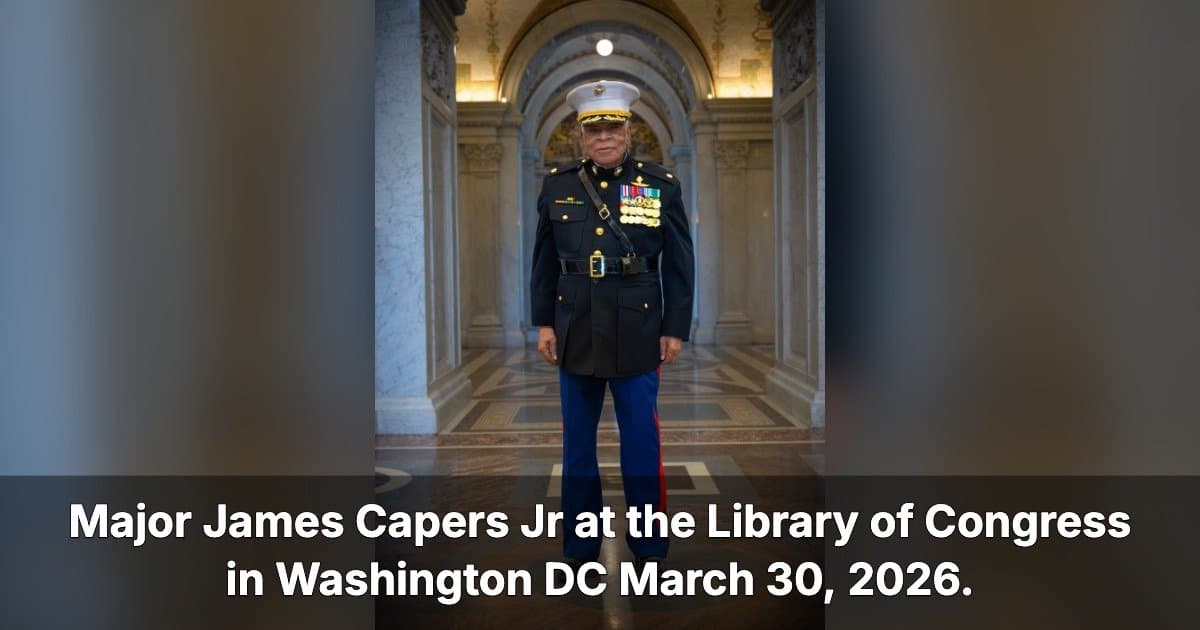
The Library of Congress has permanently archived the oral history of Medal of Honor Designee Major James Capers Jr., a pioneer of Marine Force Recon and the first African American Marine officer in United States history designated to receive the nation's highest military honor. This induction into the Veterans History Project preserves Major Capers's firsthand account of his service, including his 64 long-range reconnaissance patrols in Vietnam and his role as the face of the Marine Corps' first fully integrated national recruitment campaign in 1967.
The importance of this archival effort lies in its preservation of a critical, firsthand perspective from a figure who broke significant racial barriers within the U.S. military. Major Capers, born to sharecroppers in the Jim Crow South, was promoted from enlisted to officer via a battlefield commission. His tactics remain foundational to special operations forces today, as recognized by his induction into the U.S. Special Operations Command Commando Hall of Honor. The Veterans History Project, accessible via https://www.loc.gov/vets, exists to collect, preserve, and make accessible such personal accounts so future generations may better understand the realities of war.
This historical record gains further significance with Major Capers's pending Medal of Honor. On March 26, 2026, the President signed H.R. 3377 into law, authorizing the award for acts of valor during the Vietnam War. His extensive personal decorations, including the Silver Star and Bronze Star with Combat V, underscore a career of exceptional service now formally recognized at the highest level. The induction ceremony at the Library of Congress, documented in media materials available at http://www.majorcapers.com, included family members such as his daughter, researcher Aneesah Akbar-Uqdah, and his grandson, U.S. Coast Guard OS3 Joden Brunson, highlighting the intergenerational impact of his legacy.
For the public and historians, this archived oral history provides an invaluable primary source on the experiences of African American service members during the Vietnam era and the evolution of U.S. special operations. It ensures that the story of a man who served as both a combat leader and a national recruiting symbol is preserved with the authority of the Library of Congress. The project safeguards these narratives against loss, allowing researchers, educators, and citizens direct access to the voices of veterans like Major Capers, whose contributions shaped military integration and special warfare doctrine.