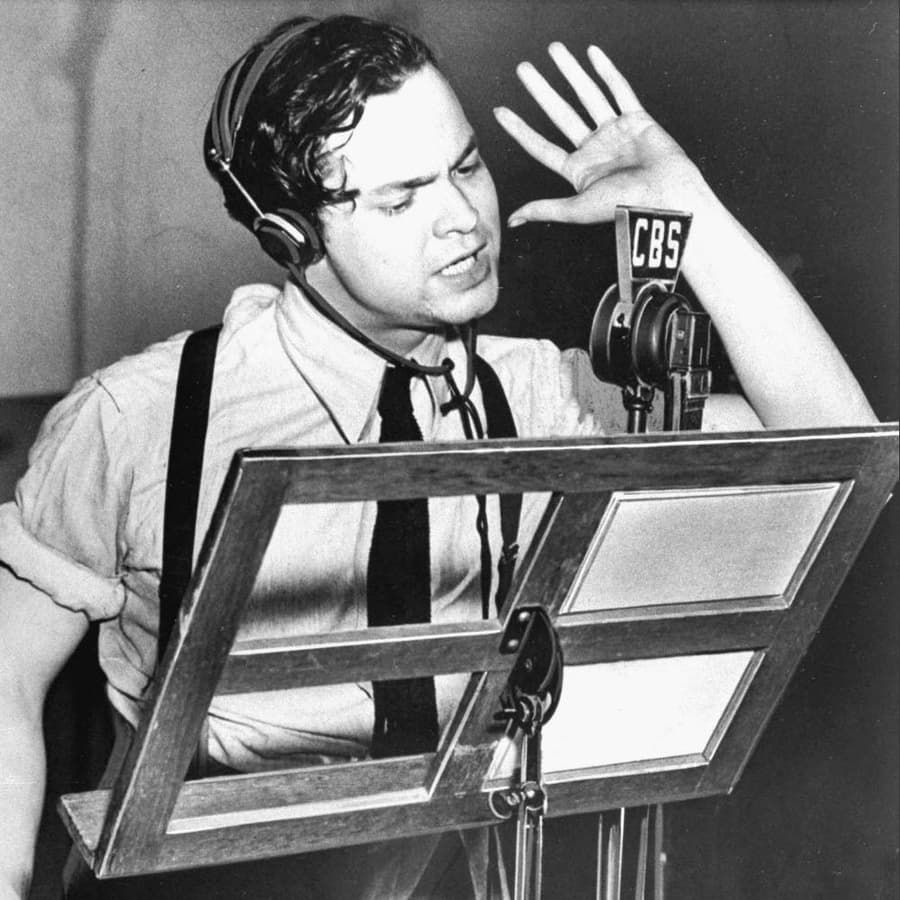
A groundbreaking book released today sheds new light on one of the most infamous moments in American media history, revealing that the panic caused by Orson Welles' 1938 'War of the Worlds' radio broadcast was far more widespread and intense than previously believed. 'Dead Air: The Night Orson Welles Terrified America,' authored by bestselling writer William Elliott Hazelgrove, presents compelling evidence that the broadcast's impact extended well beyond the East Coast, affecting communities across the nation.
Hazelgrove's extensive research, which involved combing through newspapers from coast to coast, has uncovered numerous accounts of chaos and confusion that erupted in the wake of the broadcast. These stories paint a vivid picture of a nation gripped by fear, with citizens taking drastic actions in the belief that Earth was under attack by Martians.
The book recounts harrowing tales of individuals abandoning their responsibilities, fleeing their homes, and even contemplating suicide. One particularly striking account describes a man who, having just undergone surgery, tore out his medical tubes and drove home while bleeding profusely. Another tells of a driver who, in a panic, tied young girls to the hood and trunk of his car as he sped down a highway.
Hazelgrove's work is significant not only for its historical revelations but also for its relevance to contemporary discussions about media influence and the spread of misinformation. The author draws parallels between the 1938 incident and modern concerns about 'fake news,' highlighting how Welles' use of a breaking news bulletin format was able to convince listeners of an entirely fictional scenario.
The book's release comes at a time when public trust in media is under scrutiny, making its insights into the power of broadcast journalism particularly pertinent. By demonstrating the nationwide scope of the panic, 'Dead Air' challenges long-held assumptions about the broadcast's impact and raises important questions about the responsibility of media outlets in disseminating information.
Hazelgrove's findings also highlight the technological and social context of the late 1930s, a time when radio was a dominant form of mass communication. The book illustrates how the medium's immediacy and reach could create a shared national experience, for better or worse.
The author's meticulous research has garnered praise from notable publications, with the Wall Street Journal and Publishers Weekly offering positive reviews. This critical acclaim suggests that 'Dead Air' may prompt a reevaluation of this pivotal moment in media history among scholars and the general public alike.
As society continues to grapple with issues of media literacy and the impact of sensationalism in news reporting, 'Dead Air' serves as a potent reminder of the potential consequences when the lines between fact and fiction blur in mass communication. The book invites readers to consider how far we've come in our media consumption habits and what lessons can be learned from this historical event.
Ultimately, Hazelgrove's work contributes to our understanding of media influence and mass psychology, offering valuable insights that resonate with current debates about information dissemination and public trust. As we navigate an increasingly complex media landscape, the lessons drawn from the 'War of the Worlds' broadcast remain surprisingly relevant, making 'Dead Air' a timely addition to the discourse on media responsibility and the power of storytelling in shaping public perception.