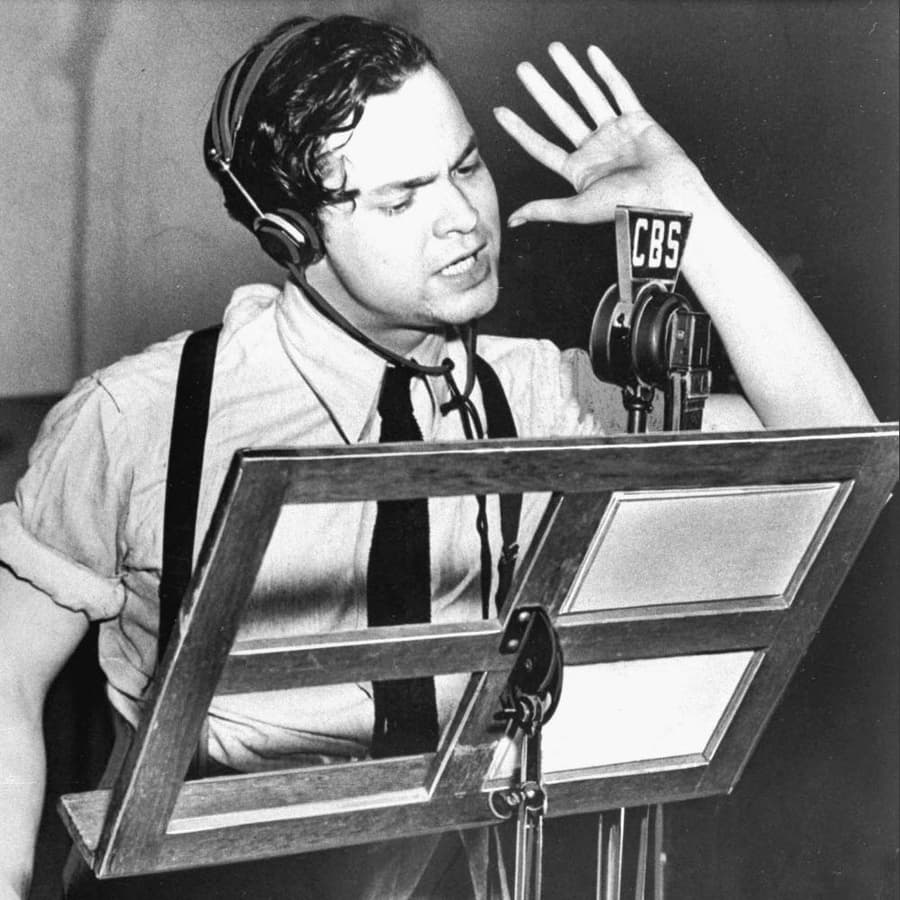
As the 86th anniversary of Orson Welles' infamous 'War of the Worlds' radio broadcast approaches, author William Hazelgrove offers a fresh perspective on the event that sparked nationwide panic in his new book 'Dead Air: The Night Orson Welles Terrified America.' Published by Rowman and Littlefield, the book delves into the circumstances that allowed a fictional alien invasion to be perceived as reality by millions of Americans.
On October 30, 1938, a 23-year-old Orson Welles orchestrated what would become one of the most notorious broadcasts in radio history. Hazelgrove's work explores how a combination of factors, including pre-existing war anxiety, economic depression, and the rapid growth of radio as a medium, created the perfect conditions for mass hysteria. The book details how Welles' adaptation of H.G. Wells' 'War of the Worlds' led to widespread panic, with people across the country fleeing their homes, seeking shelter, and preparing for what they believed to be an actual Martian invasion.
Hazelgrove's 'Dead Air' has already garnered critical acclaim, receiving positive reviews from the Wall Street Journal, Publishers Weekly, and a starred review from Booklist. The book's relevance extends beyond historical interest, offering insights into the nature of media influence and public perception that resonate strongly in today's digital age.
The author posits that the 'War of the Worlds' broadcast was a watershed moment in media history, fundamentally altering how the public interacts with and interprets information disseminated through mass communication channels. Hazelgrove argues that the event's legacy is particularly pertinent in the current era of 'fake news' and media skepticism, drawing parallels between the 1938 broadcast and contemporary challenges in distinguishing fact from fiction in the media landscape.
'Dead Air' provides a comprehensive look at the broadcast's impact, featuring anecdotal accounts of individuals' reactions across the United States. These personal stories offer a vivid illustration of the broadcast's far-reaching effects and the power of perception in shaping reality. Hazelgrove's work suggests that the lessons learned from this historical event remain crucial in understanding modern media consumption and its potential consequences.
The book's release coincides with ongoing debates about media literacy and the responsibility of content creators and distributors. By examining how Welles transformed six seconds of radio silence into a moment of national terror, Hazelgrove invites readers to consider the delicate balance between artistic expression, journalistic integrity, and public trust.
As social media and digital platforms continue to evolve as primary sources of information, the story of the 'War of the Worlds' broadcast serves as a cautionary tale about the potential for misinformation to spread rapidly and the importance of critical thinking in media consumption. Hazelgrove's analysis provides valuable context for current discussions about the role of media in society and the mechanisms by which information—or misinformation—can shape public opinion and behavior.
The publication of 'Dead Air' not only commemorates a significant moment in broadcasting history but also contributes to ongoing dialogues about media ethics, the power of storytelling, and the responsibilities of both media producers and consumers in the information age. As such, Hazelgrove's work offers readers an opportunity to reflect on how far media has come since 1938, and what lessons from the past can be applied to navigate the complex media landscape of the present and future.