

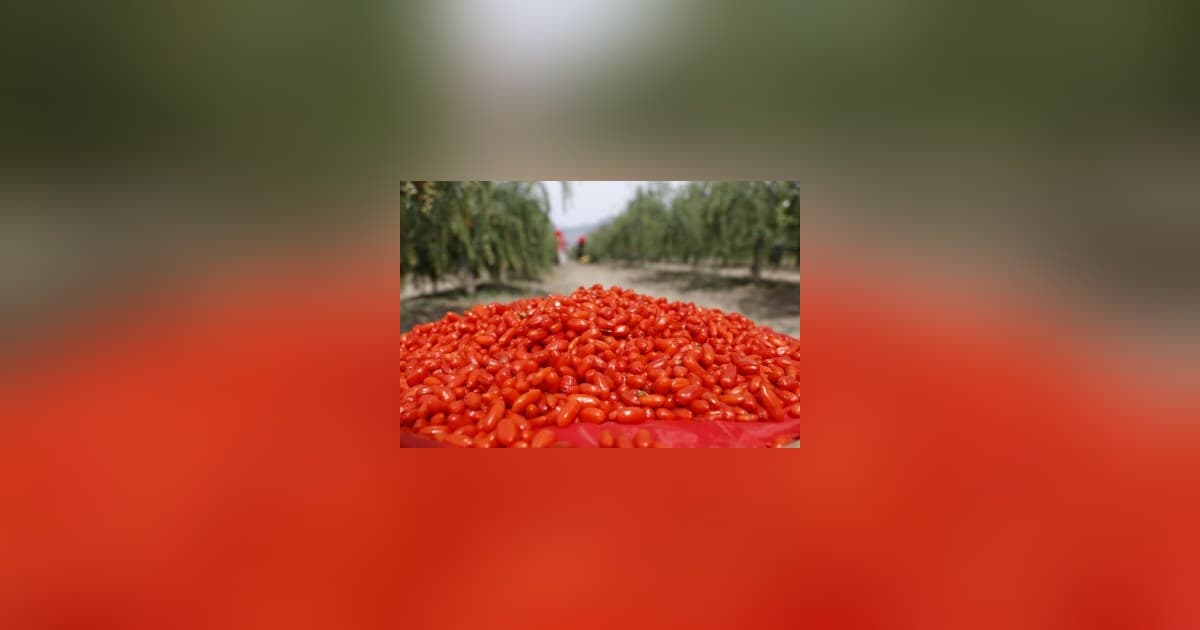
The 9th Goji Berry Industry Expo kicked off on June 14 in Zhongning County, Ningxia Hui Autonomous Region, as farmers harvested the first goji berries of 2026. This annual event highlights the remarkable transformation of a regional specialty into a global health trend. Grown at an elevation of 1,100 meters on the Yellow River alluvial plain, Ningxia goji berries benefit from over 3,000 hours of annual sunlight and mineral-rich, weakly alkaline soil. These unique conditions produce what is known as the "Magic Fruit," the only goji variety officially listed for medicinal use in the Pharmacopoeia of the People's Republic of China.
According to Pan Tai'an, chairman of Ningxia Wolfberry Goji Industry Co., Ltd., every berry is hand-picked because the trees blossom and bear fruit simultaneously. He emphasizes that no chemical fertilizers or pesticides are used, only organic compost, to guarantee pure quality. Historically treasured in Chinese medicine—documented in the ancient Shennong Ben Cao Jing for anti-aging properties—Ningxia goji berries are now a trending superfood on international social media. Overseas consumers pay a premium for authentic products, freeing the berry from its past identity as a niche, rustic specialty.
The industry faced two major bottlenecks: the extreme perishability of fresh berries and underdeveloped deep-processing technology. To address this, Ningxia Wolfberry invested six years in R&D and successfully developed ambient-temperature preservation technology for goji puree—a pioneering breakthrough that fills a technical gap and sets world-leading standards. Fresh goji berries go through cleaning, pulping, sterilization, and canning within two hours after harvest to retain key nutrients like goji polysaccharides, betaine, and zeaxanthin. This innovation has produced over 100,000 tons of goji puree, with total sales exceeding 2 billion yuan (about 293 million U.S. dollars). It has also driven the construction of 50 high-standard production lines across Ningxia, marking a shift from raw material sales to high-value product manufacturing.
According to the Goji Industry Development Center of the Ningxia Forestry and Grassland Administration, Ningxia's goji marketing network now covers more than 50 countries and regions, including Southeast Asia, Europe, and the Americas. In 2025, fresh goji berry output reached 200,000 tons, with the full industrial chain output value exceeding 21.3 billion yuan. While technology-driven companies like Ningxia Wolfberry deepen their presence in international supply chains, emerging players like Ningxia Qilixiang Goji Co., Ltd. are reshaping consumer perception. Founded in 2009 by three university students with just 700 yuan, Qilixiang now has annual sales exceeding 1 billion yuan. They develop blended purees—such as goji-ginseng, red date-goji, and mulberry-goji—with eye-catching packaging, operating about 200 online stores and consistently ranking first in e-commerce sales for goji products.
Innovative, high-value-added products like goji puree, goji seed oil, and goji juice enjoy immense global demand. Once viewed as a mysterious Chinese herbal remedy, Ningxia goji berries are now part of daily life for middle-class families from New York to London, favored by Hollywood celebrities, and used in premium restaurants worldwide. To ensure quality, companies adhere to the world's most stringent regulations. Ningxia Wolfberry has held organic certifications from North America, the European Union, and Japan for 21 consecutive years, earning a "green pass" to the global market. To date, its products have been exported to 33 countries and regions.
Today, Ningxia's goji industry is embracing a diversified development model, including goji art galleries, history museums, and experience centers—shifting from merely "selling products" to "selling scenery" and "selling culture." This transformation reflects the progress of Chinese products and brands, evolving from a little-known northwest specialty and low-end raw material exporter into a global health trend and a modern, diversified industry fueled by technology, creativity, and culture.
