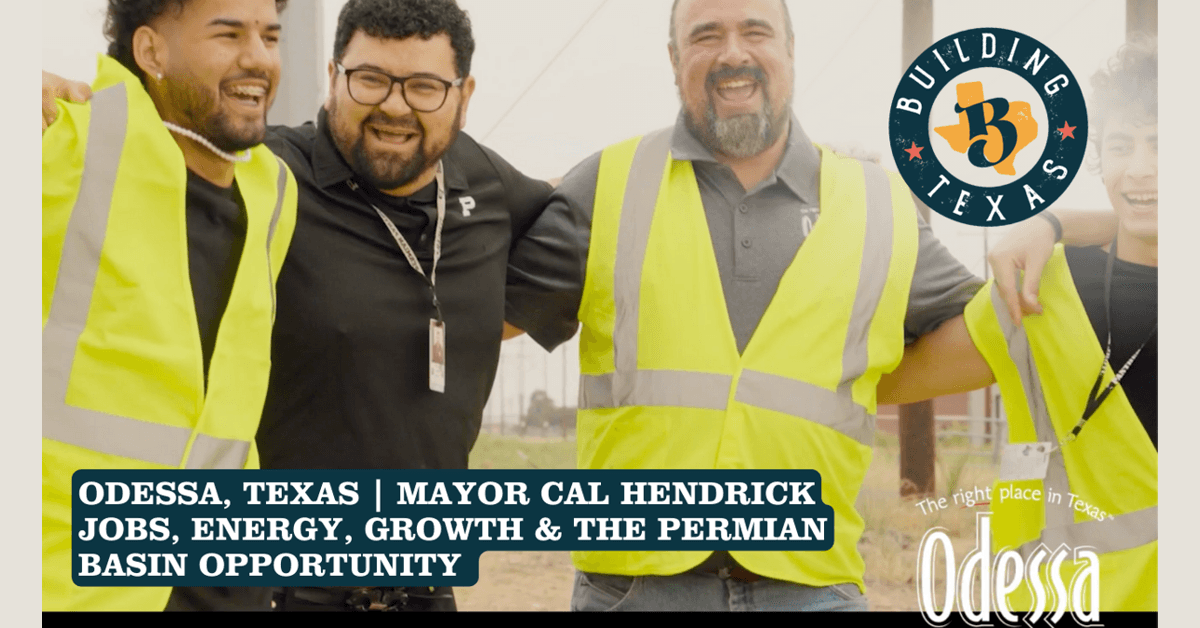
In a recent interview on The Building Texas Show, Odessa Mayor Cal Hendrick detailed how the Permian Basin region is evolving beyond its traditional energy foundations to build a more diversified and sustainable economy. While acknowledging that oil and gas remain central to Odessa's identity, Hendrick emphasized that the city's future prosperity depends on expanding into new sectors and preparing its workforce for high-demand careers.
"Odessa has always been about opportunity," Hendrick stated during the conversation with host Justin McKenzie. "If you're willing to work, learn a trade, or start a business, there is no shortage of demand here. We are underemployed, not overbuilt." This perspective underscores the region's ongoing need for skilled labor despite its economic transformation.
The mayor highlighted several key areas driving Odessa's economic momentum, including energy efficiency initiatives, emerging power sources, healthcare expansion, and higher education development. These sectors represent strategic priorities as the city positions itself for sustainable growth over the next five decades. Hendrick specifically noted the critical role of community colleges, universities, and workforce training programs in creating pathways to careers in welding, HVAC, plumbing, electrical work, trucking, and entrepreneurship.
Infrastructure planning emerged as another crucial component of Odessa's long-term strategy. Hendrick and McKenzie discussed the challenges of rapid population growth, including strain on water systems, roads, public safety resources, and healthcare facilities. The mayor emphasized the importance of master planning and fiscal responsibility in addressing these issues while maintaining the region's business-friendly environment that continues to attract investors and innovators.
Regional collaboration represents a significant shift in Odessa's approach to development. "Odessa is no longer isolated by geography," McKenzie observed during the interview. "With connectivity, capital, and workforce demand converging, this region is becoming a national brand for opportunity." This connectivity extends to partnerships with neighboring communities like Midland, reflecting a broader recognition that the Permian Basin's success depends on coordinated regional efforts rather than isolated municipal initiatives.
The full interview provides additional insight into how city governance functions in Odessa and the practical implementation of these economic strategies. Viewers can watch the complete conversation on YouTube at https://www.youtube.com/watch?v=OdessaTexasMayorCalHendrick. The episode is part of The Building Texas Show's ongoing series spotlighting Texas cities through conversations with mayors and civic leaders, offering audiences deeper understanding of local leadership and economic development across the state.
Odessa's economic transition carries significant implications for workforce development models nationwide, particularly for regions historically dependent on single industries. The city's approach demonstrates how traditional energy communities can leverage existing assets while building new economic pillars through strategic diversification. This matters because it provides a potential blueprint for other regions facing similar transitions, showing how workforce training, infrastructure investment, and regional cooperation can create sustainable economic futures beyond traditional industry cycles.