

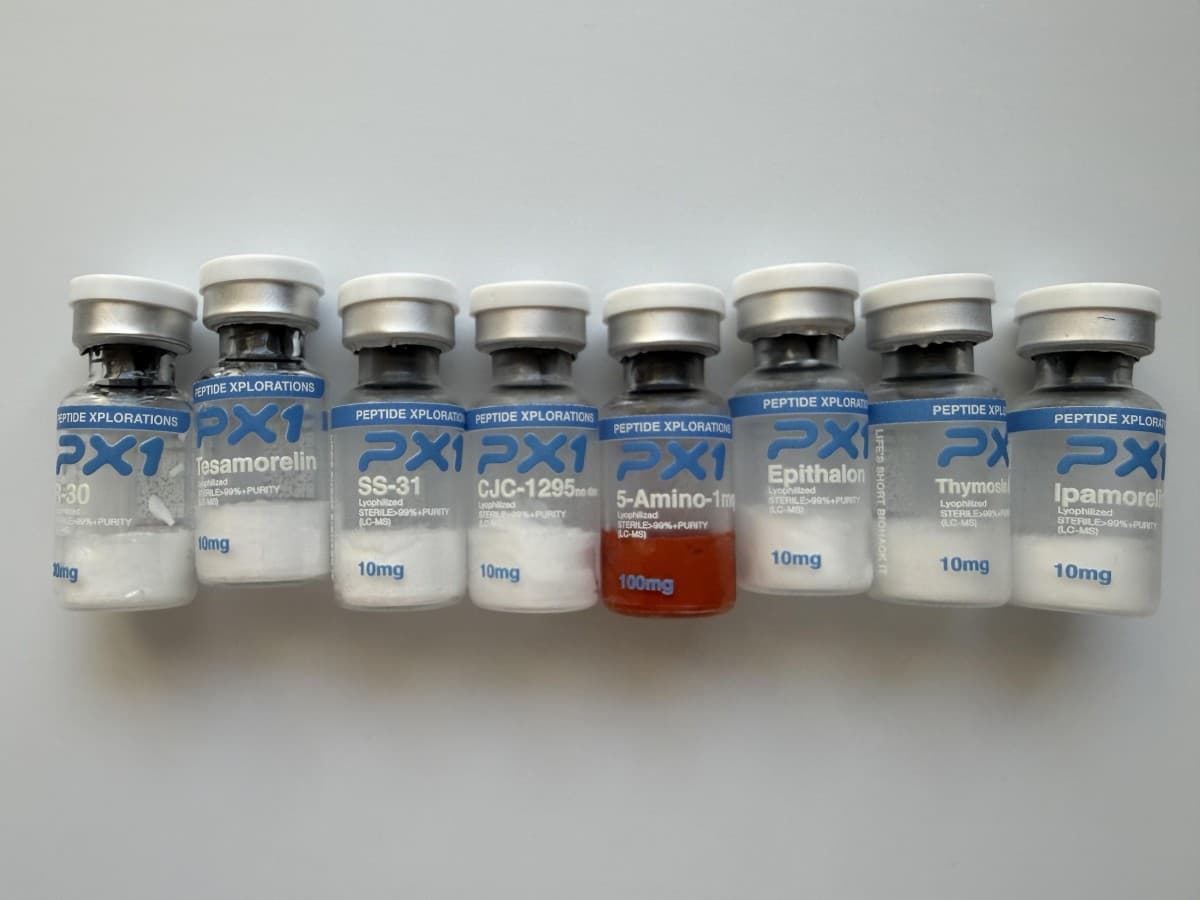
Newport Beach, CA – PX1 Research has announced that its domestically manufactured research peptides are now clearing a seven-stage batch testing protocol at 99%+ purity, with full certificate of analysis (COA) documentation and same-day shipping available on verified batches. The achievement marks a concrete expansion of the company's quality control standards, reinforcing its position among domestic suppliers applying pharmaceutical-grade verification methods to research-grade compounds.
Seven-stage testing sets a measurable benchmark. PX1 Research conducts all peptide manufacturing within cGMP certified domestic facilities, applying a sequential seven-stage batch testing process that culminates in HPLC mass-spectrometry verification. High-performance liquid chromatography (HPLC) combined with mass-spec analysis is widely recognized in analytical chemistry as one of the most precise methods for confirming compound identity and measuring impurity levels. By running every batch through this combined methodology, PX1 Research produces documentation that researchers can audit at the lot level.
Each shipment includes a COA that reflects the specific purity measurement recorded for that batch, giving end users traceability from production through delivery. The same-day shipping capability on verified batches reduces the delay between order confirmation and laboratory receipt, a logistical factor relevant to research timelines.
Domestic manufacturing and cGMP certification address a sourcing concern common in the research peptide supply chain. Internationally sourced compounds have historically presented variable documentation standards and inconsistent purity reporting. By maintaining domestic production, PX1 Research retains direct oversight of raw material sourcing, synthesis conditions, and environmental controls throughout the manufacturing process. cGMP, or current Good Manufacturing Practice, refers to the regulatory framework enforced by the U.S. Food and Drug Administration for production environments. Applying these standards to research peptides—compounds intended strictly for laboratory and scientific research use—introduces a level of process discipline not universally observed across domestic or international suppliers. The seven-stage testing sequence layers multiple analytical checkpoints across the production cycle rather than applying a single terminal test before release.
Among the high purity compounds available is research grade semaglutide, a GLP-1 receptor agonist that has attracted significant scientific interest in metabolic and endocrine research. Semaglutide presents particular analytical challenges due to its molecular complexity, making rigorous HPLC mass-spec verification especially relevant for batches of this compound. Researchers sourcing it from PX1 Research receive the same COA-backed documentation applied to other compounds in the portfolio.
Beyond purity figures, the COA documentation accompanying each shipment captures the specific analytical data generated during batch testing. This batch-level transparency allows researchers to cross-reference reported purity against the HPLC chromatogram data included in the certificate, rather than relying solely on summary figures. The combination of domestic cGMP production, seven-stage testing, HPLC mass-spec verification, and COA documentation at the batch level forms the core of PX1 Research's quality assurance approach. Same-day shipping on qualified batches is available, with the COA accompanying each order to support laboratory recordkeeping and research documentation requirements.
For researchers seeking reliable, high-purity compounds, this announcement underscores the growing importance of rigorous quality control in the peptide supply chain. By setting a measurable benchmark through seven-stage testing and transparent documentation, PX1 Research aims to provide a dependable source for scientific investigation.
