

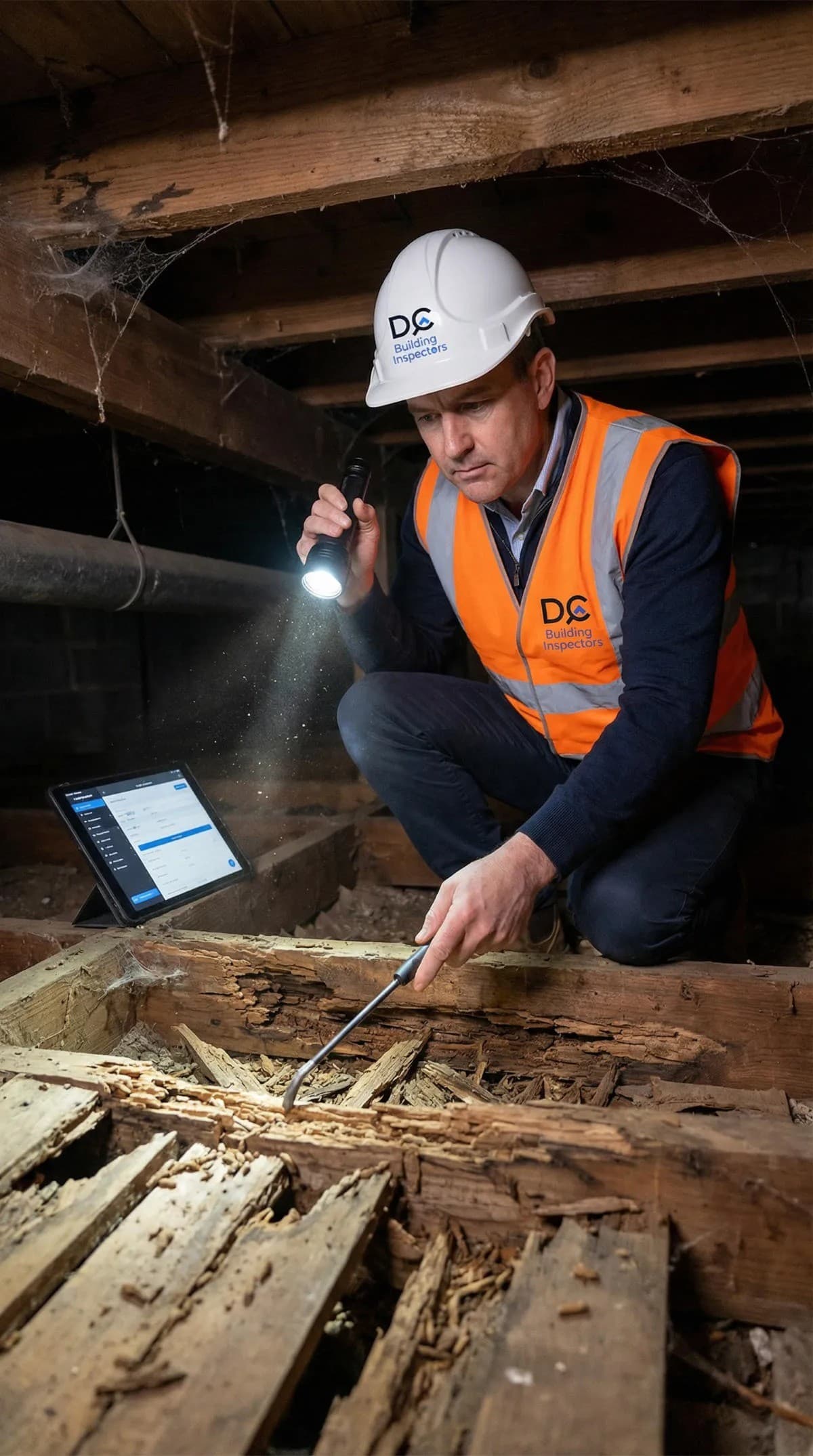
Melbourne home buyers who forgo building and pest inspections before settlement risk significant financial losses from hidden defects, according to data released by DC Building Inspectors Melbourne. The company's findings, drawn from its inspection portfolio, show that a notable proportion of inspected properties contained issues not visible during standard open-for-inspection walkthroughs, including concealed water ingress, subfloor moisture damage, structural movement, and active termite activity. In numerous cases, estimated rectification costs reached tens of thousands of dollars—expenses that fall entirely on the buyer once contracts are exchanged and settlement is finalised.
Real estate transactions in Victoria carry no implied warranty that a property is free from defect. Without an independent inspection report, buyers have no documented basis on which to negotiate price, request repairs, or exit a contract under a building clause. Termite damage represents one of the more significant financial risks. Termite colonies can remain undetected behind wall linings, within roof spaces, and beneath flooring for extended periods. Where infestations have caused load-bearing damage, structural timber replacement can cost between $20,000 and $80,000 depending on the extent of affected areas. A building and pest inspection conducted before purchase provides buyers with the information required to make an informed decision, rather than uncovering the problem months into ownership.
DC Building Inspectors Melbourne has structured its service model around the practical time constraints buyers face during property campaigns. Reports are delivered on the same day as the inspection, giving buyers documented findings before auction day or contract deadlines. The company operates seven days a week, including evenings until 9pm, to accommodate buyers unable to arrange inspections during standard business hours.
“In more than 50 years of combined experience across our team, we have seen buyers lose significant amounts of money because they either skipped the inspection entirely or used a report that did not cover both building and pest in a single assessment,” said David Childs, Director of DC Building Inspectors Melbourne. “Our same-day turnaround means buyers can book an inspection and have a full written report in hand within hours, not days—that time difference can be the difference between protecting yourself and inheriting someone else’s problem.”
The company's inspectors hold registration under the Victorian Building Authority and carry professional indemnity insurance. Each report is prepared to Australian Standard AS 4349.1 for building inspections and AS 4349.3 for timber pest inspections, providing buyers with documentation that satisfies lender and legal requirements. As a registered building inspector Melbourne buyers have engaged for both pre-auction and pre-settlement assessments, DC Building Inspectors Melbourne covers all property types including houses, townhouses, units, and older period homes that present an elevated risk of concealed defects. Reports include photographic evidence, plain-language descriptions of identified defects, and a clear categorisation of issues as major, minor, or maintenance-related.
For buyers without a construction background, distinguishing between a cosmetic issue and a structural defect is not straightforward during a standard walkthrough. A qualified independent inspector can identify problems inside roof cavities, under suspended floors, and behind external cladding that a buyer would have no practical means of assessing without professional assistance. DC Building Inspectors Melbourne also provides buyers with direct access to the inspector who conducted their assessment, allowing follow-up questions to be addressed before a final purchasing decision is made.
As competitive conditions across Melbourne’s property market prompt some purchasers to forgo standard due diligence, the findings underscore the importance of comprehensive pre purchase building and pest inspection services. Buyers who skip inspections do so at their own financial risk, with hidden defects carrying a heavy price tag that could have been avoided with a same-day report.
