A new consumer survey conducted by Fusion, a leading business-to-business marketing agency for fresh food, has revealed critical insights into the self-checkout landscape and its impact on fresh produce sales. The survey, which gathered responses from a wide range of shoppers, indicates both the growing popularity of self-checkout systems and the challenges they present, particularly for the fresh produce sector.
The findings show that over three-quarters of surveyed consumers regularly use self-checkout, with an impressive 90% expressing satisfaction with the experience. This high adoption rate underscores the importance of self-service options in today's retail environment. Privacy and speed emerged as the primary drivers for self-checkout usage, with many respondents citing self-consciousness and the desire for a quick, grab-and-go experience as their main reasons for choosing self-checkout over traditional cashier lines.
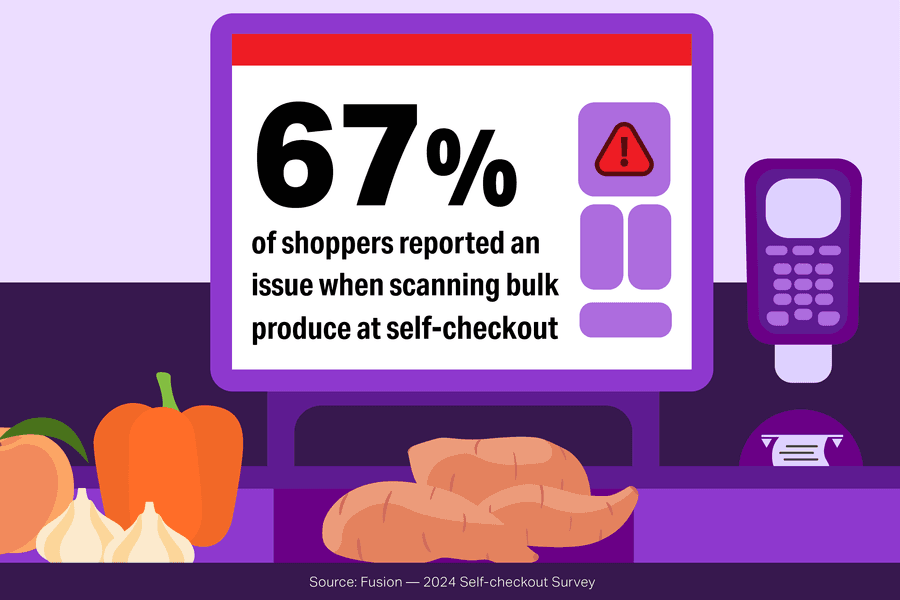
However, the survey also uncovered significant friction points that are causing missed sales opportunities, particularly in the fresh produce category. Nearly 60% of respondents reported difficulties when scanning packaged produce, while more than two-thirds faced issues with bulk produce items. These challenges, primarily related to barcode scanning, manual code entry, or navigating the register system, often result in frustration and, more critically, abandoned purchases.
Perhaps the most alarming statistic for produce companies and retailers is that 57% of shoppers admitted to leaving produce items behind at the register due to system confusion or lack of user-friendly instructions. This finding highlights a critical need for improved produce labeling and more intuitive self-checkout interfaces, especially for produce scanning.
The survey results offer valuable insights for both retailers and produce companies looking to enhance the self-checkout experience and increase sales of fresh produce. Respondents suggested several improvements, including more explicit on-screen instructions and audio prompts, with 14% specifically recommending these features. Additionally, enabling customers to continue scanning even when an issue arises could reduce interruptions and improve overall efficiency.
For the fresh produce industry, these findings are particularly significant. The high abandonment rate of produce items at self-checkout represents a substantial loss in potential sales. By addressing the scanning issues and improving the overall user experience, produce companies and retailers have an opportunity to recapture these lost sales and potentially increase overall produce consumption.
The implications of this survey extend beyond just the produce section. As self-checkout systems continue to proliferate across various retail sectors, the lessons learned from this study could be applied to improve the overall shopping experience. Retailers who invest in enhancing their self-checkout systems based on these insights may see improvements in customer satisfaction, operational efficiency, and sales across all departments.
Moreover, the survey highlights the changing dynamics of consumer behavior in retail environments. The preference for privacy and speed in checkout processes reflects broader societal trends towards personalization and efficiency in consumer experiences. Retailers and produce companies that can adapt to these changing preferences are likely to gain a competitive edge in the market.
As the retail landscape continues to evolve, the insights from this survey provide a roadmap for improvement and innovation in self-checkout technology. By addressing the challenges identified, particularly in produce scanning and user interface design, retailers and produce companies can work together to create a more seamless, efficient, and satisfying shopping experience for consumers. This, in turn, has the potential to drive increased sales, reduce waste, and foster greater customer loyalty in an increasingly competitive retail environment.