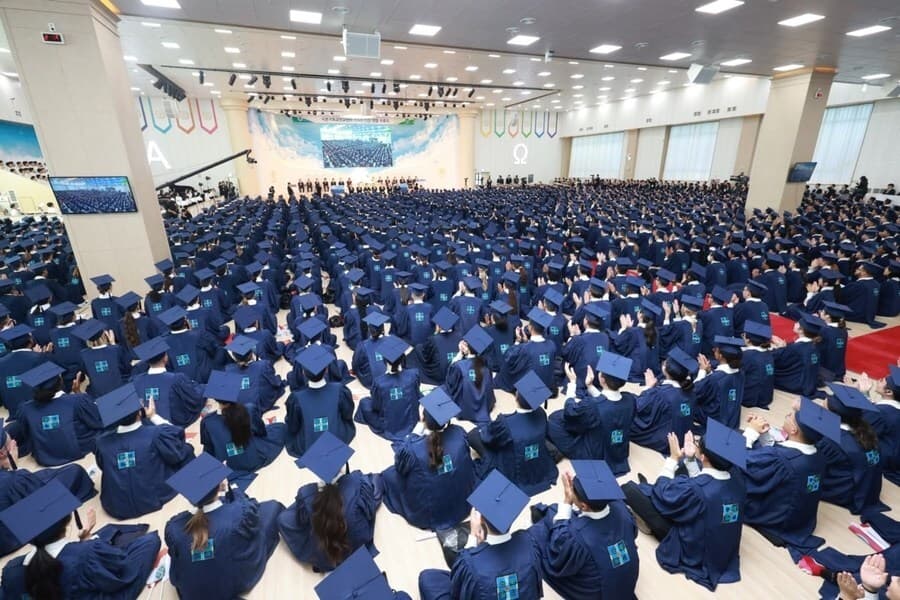
In a striking contrast to the declining religious participation trends in South Korea, the Shincheonji Church of Jesus has announced an unprecedented number of graduates from its Zion Christian Mission Center. The church reported a staggering 111,628 graduates in its 115th class, marking the fourth time it has surpassed 100,000 graduates in a single year.
The graduation ceremony, held on October 30 at the Shincheonji Cheongju Church, comes at a time when many religious institutions in South Korea are facing challenges. While Protestant and Buddhist congregations are experiencing a decline in numbers, with some places of worship even being auctioned off, Shincheonji Church of Jesus is demonstrating remarkable growth.
This surge in graduates is particularly noteworthy given the current religious climate in South Korea. The country has been witnessing a general trend of decreasing religious affiliation, making Shincheonji's growth an anomaly that warrants attention. The church's ability to attract and retain members, especially in such large numbers, raises questions about its methods and appeal in a rapidly secularizing society.
Chairman Lee Man-hee of Shincheonji Church of Jesus, in his sermon at the graduation ceremony, emphasized the church's comprehensive understanding of the Bible, including the Book of Revelation. He called for cooperation and mutual support among religious groups, suggesting a vision of religious harmony that could have broader implications for interfaith relations in South Korea.
The ceremony's international reach was evident, with 10,000 overseas graduates and 1,000 domestic and foreign religious figures in attendance. This global participation indicates the church's expanding influence beyond South Korean borders, potentially impacting religious dynamics in other countries as well.
Of particular interest is the significant number of pastors among the graduates and current students. The church reported that 3,377 pastors graduated in this class, with an additional 6,203 pastors currently enrolled in the Zion Christian Mission Center. This influx of religious leaders into Shincheonji's ranks could signal a shift in the theological landscape of South Korea and potentially influence the direction of Christian teachings in the country.
The growth of Shincheonji Church of Jesus amidst a general decline in religious participation raises important questions about the changing nature of faith and spirituality in modern society. It may prompt researchers and sociologists to examine the factors contributing to this church's success, including its teachings, community-building strategies, and appeal to younger generations.
As Shincheonji continues to expand, its impact on South Korea's religious and social fabric is likely to grow. The church's emphasis on biblical education and its ability to attract a diverse range of followers, including established religious leaders, suggests a potential reshaping of the country's spiritual landscape. This growth may also lead to increased scrutiny and discussion about the role of new religious movements in contemporary society.
The unprecedented number of graduates from Shincheonji Church of Jesus represents more than just a statistical anomaly; it reflects a significant shift in South Korea's religious dynamics. As the church continues to grow, its influence on the country's spiritual, social, and potentially political spheres may become increasingly pronounced, making it a phenomenon that merits ongoing observation and analysis.