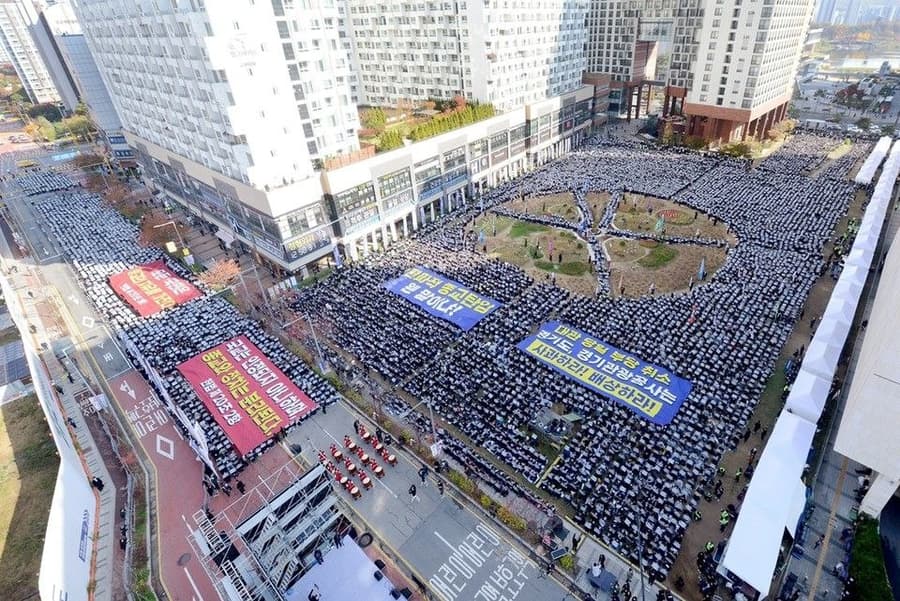
In a significant display of dissent, the Shincheonji Church of Jesus orchestrated a large-scale protest on November 15th in front of the Gyeonggi Provincial Office, South Korea. The demonstration was prompted by the Gyeonggi Tourism Organization's abrupt cancellation of a venue intended for a major international event on the same day it was scheduled to occur.
The cancellation, which affected a planned 110,000-person graduation ceremony set for October 30th in Imjingak, Paju, has ignited a heated debate about religious freedom and administrative impartiality in South Korea. Shincheonji Church officials assert that they had followed all legal procedures and received necessary approvals for the event, making the last-minute revocation particularly contentious.
Critics are labeling the tourism organization's actions as 'biased religious oppression,' pointing out that the decision has caused significant disruption and financial loss. The church had invested substantial resources in event preparation, and numerous religious leaders had already traveled from overseas to attend.
The incident has raised serious questions about the adherence to South Korea's constitutional guarantees of religious freedom. Specifically, the church argues that the cancellation violates Article 20 of the South Korean Constitution, which protects religious liberty. This situation has broader implications for religious organizations in the country, potentially setting a precedent for how administrative bodies interact with faith groups.
Allegations have surfaced that the venue cancellation was a result of political pressure from other religious groups, a claim that, if true, would represent a troubling intersection of politics and religion in South Korean society. The church contends that this is part of a larger pattern of persecution, citing previous incidents of forced investigations, tax probes, and arrests of its members.
The controversy surrounding Shincheonji Church is not new. For years, the organization has faced criticism and pressure from traditional churches and political entities. Some observers argue that the church has been used as a scapegoat in efforts to gain political favor and votes, drawing parallels to historical instances of religious persecution.
This latest development underscores the ongoing tension between newer religious movements and established institutions in South Korea. It also highlights the delicate balance that must be maintained between religious freedom and government oversight in a democratic society.
The protest by Shincheonji Church serves as a stark reminder of the importance of upholding constitutional values, particularly the separation of church and state. It challenges South Korean society to confront issues of religious prejudice and political manipulation of faith groups.
As this situation unfolds, it will likely prompt discussions about the need for clearer guidelines and more transparent processes in the approval and management of large-scale religious events. It may also lead to a reevaluation of how administrative agencies interact with religious organizations to ensure fair and equitable treatment regardless of their size or public perception.
The incident serves as a litmus test for South Korea's commitment to religious pluralism and the protection of minority faith groups. How the government and society at large respond to this protest could have far-reaching consequences for religious freedom and civil liberties in the country.
As the story develops, it will be crucial to monitor any legal challenges that may arise from this incident, as well as any potential policy changes that could affect religious organizations' rights to assembly and practice. The outcome of this controversy could shape the landscape of religious freedom in South Korea for years to come.