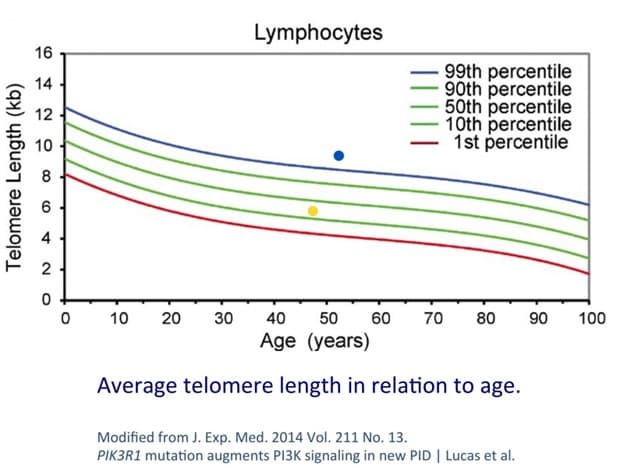
A groundbreaking six-year study conducted by entrepreneur Greg Lindberg has revealed that a rigorous program of intermittent fasting and exercise may reverse cellular aging by increasing the length of telomeres. This finding challenges the long-held belief in the Hayflick limit, which posits that cells have a predetermined lifespan.
Telomeres, the protective caps at the ends of chromosomes, typically shorten with each cell division and are considered a key indicator of cellular aging. Lindberg's study, which involved weekly water-only fasts exceeding 90 hours combined with daily physical and mental exercises, showed a remarkable increase in telomere length over the six-year period.
According to the study results, Lindberg's average telomere length increased from 7.01 kb to 10.46 kb between April 2018 and July 2024. This change represents a shift from the telomere length of an average 60-year-old to that of an 18-year-old, moving him from the 39th percentile to the 99th percentile in telomere length.
The implications of these findings are significant for the field of anti-aging research and potential disease prevention. Numerous scientific studies have linked telomere length to lifespan and overall health. Shorter telomeres are associated with age-related diseases and reduced survival rates, while longer telomeres are indicative of better health and longevity.
Lindberg's program, which he calls 'Only Eat On Weekends,' consists of water-only fasting for four days per week, combined with one to two hours of daily exercise during fasting periods. He emphasizes the importance of strenuous mental exertion, such as listening to science and engineering audiobooks at increased speeds while exercising, to stimulate neurogenesis.
The study's results are particularly noteworthy given the challenging circumstances under which they were achieved. Lindberg reports that the six-year period included significant personal stressors, including legal battles and time spent in federal prison. Despite these adversities, the fasting and exercise regimen appeared to counteract potential negative impacts on cellular health.
These findings challenge the conventional understanding of cellular aging and the Hayflick limit. Lindberg argues that his data suggests cells do not have a built-in, predetermined lifespan, and that telomere length can be increased through specific lifestyle interventions.
The potential impact of this research extends beyond individual health. If widely applicable, such interventions could have far-reaching implications for public health, potentially reducing the incidence of age-related diseases such as diabetes, heart disease, cancer, and Alzheimer's. This could lead to significant changes in healthcare approaches and potentially reduce the economic burden of age-related illnesses.
However, it is important to note that while these results are promising, further research and peer review will be necessary to validate the findings and determine their broader applicability. The extreme nature of the fasting regimen may also present challenges for widespread adoption and could have different effects on individuals with varying health conditions.
As the scientific community continues to explore the relationship between lifestyle factors and cellular aging, Lindberg's study provides a compelling case for the potential of intermittent fasting and rigorous exercise in promoting longevity and health. It opens new avenues for research into anti-aging interventions and challenges our understanding of the limits of human cellular lifespan.