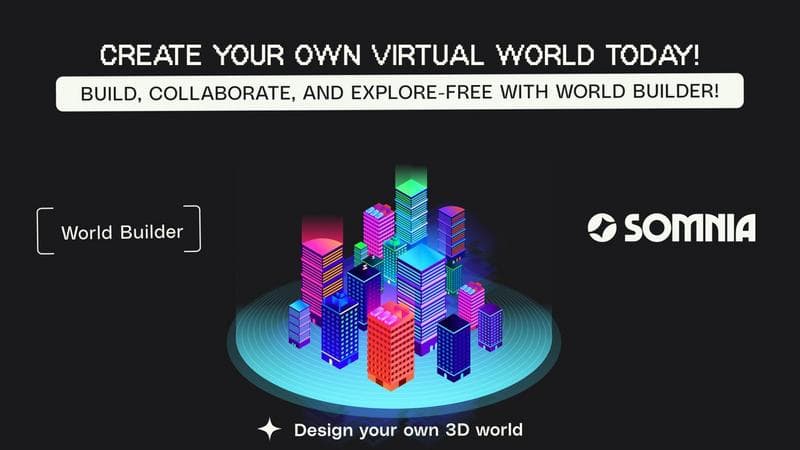
Somnia, a prominent Web3 project focused on blockchain solutions for NFTs, metaverse, gaming, and social applications, has unveiled World Builder, a new addition to its Dream Builder suite. This innovative tool is set to revolutionize the way creators develop immersive games and interactive experiences in the virtual realm.
World Builder offers a comprehensive platform that allows users to create fully-interactive, customized worlds tailored to their specific vision. The tool's versatility makes it suitable for a wide range of users, from game developers to event organizers, enabling them to design, construct, and launch unique experiences within the metaverse.
Somnia CEO Paul Thomas emphasized the tool's accessibility and power, stating, 'We've designed World Builder to be accessible yet powerful, providing everything needed to craft engaging virtual environments that can be enjoyed by players across the metaverse.' This approach aims to lower the barrier to entry for metaverse content creation, potentially leading to a surge in diverse and innovative virtual experiences.
The platform boasts several key features that set it apart in the rapidly evolving metaverse landscape. Users can start with a blank canvas or choose from various preset worlds and assets, offering flexibility in the creative process. The web-based nature of World Builder eliminates the need for software downloads, making it more accessible to a broader audience. Its visual editor rivals professional game engines in capabilities, while a code editor allows for deeper customization using JavaScript and MML markdown.
One of the most significant aspects of World Builder is its integration with the Somnia ecosystem. This feature allows for interoperability with Somnia assets and integrated NFTs, including popular collections like Bored Ape Yacht Club and Grillz Gang. This interoperability opens up new possibilities for collaboration and creativity within the virtual space, potentially increasing the value and utility of NFTs.
The launch of World Builder could have far-reaching implications for the metaverse and gaming industries. By simplifying the process of creating virtual worlds and experiences, Somnia is potentially democratizing metaverse development. This could lead to a more diverse and vibrant virtual ecosystem, with a wider range of creators contributing their unique visions and ideas.
For the gaming industry, World Builder represents a shift towards more user-generated content in virtual environments. This tool could empower indie game developers and small studios to create and launch games without the need for extensive resources or technical expertise traditionally required for game development.
The potential impact on the broader tech industry is also noteworthy. As more businesses and organizations look to establish a presence in the metaverse, tools like World Builder could become essential for creating virtual storefronts, meeting spaces, and other interactive environments. This could accelerate the adoption of metaverse technologies across various sectors.
Somnia's approach to launching World Builder, offering early access to a select group of creators, suggests a strategic rollout aimed at refining the tool based on initial user feedback. This could result in a more polished and user-friendly final product, potentially setting a new standard for metaverse development tools.
As the metaverse continues to evolve, platforms like World Builder may play a crucial role in shaping its future. By providing accessible tools for creating immersive virtual experiences, Somnia is contributing to the growth and diversification of the metaverse ecosystem. The success of World Builder could inspire further innovations in this space, ultimately leading to a more interactive, engaging, and user-driven virtual world.