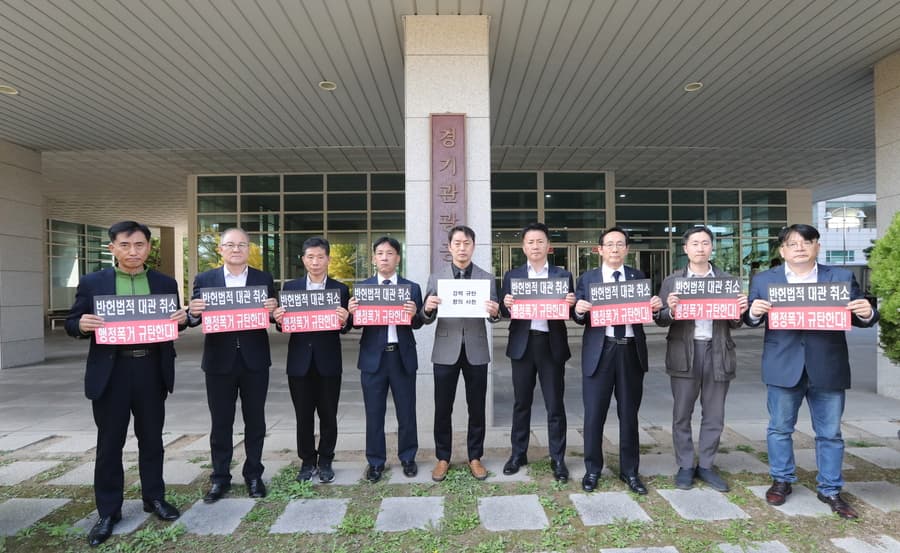
A recent administrative decision by a South Korean government agency has ignited international controversy and raised serious concerns about religious freedom in the country. On October 29th, the Gyeonggi Tourism Organization, a public entity under Gyeonggi Province, South Korea, abruptly canceled the venue rental for the "Religious Leaders Forum and Graduation Ceremony," a joint initiative by two prominent religious organizations. This last-minute decision has not only resulted in substantial financial damage but also called into question South Korea's commitment to religious tolerance and freedom.
The event, which was set to take place in Paju, South Korea, was expected to draw over 30,000 participants from 57 countries, including 1,000 religious leaders representing Christianity, Buddhism, Islam, and Hinduism. The hosting organizations, the Association for Buddhist National Unification of Korea and Shincheonji Church of Jesus, have stated that they had received official confirmation as recently as October 28th that there was no plan for cancellation.
The organizers have accused the Gyeonggi Tourism Organization of unconstitutional discrimination against a specific religion, violating religious freedom, human rights, and due process of law. They argue that the unilateral cancellation was an unreasonable administrative action targeting a specific religious group, pointing out that other events scheduled for the same day were not affected. This, they claim, suggests that the cancellation was an "administrative decision caused by opposition from a specific religious group," which "violates the principle of separation of church and state guaranteed by the Constitution."
While the Gyeonggi Tourism Organization cited security concerns related to recent North Korean actions and the planned activities of a North Korean defector group as reasons for the cancellation, critics have noted that other events, such as civilian bike rides and foreign tourist visits to the DMZ, were permitted within the same designated area. This inconsistency has further fueled suspicions of targeted discrimination.
The incident has reignited international debate about religious freedom and tolerance in South Korea. It comes in the context of previous concerns highlighted in the U.S. State Department's International Religious Freedom Report, which mentioned issues such as the prosecution of Shincheonji Church of Jesus and the government's refusal to approve mosque construction.
This event cancellation and its implications are significant for several reasons. First, it raises questions about the South Korean government's commitment to upholding religious freedom and equality under the law. The apparent targeting of specific religious groups could potentially damage South Korea's international reputation as a democratic nation that respects human rights and religious pluralism.
Second, the financial impact on the organizers and participants, many of whom had likely made travel arrangements from around the world, is substantial. This could have ripple effects on future international religious and cultural events in South Korea, potentially deterring organizers from planning such gatherings due to fears of last-minute cancellations.
Lastly, this incident may strain diplomatic relations, particularly with countries whose citizens were planning to attend the event. It could lead to increased scrutiny of South Korea's policies and practices regarding religious freedom by international human rights organizations and foreign governments.
As the controversy unfolds, the Association for Buddhist National Unification of Korea and Shincheonji Church of Jesus are calling upon the South Korean government to respect religious freedom, uphold human rights, and rectify this decision. They have also urged international organizations to monitor the situation and take appropriate action to protect religious freedom.
The outcome of this incident and the South Korean government's response will likely have far-reaching implications for religious freedom, international relations, and the country's image as a bastion of democratic values in East Asia. It serves as a reminder of the ongoing challenges in balancing security concerns with the protection of fundamental rights and freedoms in modern democracies.