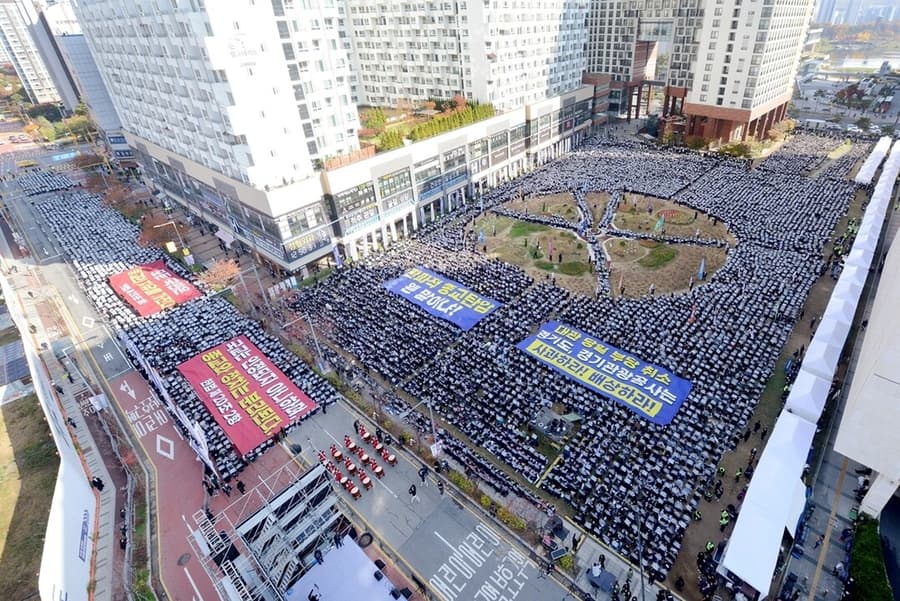
A decision by the Gyeonggi Tourism Organization (GTO) to cancel a significant religious event in Paju, South Korea, has ignited a firestorm of international criticism and raised serious questions about religious freedom in the country. The event, titled "Religious Leaders Forum and Graduation Ceremony," was set to bring together over 30,000 participants from 78 countries, including 1,000 religious leaders representing various faiths.
The cancellation, which occurred at 11 pm on October 29, just hours before the event was scheduled to begin, has led to a joint protest statement signed by 1,735 signatories, including 402 organizations, 758 religious representatives, and 977 individuals from around the world. The statement, delivered to the Government of the Republic of Korea on November 27, condemns the cancellation as an act of biased religious oppression through public power.
This incident has far-reaching implications for South Korea's international reputation and its commitment to religious freedom. The first clause of Article 20 of the South Korean Constitution guarantees freedom of religion for all citizens. Critics argue that the cancellation not only violates this constitutional right but also infringes on human rights and due process of law.
The abrupt nature of the cancellation has resulted in significant financial and psychological damage to the international participants and organizers. The event had been in planning for months, with the GTO approving the rental on July 22 and the organizers completing full payment of the rental fee on October 2. A working-level meeting on October 16 had reviewed all details and completed a safety inspection, with officials assuring organizers that the event would proceed despite Paju City being designated a danger zone due to potential North Korean provocations.
The timing and circumstances surrounding the cancellation have raised suspicions of external pressure. On October 28, a rally was hosted by 'SUGICHONG', a Christian council of the capital area of Korea, urging the cancellation of the venue rental. The following day, Gyeonggi Province Governor Kim Dong-yeon unilaterally notified the cancellation, citing security concerns related to recent North Korean actions and activities by a North Korean defector group.
The international community's response has been swift and decisive. Over 88 global leaders, including international law experts, religious leaders, education experts, heads of organizations, and journalists, have sent official documents and protest letters to the Republic of Korea. These communications express shock and disappointment at the administrative action and demand prompt and appropriate measures to address the situation.
The joint protest statement calls for several actions from the South Korean government. These include an official apology from the Gyeonggi Provincial Government and the Gyeonggi Tourism Organization to both domestic and international religious organizations and the global community. Additionally, the statement demands appropriate disciplinary actions against the officials responsible for handling this matter and the strengthening of fair and transparent venue reservation procedures and preliminary consultation systems.
This incident has broader implications for South Korea's international relations and its standing as a democratic nation that respects religious freedoms. It raises questions about the influence of domestic religious groups on government decisions and the potential for such actions to create divisions within the country. The controversy also highlights the delicate balance between security concerns and the protection of civil liberties, particularly in regions facing geopolitical tensions.
As the situation continues to unfold, the global community will be watching closely to see how the South Korean government responds to these allegations of religious discrimination and violation of constitutional rights. The resolution of this controversy could have lasting impacts on South Korea's reputation as a bastion of democracy and religious freedom in East Asia.