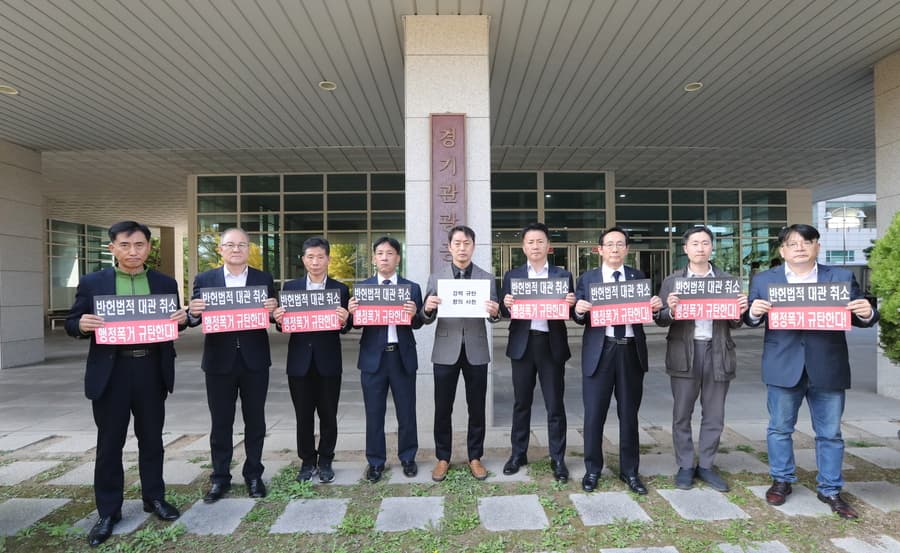
A recent administrative decision by the Gyeonggi Tourism Organization, a public entity under South Korea's Gyeonggi Province, has sparked international controversy and raised serious concerns about religious freedom in the country. The agency abruptly canceled the venue rental for the "Religious Leaders Forum and Graduation Ceremony," a joint initiative by two prominent religious organizations, just days before the event was scheduled to take place in Paju, South Korea.
The cancellation, which occurred on October 29th, has had far-reaching consequences. The event was expected to draw over 30,000 participants from 57 countries, including 1,000 religious leaders representing Christianity, Buddhism, Islam, and Hinduism. The last-minute nature of the decision has resulted in significant financial damage to the international event and its organizers.
The hosting organizations, the Association for Buddhist National Unification of Korea and Shincheonji Church of Jesus, have strongly criticized the decision. They argue that the cancellation constitutes an unconstitutional act of discrimination against a specific religion, violating religious freedom, human rights, and due process of law. The organizers stated that they had received official confirmation on October 23rd and 28th that there was no plan for cancellation, making the sudden reversal all the more perplexing.
The Gyeonggi Tourism Organization cited security concerns related to recent North Korean actions and the planned activities of a North Korean defector group as reasons for the cancellation. However, this explanation has been met with skepticism, as other events scheduled for the same day in the same area, including civilian bike rides and foreign tourist visits to the DMZ, were allowed to proceed.
This incident has reignited international debate about religious freedom and tolerance in South Korea. It comes in the context of previous concerns raised by the U.S. State Department's International Religious Freedom Report, which has highlighted issues such as the prosecution of Shincheonji Church of Jesus and the government's refusal to approve mosque construction in the country.
The implications of this decision extend beyond the immediate financial and logistical consequences for the event organizers. It raises fundamental questions about the state of religious freedom in South Korea and the government's commitment to upholding constitutional rights. The apparent targeting of specific religious groups through administrative actions threatens to undermine the principle of separation of church and state, a cornerstone of democratic societies.
Furthermore, the international nature of the event means that this decision has diplomatic ramifications. With participants from 57 countries affected, the cancellation could potentially strain South Korea's relationships with nations that value religious freedom and human rights. It also risks damaging South Korea's reputation as a modern, democratic nation that respects diverse beliefs and practices.
The Association for Buddhist National Unification of Korea and Shincheonji Church of Jesus have called upon the South Korean government to respect religious freedom, uphold human rights, and rectify this decision. They have also urged international organizations to monitor the situation and take appropriate action to protect religious freedom.
As this controversy unfolds, it serves as a reminder of the ongoing challenges faced by religious minorities worldwide and the importance of vigilance in protecting fundamental rights. The international community will be watching closely to see how South Korea addresses these concerns and whether it can reaffirm its commitment to religious freedom and tolerance in the face of this controversy.