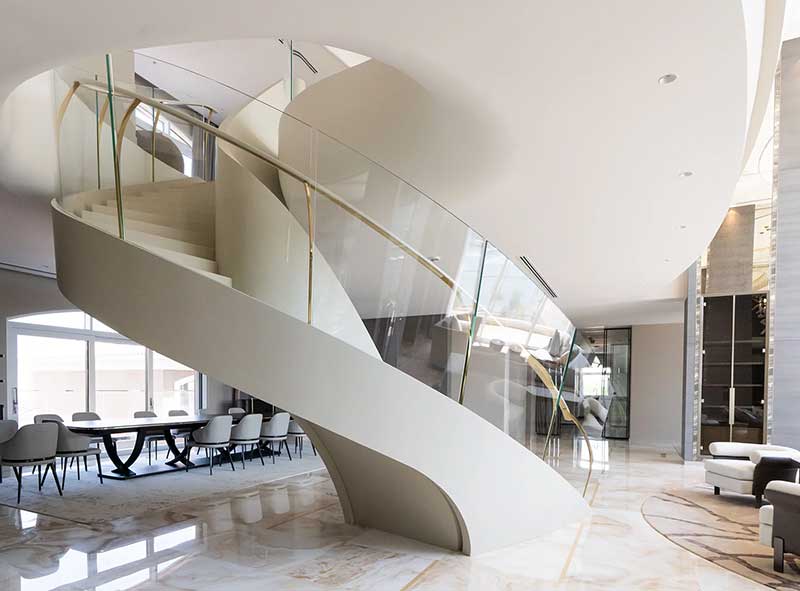
Spiral staircases have emerged as a popular architectural element, prized for their space-saving qualities and aesthetic appeal in both residential and commercial settings. As the demand for efficient use of space grows, particularly in urban environments, the importance of properly designed spiral staircases has become increasingly evident. However, the process of determining the dimensions and layout of these structures involves a complex interplay of factors that must be carefully balanced to ensure both functionality and safety.
The basic design of a spiral staircase revolves around three main components: the central pole, steps, and handrail. The choice of materials for these elements can significantly impact the overall look and feel of the staircase, with options ranging from traditional wood to modern metal or glass. Each material offers unique benefits, such as the warmth and elegance of wood or the durability and contemporary aesthetic of metal. This variety allows designers to tailor the staircase to complement the existing architecture and interior design of a space.
The initial phase of installing a spiral staircase involves precise measurements and planning. Determining the floor-to-floor height and the available diameter for the staircase is crucial, as these measurements will dictate the overall design and feasibility of the project. Professional designers play a vital role in this stage, utilizing advanced tools like CAD software to create accurate visualizations of the staircase within the intended space. This technology not only aids in design but also helps identify potential issues before construction begins.
Safety is paramount in staircase design, and spiral staircases are subject to specific regulations and design principles to ensure user safety. These include guidelines for step height and depth, handrail height, and the elimination of gaps that could pose risks to children or pets. Adherence to local building codes is essential, as these regulations can vary by location and may impact various aspects of the staircase's construction. Failure to comply with these standards could result in costly modifications or even the need to remove the staircase entirely.
While functionality is crucial, the aesthetic appeal of spiral staircases cannot be overlooked. These structures often become focal points within a space, contributing significantly to the overall ambiance and potentially increasing property value. The challenge lies in striking a balance between the practical space-saving benefits of a spiral staircase and its visual impact. Skilled designers can achieve this balance by carefully selecting materials, finishes, and design elements that harmonize with the surrounding architecture while still meeting all functional requirements.
Technological advancements have revolutionized the design and manufacturing process of spiral staircases. The use of 3D modeling allows for unprecedented precision in creating customized staircases that fit perfectly within designated spaces. Additionally, innovative manufacturing techniques such as laser-cutting and the use of modular components have streamlined the installation process, often resulting in quicker and more efficient construction with superior outcomes compared to traditional methods.
The importance of professional expertise in the design and installation of spiral staircases cannot be overstated. From navigating complex building regulations to ensuring structural integrity and aesthetic appeal, experienced professionals bring valuable knowledge to every stage of the project. Their involvement is crucial in transforming the concept of a space-saving staircase into a reality that enhances both the functionality and beauty of a building.
As urban spaces continue to evolve and the demand for efficient, multi-functional design grows, the role of spiral staircases in architecture is likely to expand. Their ability to combine practical space-saving solutions with striking visual elements makes them an attractive option for a wide range of applications. By carefully considering all aspects of design, from initial measurements to final installation, architects and designers can create spiral staircases that not only meet the practical needs of a space but also contribute to its overall aesthetic and value.