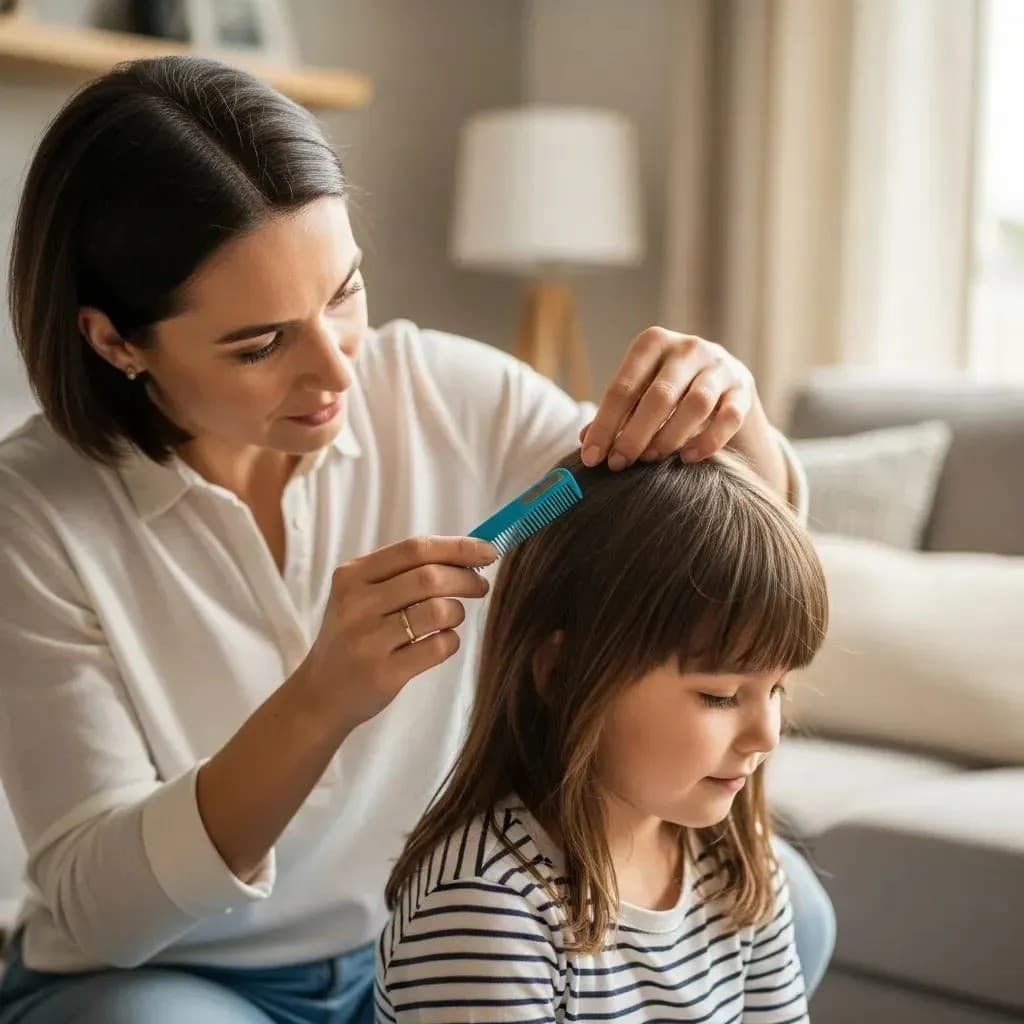
Georgia school lice data compiled from district health reports and school nurse documentation across the state shows that the 2025-2026 academic year has produced a notable increase in confirmed lice infestations when compared to previous years. Statewide figures indicate that lice-related referrals to school health offices rose by an estimated 20 to 25 percent compared to the same reporting windows two years earlier. Multiple metro Atlanta school districts reported higher-than-average case numbers per classroom during periods that historically see elevated activity following summer camps, holiday gatherings, and extracurricular events where children engage in close physical contact.
This increase matters because children identified with active infestations are routinely sent home, causing lost instructional time. Parents are then left to navigate an often confusing market of over-the-counter products, many of which rely on chemical pesticides such as permethrin or pyrethrin. A growing body of scientific research confirms that lice populations across many regions of the United States, including Georgia, have developed resistance to these compounds, significantly reducing their effectiveness compared to prior decades. Independent research published in peer-reviewed dermatology and pediatric journals has confirmed the widespread presence of what researchers refer to as "super lice," genetically adapted populations carrying a mutation known as the knockdown resistance mutation, or kdr. Studies tracking this mutation found it present in lice populations across more than 40 states, with Southern states including Georgia showing particularly high prevalence rates.
When a treatment fails to fully eliminate an infestation, the child returns to school still carrying active lice or viable eggs, perpetuating the cycle of transmission. School-based data from campuses across Fulton County and DeKalb County reflects this pattern, with repeat cases surfacing within weeks of an initial report. This resistance issue is central to understanding why outbreaks continue to persist and, in some cases, spread more broadly before being brought under control.
In response to these conditions, evidence-based providers are emphasizing chemical-free lice treatment. This method avoids the concerns linked to repeated chemical application on young children, making it especially relevant for families whose children have sensitive skin, neurological considerations, or other health factors that make pesticide-based treatments inadvisable. Choosing chemical-free treatment is not simply a lifestyle preference; it is increasingly the clinically supported path when addressing lice strains that have shown documented resistance to common active ingredients.
The head lice prevention Atlanta communities need extends well beyond reactive treatment after an infestation is discovered. Prevention strategies include avoiding head-to-head contact during group activities, refraining from sharing combs, brushes, hats, helmets, or hair accessories, keeping long hair tied back or braided during school hours, and performing routine visual checks of children's hair, especially at the nape of the neck and behind the ears where lice eggs, known as nits, are most commonly found. More information on prevention and treatment approaches is available at https://licehappensga.com/.
Stigma remains one of the most significant barriers to effective lice management. Many families delay seeking help or avoid notifying schools out of embarrassment, a response that directly prolongs outbreaks. Lice infestations carry no association with personal hygiene or socioeconomic background. Lice spread exclusively through direct head-to-head contact and show no preference for clean or dirty hair. Children across all types of households and school environments are equally susceptible. Reducing stigma makes it easier for families to act quickly and transparently, which ultimately benefits the entire school community.
For healthcare professionals and school nurses, establishing clear and consistent protocols is critical. The objective is to standardize the response across Atlanta-area schools so that the quality of guidance a family receives is not dependent on which school their child attends or which provider they contact first. Inconsistent messaging is one of the primary factors that allows outbreaks to extend beyond their original point of origin. Rather than defaulting to blanket "no-nit" policies, which the American Academy of Pediatrics has stated are not evidence-supported and contribute unnecessarily to school absences, a response framework built around prompt and effective treatment of confirmed cases combined with targeted screening of immediate classmates and household contacts is recommended. This focused approach limits community disruption while addressing the actual network through which transmission occurs.
Georgia school lice data from 2026 also reinforces the value of seasonal awareness. Cases tend to cluster at predictable times throughout the year. Checking children before the start of a new school term, after a sleepover, or following a summer or sports camp creates the opportunity to identify infestations early, when they are more manageable and less likely to have spread to additional children. Parents who suspect their child may have lice are encouraged to seek a professional screening rather than relying on self-diagnosis, as lice and nits are frequently mistaken for dandruff, hair product residue, or other debris.
The broader takeaway from the 2026 data is that communities investing in education and access to professional, effective treatment will experience shorter and less widespread outbreaks. Head lice prevention in Atlanta cannot be resolved through awareness campaigns alone. It requires accessible, reliable, and expert-led treatment backed by consistent communication among clinics, schools, and families.