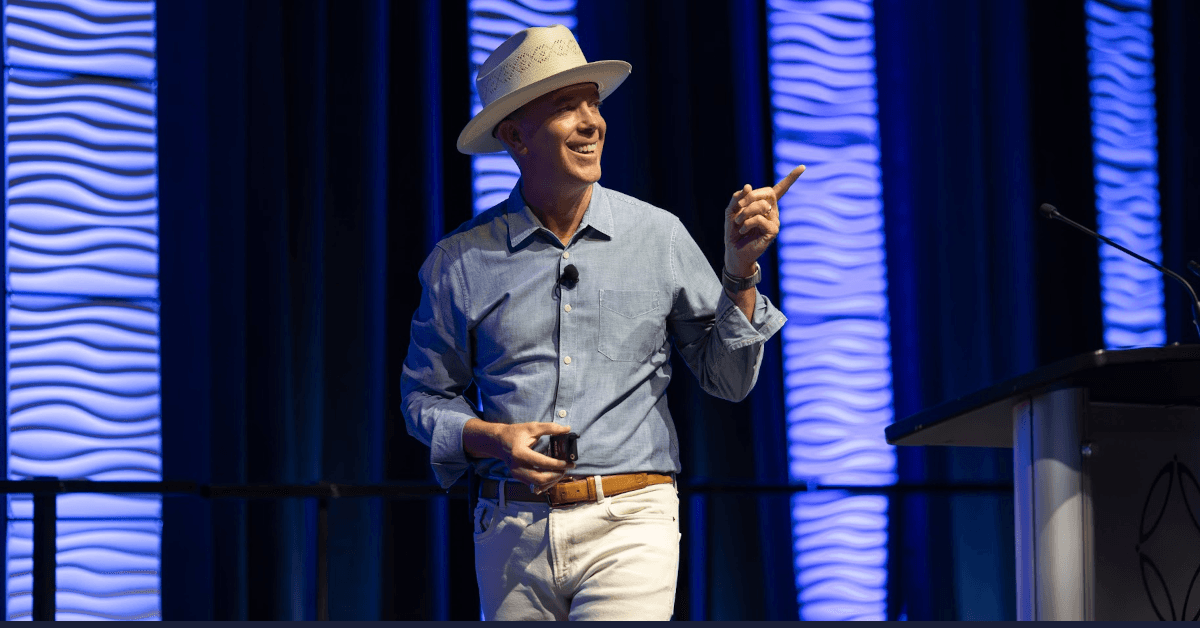
In a recent interview on the Building Texas Show, aerospace entrepreneur and military veteran Joseph Kopser outlined significant challenges facing the state's burgeoning space industry, emphasizing that Texas's economic future depends on bridging a critical workforce gap and revitalizing rural communities. The conversation, recorded at Dallas College during the Y Texas summit, highlighted Kopser's work through the Grayline Group and the newly formed Space Workforce Incubator for Texas (SWIFT).
Kopser, a West Point graduate and aerospace engineer, noted that while Texas has become a global hub for space exploration—hosting industry giants like SpaceX, Blue Origin, and Firefly Aerospace—the state faces a severe shortage of skilled labor needed to sustain this growth. "We have to have a workforce to build those rockets, to sustain life support systems, and to build spacecraft," Kopser told host Justin McKenzie. He stressed that the industry requires not just engineers but also skilled tradespeople, including plumbers, electricians, and welders capable of handling highly pressurized systems.
To address this shortage, Kopser co-founded SWIFT, an initiative designed to connect individuals aged 18 to 35 with vocational training and higher education opportunities. The program aims to ensure that the "Texas economic miracle" is not hindered by a lack of skilled workers. "People will be what they can see," Kopser remarked, underscoring the importance of early exposure to these career paths for students. More information about SWIFT can be found at https://www.graylinegroup.com/swift.
The discussion also focused on the "exporting of talent" from rural Texas, which Kopser identified as a major economic vulnerability. He argued that expanding fiber internet and developing autonomous supply chains present a historic opportunity to reverse the exodus of young people from small towns. "Now, with the reshoring of manufacturing and the ability to work remotely, you can live the quality of life you want in rural Texas while accessing the modern economy," Kopser said. He warned against hollowing out the middle class in these areas, advocating for high-paying jobs to complement existing service industries and retiree populations.
Kopser highlighted "dual-use" technologies—innovations that serve both national defense and commercial sectors—as key drivers for economic growth. He cited Texas-based companies like Apptronik, which specializes in humanoid robotics; Saronic, focused on autonomous watercraft; and LoCal, involved in biochar energy, as examples of private-sector innovation addressing public needs. These companies represent the type of high-tech employment that could anchor rural economies.
Recently launching a campaign to represent Texas House District 47, Kopser has positioned workforce development and economic revitalization as central to his platform. "The skills gap is widening, and the decisions we make today will shape Texas’s economy for decades," he stated. He criticized hyper-partisan politics for distracting from job creation and providing equitable opportunities for youth. To gather constituent input, Kopser has initiated a data-driven survey, continuing his advocacy through the organization USTomorrow, which promotes "people over politics." Details on his policy priorities are available at https://www.ustomorrow.org.
The implications of Kopser's warnings are substantial for Texas's economic trajectory. Without immediate action to train a skilled workforce and invest in rural infrastructure, the state risks losing its competitive edge in the space industry, potentially affecting thousands of jobs and billions in economic output. For residents, this could mean fewer high-wage opportunities and increased regional inequality, while for the industry, it may lead to project delays and increased operational costs. Globally, Texas's ability to maintain its role as a space exploration hub influences technological advancement and supply chain resilience, making this a matter of both state and national importance.