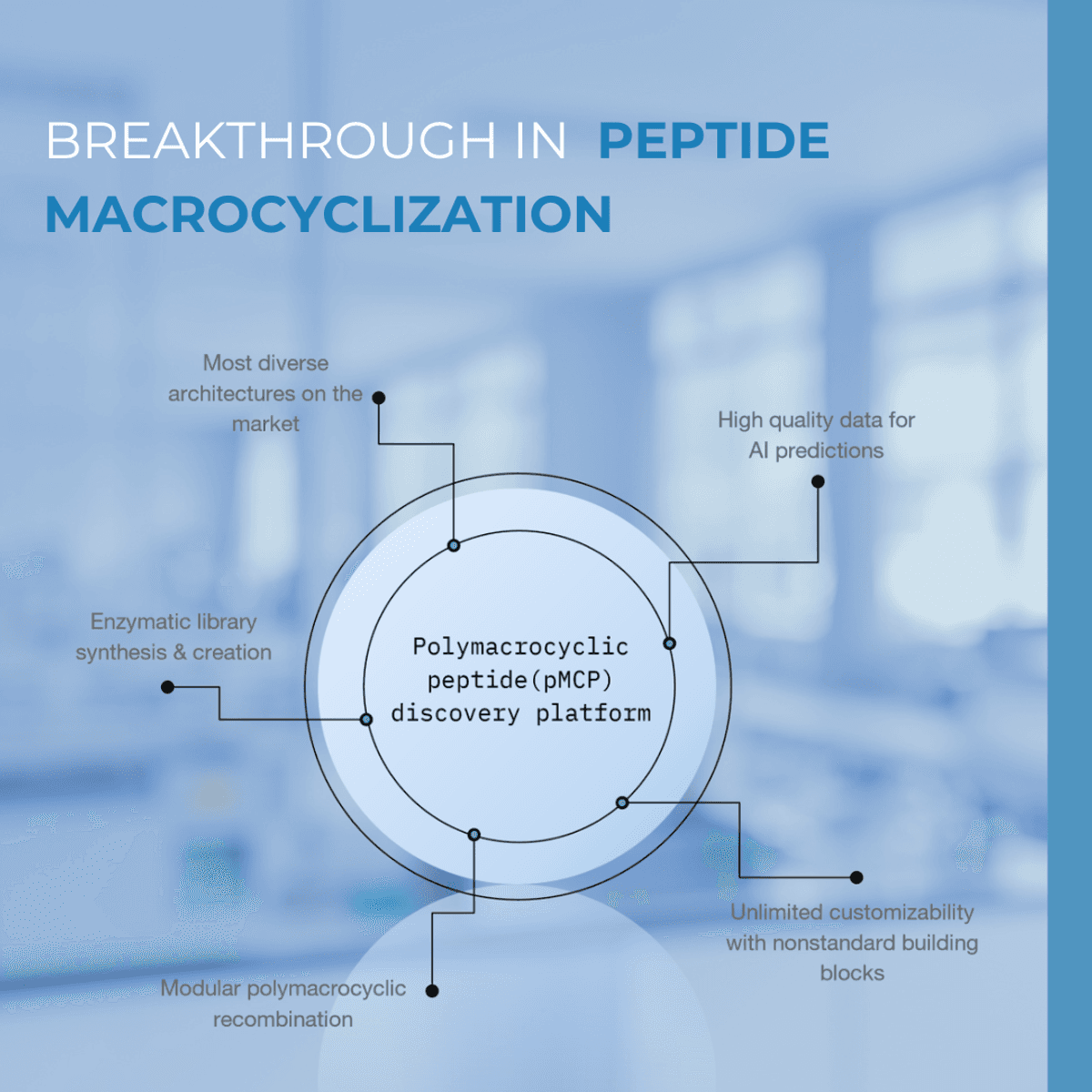
A University of Utah research team has demonstrated that a radical enzyme can modify therapeutic peptides into compact rings without the typical leader-sequence requirements, an advancement now transitioning from academic research to clinical development through Utah spinout Sethera Therapeutics. The findings, published in ACS Bio & Med Chem Au Journal, address critical limitations in peptide stability and tissue-targeting for next-generation incretin therapies.
GLP-1 receptor agonists have revolutionized diabetes and obesity treatment, but challenges remain in peptide stability and precise tissue targeting. This enzymatic innovation directly confronts these limitations by providing a programmable modification strategy that can be implemented late in drug development without extensive re-engineering of existing compounds.
First author Jacob Pedigo from the Vahe Bandarian Lab in the Department of Chemistry employed multiple analytical methods to confirm clean C-terminal thioether macrocyclization on GLP-1-pathway analogs. The research revealed that the rSAM maturase PapB can function leader-independently, still creating the intended thioether ring even when the recognition element domain is deleted or when the leader sequence is replaced with unrelated sequences.
This unusual combination of mechanistic specificity with substantial substrate flexibility simplifies translation because researchers can apply the same biocatalyst across multiple sequences with minimal re-engineering. Pedigo noted that the enzyme's tolerance for non-native leaders, swapped leaders, and non-canonical residues while still producing clean, single-ring products makes PapB feel like a practical tool rather than merely an interesting mechanism.
The implications for patient outcomes are significant. A compact C-terminal ring can block protease degradation, stabilize preferred receptor-binding conformations, and serve as a programmable attachment point for half-life extension or tissue targeting—features crucial for future incretin medicines. With Utah's established expertise in enzymology and peptide chemistry, the pathway from laboratory discovery to clinical application becomes more efficient and cost-effective.
Professor Vahe Bandarian, who also serves as Chief Scientific Officer at Sethera Therapeutics, emphasized that PapB delivers specific chemistry while relaxing sequence constraints that typically slow translation. This opens practical avenues to fine-tune approved peptide scaffolds late in development—addressing stability, signaling bias, and tissue targeting using a single, well-characterized enzyme.
The University of Utah holds patent interests in these findings, and Utah-based Sethera Therapeutics has been co-founded by Bandarian and Karsten A. S. Eastman to advance the technology. The work received support from the National Institutes of Health through grants R35 GM126956 and T32 GM122740, demonstrating how federal research investment in Utah science fuels local company formation and ultimately drives clinical innovation. For additional information about the technology, visit https://setheratx.com/.