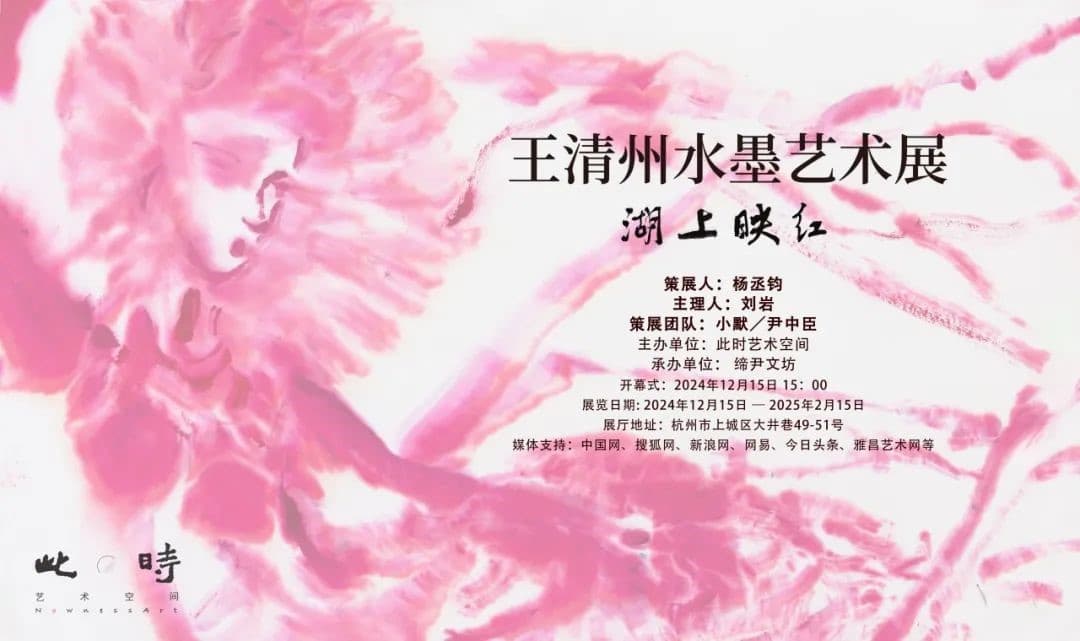
The art world is abuzz with the opening of 'Reflections on the Lake: The Color Ink Art of Wang Qingzhou' at This Moment Art Space in Hangzhou, China. Running from December 15, 2024, to February 15, 2025, this exhibition marks Wang Qingzhou's debut in Hangzhou and features over 20 color ink works that challenge traditional boundaries and offer a fresh perspective on contemporary Chinese art.
Curated by Yang Chengjun and hosted by Deyin Cultural Workshop, the exhibition showcases Wang's unique artistic vision, which seamlessly blends traditional Chinese ink painting techniques with Western artistic sensibilities. This fusion represents a significant development in the evolution of Chinese art, potentially influencing future directions in the field.
Wang's work is characterized by its focus on floral themes, presenting both tangible forms and abstract interpretations. This approach provides viewers with ample space for personal interpretation, a key aspect of contemporary art appreciation. The artist's style, described as a modern take on xieyi (freehand brushwork), captures the essence of contemporary life while maintaining a strong connection to traditional Chinese artistic philosophies.
The significance of this exhibition extends beyond the art world. It represents a broader cultural dialogue between East and West, showcasing how traditional art forms can evolve to remain relevant in a globalized context. Wang's ability to integrate Western elements into traditional Chinese ink painting demonstrates the potential for cross-cultural artistic exchange and innovation.
Curator Yang Chengjun highlights the four dimensions of Wang's approach: delving into tradition, embracing contemporary elements, drawing inspiration from nature, and enriching self-expression. This multifaceted strategy results in works that are both fresh and elegant, yet intensely expressive. The balance struck between vibrancy and structural discipline in Wang's compositions embodies the Eastern artistic philosophy of prioritizing spirit over form.
The exhibition also serves as a testament to the ongoing relevance of traditional Chinese artistic principles in the modern world. Wang's work demonstrates how ancient concepts, such as those expressed in Laozi's philosophy, can be reinterpreted and applied in contemporary art. This connection to cultural heritage, combined with modern sensibilities, could potentially inspire a new generation of artists to explore their cultural roots while pushing artistic boundaries.
From an international perspective, Wang's art offers insights into the evolving landscape of Chinese contemporary art. Having been influenced by his travels in Europe and exposure to Western art movements like Impressionism and Post-Impressionism, Wang's work serves as a bridge between Eastern and Western artistic traditions. This cross-pollination of ideas contributes to the global art dialogue and enhances mutual understanding between different cultural artistic expressions.
The exhibition's location at Hangzhou's West Lake, a UNESCO World Heritage site, adds another layer of significance. It symbolically places contemporary Chinese art in dialogue with the country's rich cultural and natural heritage, potentially attracting both art enthusiasts and cultural tourists, thereby boosting the local cultural economy.
As the art world continues to globalize, exhibitions like 'Reflections on the Lake' play a crucial role in showcasing the diversity and innovation within contemporary Chinese art. Wang Qingzhou's unique approach to color ink painting not only preserves traditional techniques but also propels them into the future, potentially inspiring new artistic movements and cross-cultural collaborations.
The impact of this exhibition extends beyond the immediate art community. It serves as a cultural ambassador, offering international audiences a window into the dynamism of contemporary Chinese art. As China continues to assert its cultural influence globally, exhibitions of this caliber contribute to a more nuanced understanding of Chinese artistic expression in the 21st century.