

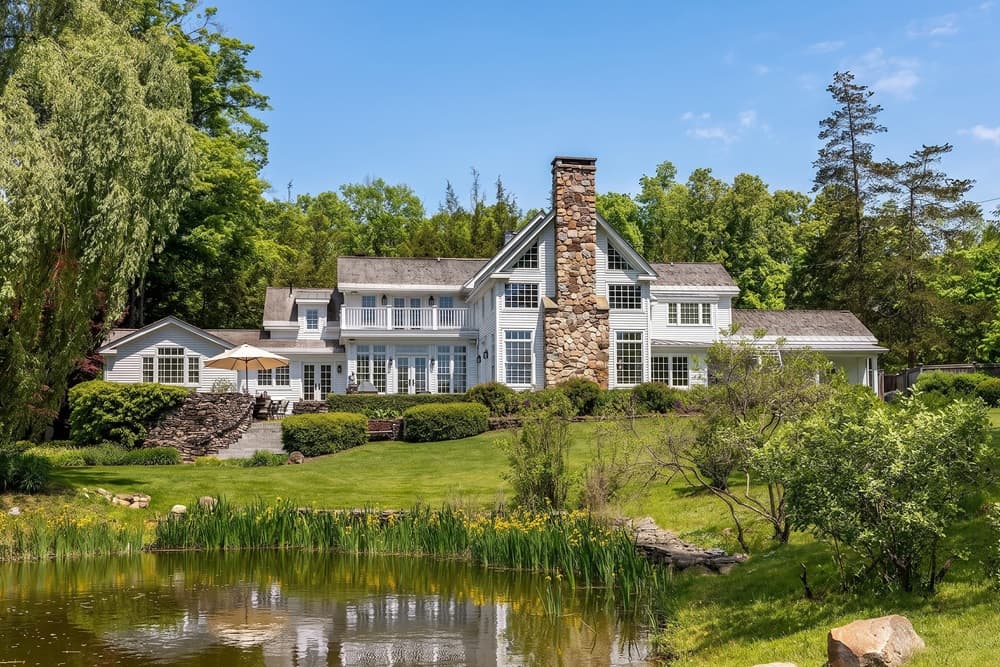
When buyers first arrive in the Litchfield Hills, Hudson Valley, and Southern Berkshires, they often picture a weekend retreat—a place to decompress, let the children run outside, and feel far from the city. Yet, according to Elyse Harney Morris, principal broker and owner at Elyse Harney Real Estate, many of these buyers find themselves staying longer, commuting less, and eventually deciding to make the region their permanent home. “They stay for a year,” she says, “and then one of them starts commuting a few days a week, and then the whole thing just stops, and they go: we’re staying.”
The region’s ability to retain buyers lies in its year-round offerings. Winter is anchored by Catamount Mountain Resort, which recently invested in a new lodge, expanded trails, and improved snowmaking. Families with skiers appreciate the proximity of a upgraded mountain resort. The region also hosts ski jumping on a 65-meter hill each February and will welcome the Junior Olympics for the second time, drawing national attention. Summer brings Tanglewood in Lenox, Massachusetts, where the Boston Symphony Orchestra performs and James Taylor’s July concerts have become a tradition. The Appalachian Trail, land trust properties, and growing electric bike trails provide outdoor activities that sustain engagement across years.
Beyond natural beauty, community infrastructure makes daily life feasible. Town centers like Salisbury offer walkable access to Lakeville Lake, restaurants, and year-round community institutions. The prep school network—including Hotchkiss, Salisbury School, and Berkshire School—provides educational options that attract and retain families. The farm-to-table culture, with farmers markets and pick-your-own operations, adds a local flavor that is hard to replicate elsewhere.
Permanent buyers approach the market differently. They prioritize school systems, medical infrastructure, and the character of towns in winter. Morris notes that the $2 million to $3 million price point is the most active segment, driven by buyers who have already spent time in the region and are formalizing their commitment. These purchases are not speculative; they are the result of a process that began with weekends and ended with a decision to stay.
The region’s strict zoning and land conservation programs ensure that what buyers are committing to will remain intact for decades. For those who decide to stay, this permanence is the point. “What brings buyers back is the realization that this region offers a complete life, not just a seasonal escape,” says Morris. The trend of weekend buyers becoming permanent residents reflects a broader shift toward places that deliver quality of life across all seasons.
