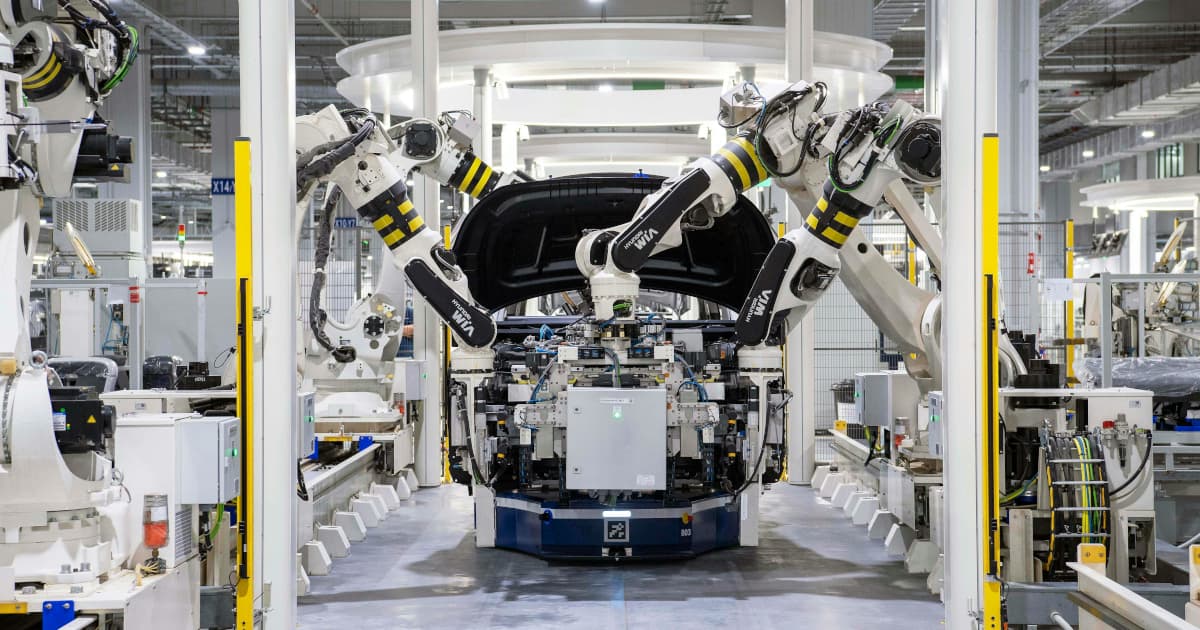
Chinese technology company Xiaomi has conducted a pilot trial using humanoid robots for active production work at its Beijing electric vehicle assembly plant. The trial involved two bipedal machines operating for three hours, achieving a task completion rate above 90%. This development represents the closest instance yet to a working proof of concept for humanoid robots in industrial manufacturing, an advancement the automotive sector has anticipated for years.
The successful deployment at Xiaomi's facility demonstrates that humanoid robotics technology has progressed from laboratory demonstrations to practical factory floor applications. For the electric vehicle industry, which faces intense pressure to optimize production efficiency and reduce costs, this trial suggests a potential pathway toward automating complex assembly tasks that have traditionally required human dexterity and adaptability. The achievement of a completion rate exceeding 90% in an initial pilot indicates the technology's readiness for more extensive testing and integration.
The implications of this development extend beyond a single company's operations. As noted in coverage from specialized industry platforms, other EV manufacturers are likely to monitor and potentially follow Xiaomi's lead. The integration of humanoid robots could reshape labor dynamics, production timelines, and competitive advantages within the global automotive sector. Industry observers can find further analysis on platforms such as GreenCarStocks.com, which focuses on news and developments in the electric vehicle and green energy markets.
This milestone is important because it moves humanoid robots from theoretical promise to tangible, measured performance in a real-world manufacturing environment. The automotive industry, a cornerstone of global manufacturing, has long sought automation solutions for intricate, non-repetitive tasks. Xiaomi's trial provides empirical data suggesting that humanoid robots can reliably perform in such settings. The potential impact includes increased production consistency, the ability to operate in environments designed for human workers without major retrofitting, and a shift in the skill sets required in advanced manufacturing.
For consumers and the broader market, the successful adoption of this technology could influence the speed, cost, and scalability of electric vehicle production. As the industry strives to meet growing demand, innovations in automation are critical. The trial also highlights the accelerating convergence of robotics, artificial intelligence, and automotive engineering, setting a precedent that may soon be adopted by other manufacturers seeking a competitive edge. The full terms and context for such industry developments are often detailed in communications from specialized sources, with disclaimers and further information available at resources like https://www.GreenCarStocks.com/Disclaimer.