

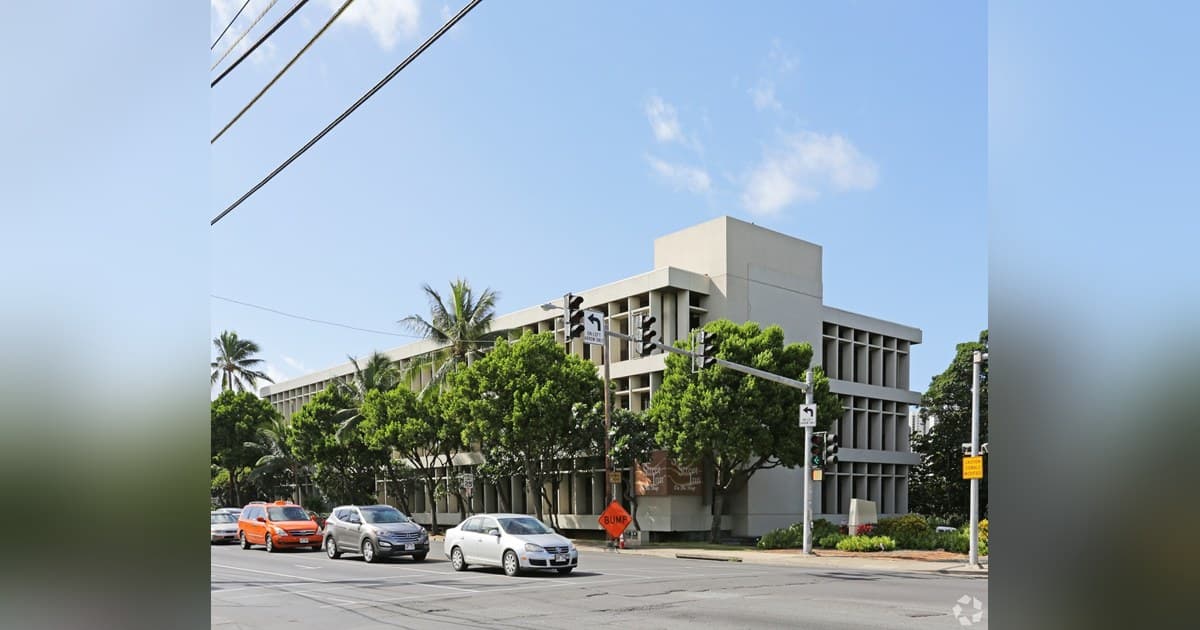
Two 20,000-square-foot office buildings in the same Hawaii city, with similar tenancy, can trade at startlingly different prices. While they may appear identical on a spreadsheet, the reasons for the price gap are identifiable, according to Mark D. Bratton, CCIM, of The Bratton Team at Colliers International Hawaii. In a market where investors underwrite commercial property, four variables account for most of the spread: condition, leasehold versus fee simple interest, scale, and physical inspection.
Physical condition is the most common explanation, and it measures future capital expenditure. A buyer evaluates what each asset will require to bring up to standard, to lease, and to maintain. Elevators, roofing, plumbing, and electrical systems all sit behind that number, and with construction costs where they are, the figure moves quickly. “You can quickly spend lots of money on any of these assets,” Bratton says. That expected spend is priced into the offer, which is why two buildings with identical income can attract materially different bids. Newer product carries a related premium because its capital requirements sit years out rather than immediately.
The largest single driver of spread in Hawaii is whether the buyer is acquiring fee simple interest or a leasehold position. More than half of investors will not consider leasehold under any conditions. That alone narrows the buyer pool enough to move pricing. Bratton puts the differential at roughly 200 basis points: where a fee simple building prices at 6.75 percent, the leasehold equivalent might begin around 8.75 percent. He frames that as a starting point for investigation rather than a conclusion. Leasehold is not one thing; a building with two years remaining before reversion and a building with 99 years at nominal rent are entirely different propositions that share a label.
For leasehold assets, the terms that matter most concern when and how the ground rent resets. The conventional Hawaii structure runs about 60 years, with the first 30 years fixed and known, and renegotiation to fair market value at ten-year intervals thereafter. That structure exists because a lessee constructing a building needs a term long enough to amortize the cost, repay the lender, and earn a return. Shorter terms suit different situations. Bratton points to a current listing where an owner-user intends to sell and lease back, with a ten-year term on offer and flexibility to extend. The building already exists, so the tenant is simply converting real estate equity into working capital.
In multifamily, one Hawaii pattern runs counter to mainland expectations. Multifamily is among the most desirable asset classes in the state because most investors understand it. That broad comprehension means a deep buyer pool, which compresses cap rates. But that logic reverses at scale. A recently traded 23-unit building in town, in excellent condition, priced at about a five cap on a roughly $10 million basis. A 400-unit building that sold earlier this year traded at a considerably higher cap rate, because a $200 million transaction has far fewer possible buyers. For investors operating in the middle of the market, the competitive advantage sits with the smaller check.
Cap rate comparisons across asset classes tell you less than they appear to, because each class carries a different risk structure. A hotel reprices every night and depends on tourism volume and airlift. A building let to a creditworthy tenant on a 20-year leaseback with guaranteed monthly payment requires almost nothing of its owner. Those are different businesses, and the yields reflect it. Multifamily sits at the lower end of the range, office at the higher end, for reasons rooted in how investors perceive risk rather than in the buildings themselves.
The step Bratton returns to is the least technical and, in his account, the most frequently underweighted. “Go touch them, go feel them, go walk them,” he says of buildings that look equivalent on paper. Access and egress, circulation, road conditions, how the site actually functions: these are the differences that separate two apparently identical assets, and they do not appear in an offering memorandum. Sight-unseen acquisitions still happen, though far less than in the 1980s, and most buyers now send a representative or arrange a video walkthrough at minimum.
For anyone pricing Hawaii assets, the composite lesson is that the spread between two similar buildings is rarely arbitrary. It is condition, tenure, scale, and what the walkthrough revealed. Recently closed transactions show how those variables resolve in practice. As investors navigate this market, understanding these factors can mean the difference between a sound investment and a costly oversight.
