Recent consumer analysis indicates that 63% of customers who initially opted for hardness-only water treatment systems returned within 18 months seeking chemical filtration, fueling the rise of combined treatment solutions in fluoridated areas. According to monitoring data from the Centers for Disease Control released in January 2025, 72% of community water systems across the U.S. now fluoridate their water supply, providing this additive to nearly 198 million Americans daily. This prevalent municipal practice, coupled with the detection of PFAS across 47 states and continued use of chloramine in urban treatment facilities, has significantly influenced homeowners' approaches to residential water treatment.
This shift in consumer behavior is reflected in sales data: Independent retailers report that installations of combination softener-filter systems now account for 41% of whole-house treatment sales in 2024, a substantial increase from just 19% in 2021. Industry experts attribute this surge to "partial solution regret"—the costly realization that while addressing hard water scaling, neglecting chemical additives leads to inadequate protection. Geographic trends reflect chemical detection areas, with mapping of PFAS contamination by the Environmental Working Group identifying per- and polyfluoroalkyl substances in drinking water affecting over 200 million individuals. These same areas are witnessing notable increases in dual-treatment residential system adoption.
In states like Arizona, Nevada, and Texas—where both hardness levels are high and municipal fluoridation efforts are robust—there has been a reported 67% year-over-year increase in combination water treatment installations during 2024. Florida's utilities, known for their heavy use of chloramine, show similar trends. "We're observing buyers who recognize that municipal compliance does not equate to optimal water quality," stated Jeremy Phillips, Sales Manager at SoftPro Water Systems. "A homeowner may find city water testing indicating 8 grains of hardness with 0.9 ppm fluoride and detectable chloramines—all within EPA acceptable limits, yet all posing long-term risks."
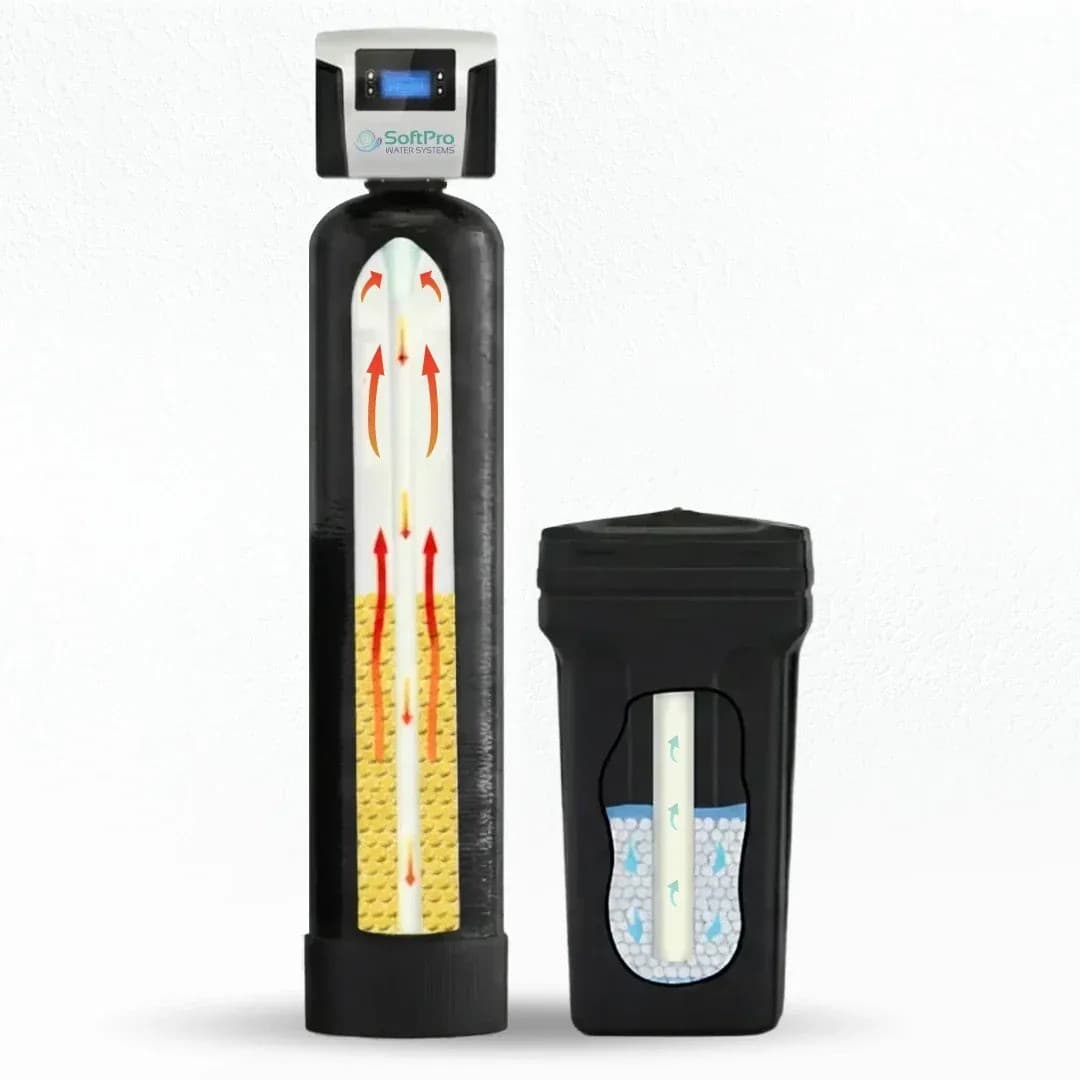
Engineering responses to this demand include series treatment architecture that combines water softening with chemical filtration. SoftPro's solution pairs its Elite HE Water Softener with the Fluoride & Chlorine+ SUPER Filter in a sequential arrangement. The softener efficiently removes calcium and magnesium through high-efficiency ion exchange, employing upflow regeneration that reduces salt usage by 30% compared to traditional systems. The filtration stage utilizes dual-media technology that merges catalytic carbon with bone char. Laboratory tests, certified under NSF/ANSI Standard 42 protocols, demonstrate 99% fluoride reduction, 98% chlorine removal, and 95% PFAS capture throughout the filter's lifespan of 600,000 to one million gallons.
Economic analysis favors integrated deployment. Research from market analysis firm BlueTech Intelligence reveals that homeowners who opt for sequential water treatment systems—first addressing hardness and later incorporating chemical filtration—spend an average of $1,840 more than those who install combination systems from the start. This additional cost arises from duplicate installation labor, separate warranty management, and complexities of managing two vendor relationships. The monthly operating expenses for combination systems average between $8 and $12 for salt and routine maintenance in a four-person household.
The regulatory landscape reinforces dual-treatment logic. The EPA's shifting position on PFAS regulation—including proposed maximum contaminant levels for PFOA and PFOS at four parts per trillion—along with ongoing scientific discussions regarding optimal fluoride exposure levels, has heightened homeowner awareness of chemical additives beyond traditional hardness issues. Surveys conducted by the Water Quality Association in late 2024 revealed that 58% of participants now consider "removal of government-added chemicals" just as crucial as hardness treatment when assessing whole-house systems.
NSF International's certification standards for combined treatment systems now include testing protocols that validate performance across multiple contaminant classes simultaneously, providing third-party assurance that integrated designs maintain efficiency without interference between treatment stages. The combined approach also addresses concerns regarding installation timing: homeowners can avoid disruptions associated with retrofit filtration projects by implementing complete treatment infrastructure during initial installation.
Industry trajectory points toward point-of-entry standardization, with water treatment consultants anticipating that combination systems will become the predominant category for residential installations by 2027. This shift is driven by ongoing PFAS discoveries, persistent fluoridation practices, and homeowners' recognition that municipal compliance standards prioritize minimum safety levels rather than optimal quality. As municipal water treatment facilities grapple with regulatory compliance, aging infrastructure, and emerging contaminant challenges, residential point-of-entry systems increasingly serve as the optimization layer that transforms "safe enough" water into "exactly right" water.