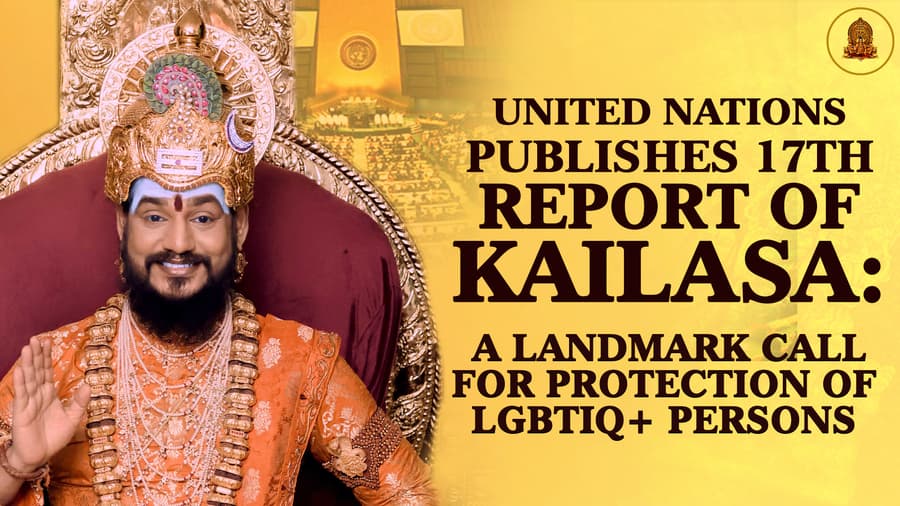
In a significant development for LGBTIQ+ rights, KAILASA has submitted its 17th report to the United Nations, shedding light on the persistent discrimination and human rights abuses faced by LGBTIQ+ individuals globally. The report, which draws attention to the criminalization of same-sex relationships in 64 countries, calls for urgent international action to address these issues.
The report's findings reveal a stark reality for LGBTIQ+ persons in many parts of the world. In countries where same-sex relationships are criminalized, penalties range from fines to life imprisonment, with some regions even imposing death sentences. This alarming situation underscores the critical need for global intervention and policy changes to protect LGBTIQ+ rights.
A key aspect of KAILASA's submission is its emphasis on Hinduism's historical recognition of gender diversity. The report cites ancient Hindu scriptures, including the Śvetāśvatara Upaniṣad, Srimad Bhagavatam, and Manusmriti, which acknowledge eleven genders and support same-sex marriages. This historical context serves to challenge contemporary discriminatory practices and highlights the potential for religious traditions to foster inclusivity.
The report also delves into the teachings of The Supreme Pontiff of Hinduism (SPH), Bhagavan Nithyananda Paramashivam, who provides insights into the complex nature of gender. According to the SPH, gender is an interplay of physical, psychological, physiological, and consciousness-based factors. This holistic understanding of gender identity offers a nuanced perspective that transcends traditional binary classifications.
KAILASA's report brings attention to the lasting impact of colonialism on indigenous gender concepts. It points out how colonial laws, such as Article 377 in India, criminalized homosexuality and disrupted pre-existing cultural practices that respected gender fluidity. This historical analysis provides crucial context for understanding the roots of current discriminatory policies in many countries.
As the first sovereign state for Hindus, KAILASA positions itself as a beacon of inclusivity and non-violence. The report outlines KAILASA's commitment to reviving and preserving Hindu traditions that promote harmony and recognize the intrinsic divinity of all beings, regardless of gender or sexual orientation. This stance is particularly significant given the global context of ongoing LGBTIQ+ persecution.
The resilience of KAILASA and its leader, the SPH, in the face of severe persecution is noteworthy. Despite facing assassination attempts, sexual assaults, and hate campaigns, KAILASA has remained steadfast in its advocacy for LGBTIQ+ rights. This unwavering commitment underscores the importance of their voice in the global discourse on human rights.
The implications of this report are far-reaching. By bringing these issues to the forefront of international attention, KAILASA is contributing to the global dialogue on LGBTIQ+ rights and challenging nations to reconsider discriminatory policies. The report's emphasis on religious and cultural traditions that support gender diversity provides a powerful counterargument to those who use religion to justify discrimination.
Moreover, KAILASA's advocacy for LGBTIQ+ rights from a position of non-violence and inclusivity offers a model for other organizations and nations. It demonstrates how deeply held spiritual beliefs can align with and support modern human rights principles.
As the world continues to grapple with issues of equality and human rights, KAILASA's 17th report to the UN serves as a crucial reminder of the work that remains to be done. It challenges global leaders and policymakers to take concrete steps towards protecting LGBTIQ+ individuals and fostering a more inclusive society. The report's message is clear: the fight for LGBTIQ+ rights is not just a matter of law or policy, but a fundamental issue of human dignity and equality that requires immediate and sustained global attention.