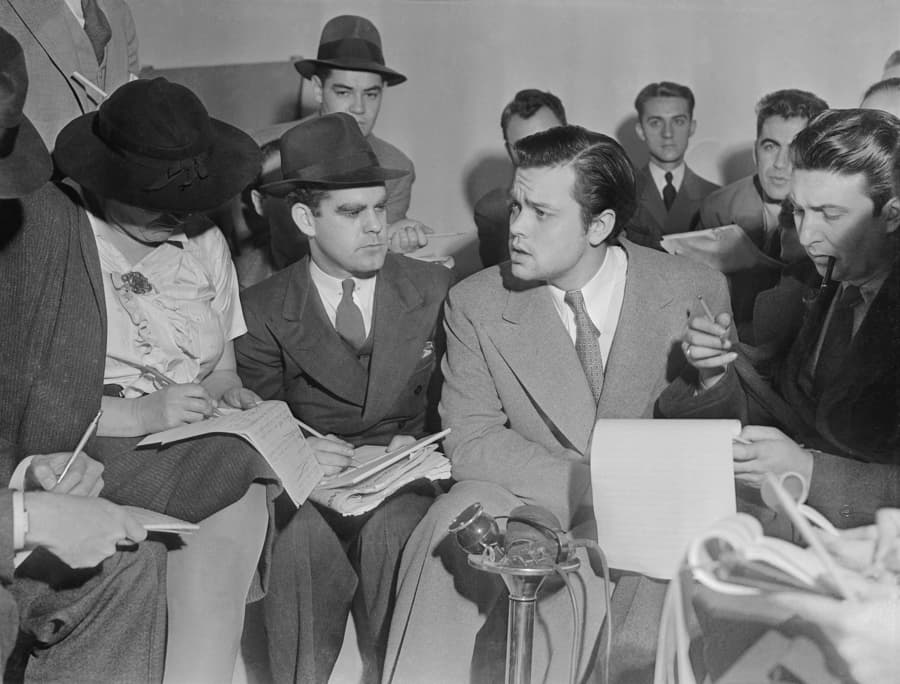
A new book released today challenges the recent revisionist history surrounding Orson Welles' infamous 1938 'War of the Worlds' radio broadcast. 'Dead Air: The Night Orson Welles Terrified America' by national bestselling author William Elliott Hazelgrove argues that the broadcast's impact was far more significant and widespread than contemporary interpretations suggest.
Hazelgrove's work, which has received positive reviews from The Wall Street Journal, Publishers Weekly, and Booklist, is based on extensive research of thousands of newspapers from the period. The author contends that the broadcast reached between six to twelve million listeners, significantly more than the less than one million claimed by some recent accounts.
The book paints a vivid picture of the chaos that ensued across America on the night of October 30, 1938. According to Hazelgrove's research, the broadcast led to numerous incidents of panic, including heart attacks, suicides, people fleeing from public spaces, and widespread confusion. 'People literally ran for the hills and refused to come back even when they were told it was only a broadcast,' Hazelgrove stated.
The author attributes the widespread belief in the broadcast to several factors. The use of a breaking news bulletin format, combined with the public's trust in radio fostered by Franklin D. Roosevelt's Fireside Chats, created a perfect storm for mass panic. Additionally, the tense international climate, with war looming in Europe, heightened public anxiety and made the scenario of an alien invasion seem more plausible to many listeners.
Hazelgrove's work is significant as it challenges the narrative that has gained traction in recent years, which downplays the impact of the broadcast. By returning to primary sources, the author provides a compelling case for the broadcast's profound effect on American society at the time.
The implications of this research extend beyond historical interest. It raises important questions about media influence, mass psychology, and the power of storytelling. In an era of fake news and information warfare, understanding how a radio broadcast could cause such widespread panic offers valuable insights into the relationship between media and public perception.
Furthermore, the book's release coincides with growing interest in the potential for extraterrestrial life and the public's reaction to such discoveries. The parallels between the 1938 broadcast and modern-day scenarios of first contact provide food for thought for both scientists and policymakers considering how to communicate potential discoveries to the public.
'Dead Air: The Night Orson Welles Terrified America' also serves as a reminder of the power of radio as a medium, even in today's digital age. The book underscores how audio storytelling can captivate and influence audiences in ways that visual media cannot always match.
As debates continue about the role of media in society and the nature of truth in reporting, Hazelgrove's work offers a historical perspective that is both timely and relevant. By reexamining this pivotal moment in American cultural history, the book invites readers to consider how they might react to extraordinary news in their own time and how vulnerable we might still be to manipulation through media.
The release of 'Dead Air' on November 19th by Rowman and Littlefield promises to reignite discussions about this famous broadcast and its place in American cultural memory. For historians, media scholars, and general readers alike, the book offers a fresh perspective on an event that continues to fascinate and provoke thought nearly a century after it first aired.