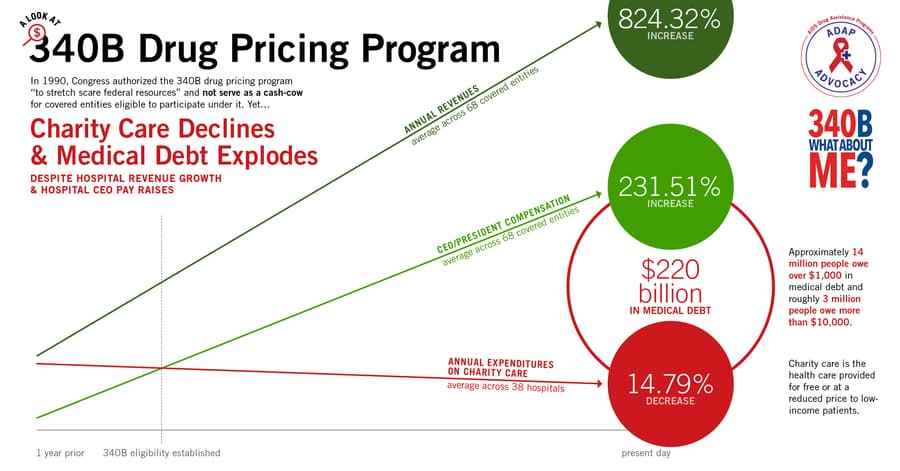
ADAP Advocacy, an organization dedicated to improving access to care for people living with HIV/AIDS, has released a series of infographics that shed light on concerning trends within the 340B Drug Pricing Program. The infographics, published as part of ADAP Advocacy's 340B Project, reveal a troubling disconnect between the program's intended benefits and the reality faced by patients.
The 340B Drug Pricing Program, established in 1992, was designed to help provide discounted medications to safety-net healthcare providers serving vulnerable populations. However, the new infographics suggest that the program may not be achieving its goals as effectively as intended. According to ADAP Advocacy's findings, hospital charity care is on the decline, while medical debt is simultaneously skyrocketing. This trend is particularly alarming given that hospitals participating in the 340B program are experiencing revenue growth and their CEOs are receiving pay raises.
The release of these infographics comes at a critical time when the Ryan White Grantee 340B Patient Advisory Committee, sponsored by ADAP Advocacy, has been increasingly focused on the issue of medical debt and its impact on patients living with chronic illnesses and rare diseases. This heightened attention underscores the growing concern about the effectiveness of the 340B program in serving its intended beneficiaries.
The implications of these findings are significant for both patients and the healthcare industry. For patients living with HIV/AIDS and other chronic conditions, the rise in medical debt coupled with declining charity care could lead to decreased access to necessary medications and treatments. This situation may exacerbate health disparities and potentially lead to poorer health outcomes for vulnerable populations.
For the healthcare industry, these infographics raise questions about the allocation of resources within the 340B program and the accountability of participating institutions. The discrepancy between hospital revenue growth and the decline in charity care suggests a need for greater transparency and potentially revised regulations to ensure that the program's benefits are reaching those who need them most.
Policymakers and healthcare advocates may use this information to call for reforms to the 340B program, aiming to realign its implementation with its original intent. This could lead to changes in how hospitals and other healthcare providers are required to use the savings generated from the program, potentially mandating a certain percentage be allocated to charity care or debt relief for patients.
The release of these infographics also highlights the important role that organizations like ADAP Advocacy play in monitoring and reporting on healthcare programs. By bringing these trends to light, ADAP Advocacy is fostering a dialogue about the effectiveness of the 340B program and advocating for improvements that could benefit patients living with HIV/AIDS and other chronic conditions.
As the healthcare landscape continues to evolve, the insights provided by ADAP Advocacy's infographic series may serve as a catalyst for change, prompting stakeholders to reevaluate the 340B program's implementation and impact. The ultimate goal remains to ensure that vulnerable populations have access to affordable medications and quality healthcare, a mission that appears to be facing significant challenges based on the trends identified in these infographics.