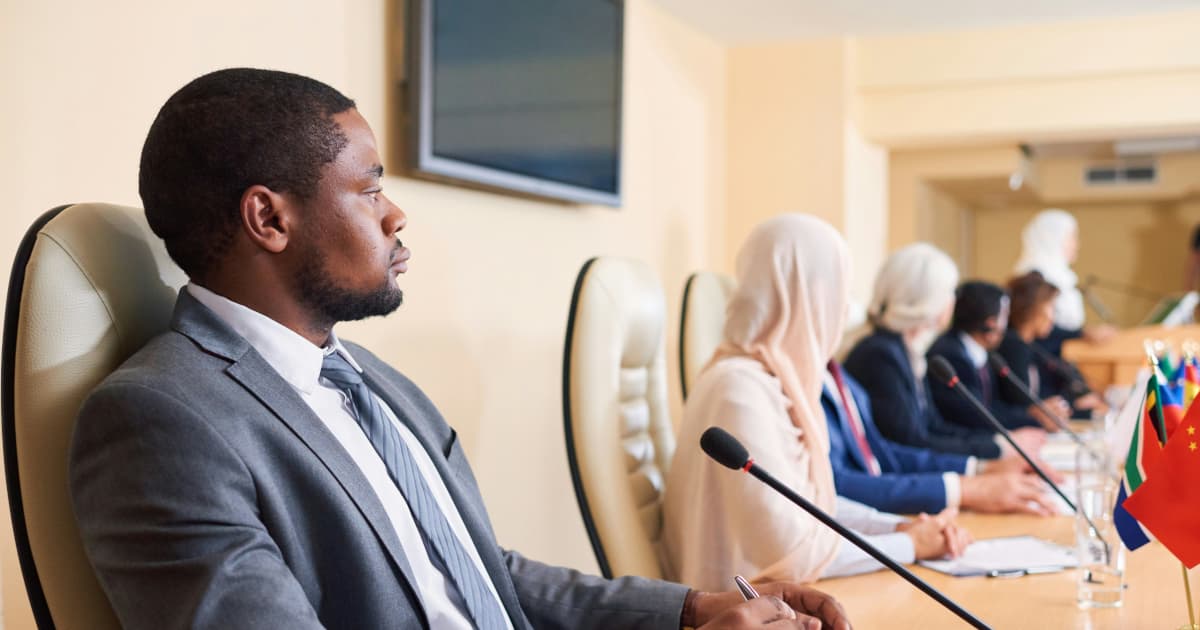
His Imperial and Royal Highness Amir, Prince-Regent of the recently restored Imperial and Royal House of Luxembourg-Görlitz, has issued a call for global unity, emphasizing diplomacy and conflict resolution as essential responses to escalating geopolitical tensions. A decorated military veteran and public servant, Prince Amir argues that security requires collaborative justice rather than mere absence of conflict, stating the world is at a crossroads where past conflicts threaten future unity.
Prince Amir's approach is guided by the principle of "Justice through Service, Sovereignty through Knowledge," focusing on three pillars for stability. The first is humanitarian diplomacy, advocating for neutral, high-level support to relief organizations delivering aid in conflict zones without political bias. The second pillar involves cultural reclamation as peacebuilding, promoting the preservation of historical legacies to foster deeper understanding between Western and African nations and reduce friction from historical erasure. The third is chivalric professionalism, which aims to bridge modern military service with ethical leadership to ensure those in power act with universal accountability.
The restoration of the House of Luxembourg-Görlitz, which honors a fragmented history connecting Royal Plantagenet sovereignty and Mende lineage, provides Prince Amir with a platform for this advocacy. He views this heritage not merely as a ceremonial title but as a mandate for modern service, engaging with diplomatic peers and local communities to demonstrate that traditional values of honor and duty are vital for navigating 21st-century crises. More information on the House's mission can be found at https://www.24-7pressrelease.com.
This initiative matters because it addresses a critical gap in international relations: the need for active partnership over isolated interests in an era of rising conflict. By prioritizing humanitarian aid without bias, Prince Amir's framework could mitigate suffering in war-torn regions, while cultural preservation efforts may heal historical divisions that fuel contemporary tensions. For industries like global diplomacy and non-governmental organizations, this call reinforces the importance of ethical engagement and cross-cultural collaboration. On a broader scale, if adopted, these principles could foster a more stable global order, reducing the risk of large-scale conflicts and promoting sustainable peace through shared humanity and accountability.