

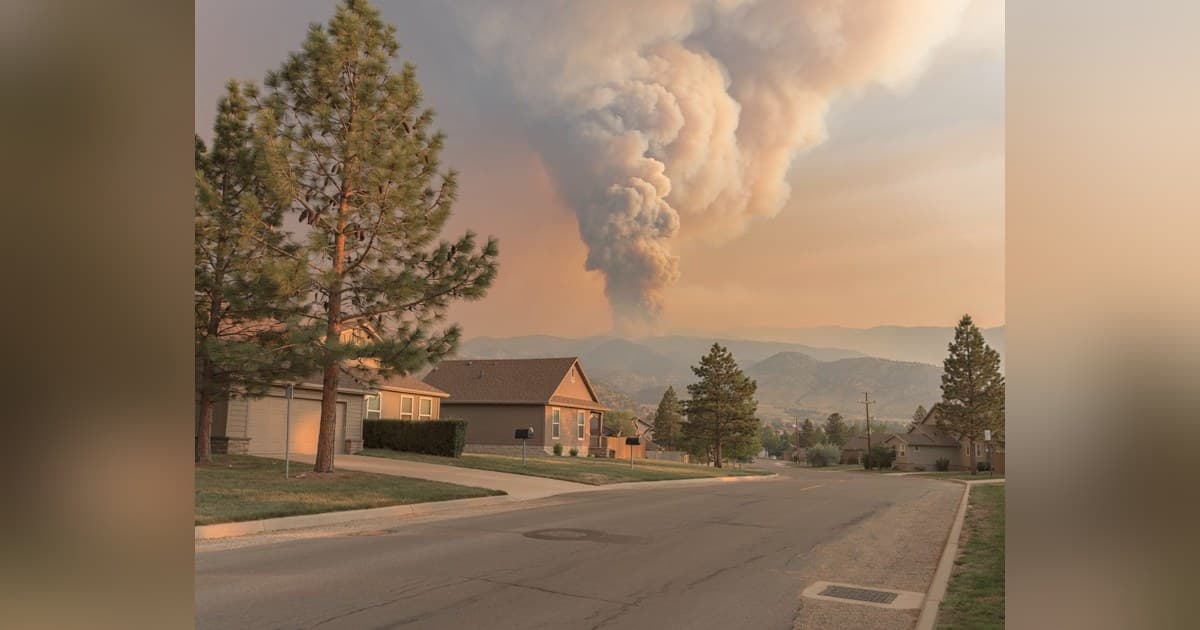
When the Aspen Acres Fire ignited on June 29, 2026, in southern Colorado, it grew explosively within hours, eventually burning more than 100,000 acres and ranking among the largest wildfires in state history. The blaze destroyed over 850 structures and forced roughly 4,000 people from their homes as evacuation orders shifted rapidly. For self-managed communities without a professional management company on call, reaching residents in that kind of environment falls to the board and the tools it has in place.
East Hatchet Ranch, a self-managed community caught in the path of the fire, used its HOA software to reach every household as conditions changed by the hour. The community relied on HOA Start’s communication tools – email, text messaging, and community updates delivered through its member portal – to keep residents current on evacuation guidance and conditions as the situation developed.
“There was so much information coming from so many directions at the time – it was overwhelming,” said Meegan Guarino, Vice President of East Hatchet Ranch. “What we were able to do through HOA Start was bring it all together in one organized community email, with updates from local officials, fire maps, weather reports, and important documents all in one place. For neighbors who couldn’t access certain emergency apps, that was a game changer.”
The experience points to a role for community association software that extends well beyond dues, documents, and routine notices. The same channels a self-managed board uses to share a meeting agenda become the fastest way to reach an entire community when time is short – provided the resident directory and messaging tools live in one place rather than scattered across personal phones and social media.
“When we built HOA Start, we were focused on helping communities manage the everyday work of running an association – not on moments like this,” said Clayton Thompson, Co-founder and CEO of HOA Start. “But strong communication turns out to be one of the most powerful tools a community has, and I’m humbled that HOA Start could play even a small part in helping this community stay connected when it mattered most.”
For readers in fire- and flood-prone regions, the case underscores a practical takeaway: self-managed boards may need to evaluate whether their current communication setup can reliably reach every resident when time is short. Guarino advised communities not to wait for an emergency. “Don’t wait for an emergency to figure out how you’ll communicate with your neighbors,” she said. “Build that connection now and make it part of your community life – because when something happens, you want to be ready to help people, not scrambling to reach them.”
As more communities weigh how they will communicate in the next emergency, the case for a single, reliable channel to every resident is likely to grow – and for self-managed boards, that channel increasingly lives in their HOA software. HOA Start provides self-managed HOA software that gives volunteer boards the tools to run their communities without a property manager, including community communication, online payments, a member website and financial management. More information is available at hoastart.com.
