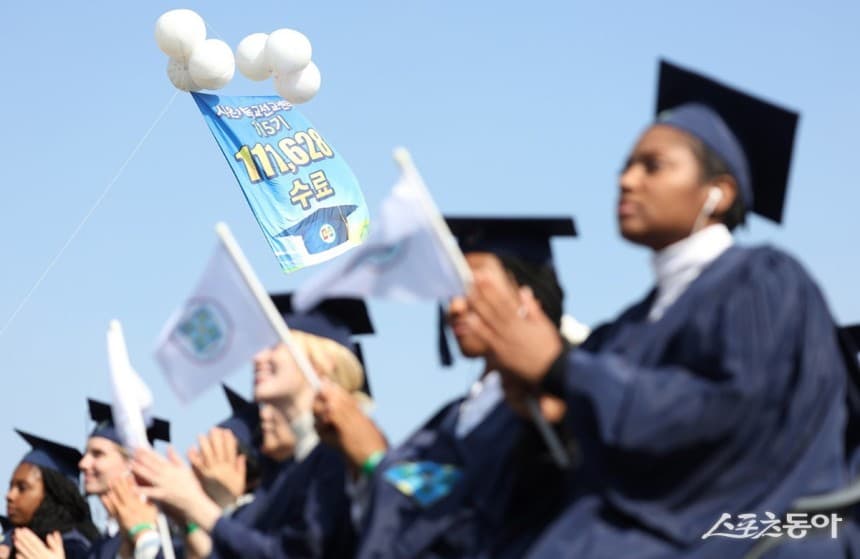
In a remarkable display of religious education and organizational growth, the Shincheonji Church of Jesus has once again broken its own record for the number of graduates from its Zion Christian Mission Center. The 'Class 115, 110,000 Joint Graduation Ceremony' saw 111,628 students complete their biblical studies, surpassing previous years' already impressive figures.
The ceremony, initially planned for Imjingak Peace Park but relocated to the Shincheonji Cheongju Church Branch due to a last-minute cancellation by the Gyeonggi Tourism Organisation, attracted graduates from around the world. The event's significance was further underscored by the presence of foreign religious leaders who traveled to Korea specifically for the occasion.
This year's graduation marks the fourth consecutive time that the Zion Christian Mission Center has produced over 100,000 graduates, following 103,764 in 2019, 106,186 in 2022, and 108,084 in 2023. The consistent increase in numbers reflects the growing appeal and reach of the Shincheonji Church of Jesus, which has expanded to more than 120 countries since its establishment in Seoul, South Korea in 1984.
The scale of this graduation ceremony is noteworthy not only for its sheer size but also for what it represents in terms of religious education and global outreach. The Zion Christian Mission Centre, serving as Shincheonji Church of Jesus' Theological School, offers a comprehensive Bible course divided into three modules, typically completed in 6-8 months. The fact that this course is free and open to anyone interested in studying the Bible has likely contributed to its widespread popularity.
The implications of such a large-scale religious education program are significant. It suggests a growing interest in structured biblical studies and potentially indicates a shift in how people engage with religious education in the modern era. The international nature of the student body also points to the Shincheonji Church's success in transcending cultural and national boundaries, potentially fostering a global community united by shared religious study.
Moreover, the consistent growth in graduation numbers year after year may signal a broader trend in religious participation and education. In an age where traditional religious institutions in many parts of the world are experiencing declining attendance, the Shincheonji Church's ability to attract and retain students in such large numbers is noteworthy.
The event also demonstrates the adaptability of religious organizations in the face of logistical challenges. Despite the last-minute venue change, the ceremony proceeded successfully, with many attendees adjusting their plans accordingly. This flexibility, combined with the use of online streaming to include graduates and viewers from other domestic branches and overseas churches, showcases how modern technology can be leveraged to create inclusive religious experiences that span the globe.
As the Shincheonji Church of Jesus continues to expand its reach and influence, events like this massive graduation ceremony raise questions about the future landscape of global religious movements. Will other religious organizations adopt similar educational models? How might this growth impact interfaith relations and the religious demographics of the countries where Shincheonji is gaining followers?
While the long-term effects of this rapid growth remain to be seen, the immediate impact is clear: over 110,000 individuals have completed an intensive Bible study program, potentially transforming their understanding of scripture and their approach to faith. As these graduates return to their communities worldwide, they may well become catalysts for further growth and change within their local religious landscapes.