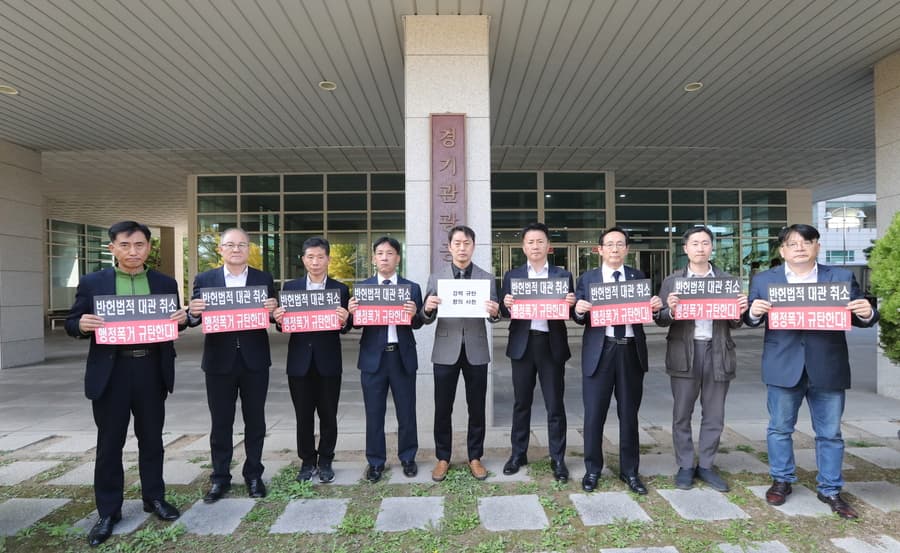
A recent administrative decision by a South Korean government agency has ignited a firestorm of controversy surrounding religious freedom and discrimination. The Gyeonggi Tourism Organization, a public entity under Gyeonggi Province, abruptly canceled the venue rental for the "Religious Leaders Forum and Graduation Ceremony," a joint initiative by two prominent religious organizations, just days before the event was set to take place in Paju, South Korea.
The cancellation has had far-reaching consequences, affecting over 30,000 participants from 57 countries, including 1,000 religious leaders representing Christianity, Buddhism, Islam, and Hinduism. The organizers, the Association for Buddhist National Unification of Korea and Shincheonji Church of Jesus, have decried the decision as an unconstitutional act of discrimination against a specific religion, citing violations of religious freedom, human rights, and due process of law.
The incident has not only resulted in substantial financial losses for the event organizers but has also reignited international debate about religious freedom and tolerance in South Korea. This comes at a time when the country's record on religious freedom has already been under scrutiny, with the U.S. State Department's International Religious Freedom Report previously highlighting concerns such as the prosecution of Shincheonji Church of Jesus and the government's refusal to approve mosque construction.
The Gyeonggi Tourism Organization cited security concerns related to recent North Korean actions and the planned activities of a North Korean defector group as reasons for the cancellation. However, the organizers have pointed out that other events, such as civilian bike rides and foreign tourist visits to the DMZ, were permitted within the same designated area on the same day. This discrepancy has led to accusations that the cancellation was an "administrative decision caused by opposition from a specific religious group," which "violates the principle of separation of church and state guaranteed by the Constitution."
The timing and manner of the cancellation have further fueled the controversy. The hosting organizations stated that they had received official confirmation on October 23rd and 28th that there was no plan of cancellation, only to have the decision reversed without prior notice on October 29th. This last-minute action has not only caused logistical chaos but has also raised questions about the transparency and fairness of administrative processes in South Korea.
The implications of this incident extend beyond the immediate financial and logistical impacts. It raises important questions about the state of religious freedom in South Korea and the government's role in protecting the rights of religious minorities. The controversy has the potential to strain international relations, particularly with countries whose citizens were among the affected participants.
As the situation unfolds, the Association for Buddhist National Unification of Korea and Shincheonji Church of Jesus are calling upon the South Korean government to respect religious freedom, uphold human rights, and rectify what they view as an unjust decision. They have also urged international organizations to monitor the situation and take appropriate action to protect religious freedom.
This incident serves as a reminder of the delicate balance between security concerns and the protection of fundamental rights, including religious freedom. It highlights the need for clear, transparent, and non-discriminatory policies in government decision-making, especially when it comes to matters that affect international events and religious gatherings.
As the global community watches, the resolution of this controversy could have significant implications for South Korea's reputation as a democratic nation that respects religious diversity and upholds the principles of religious freedom. The incident underscores the ongoing challenges faced by religious minorities worldwide and the importance of vigilance in protecting the right to freedom of religion or belief.