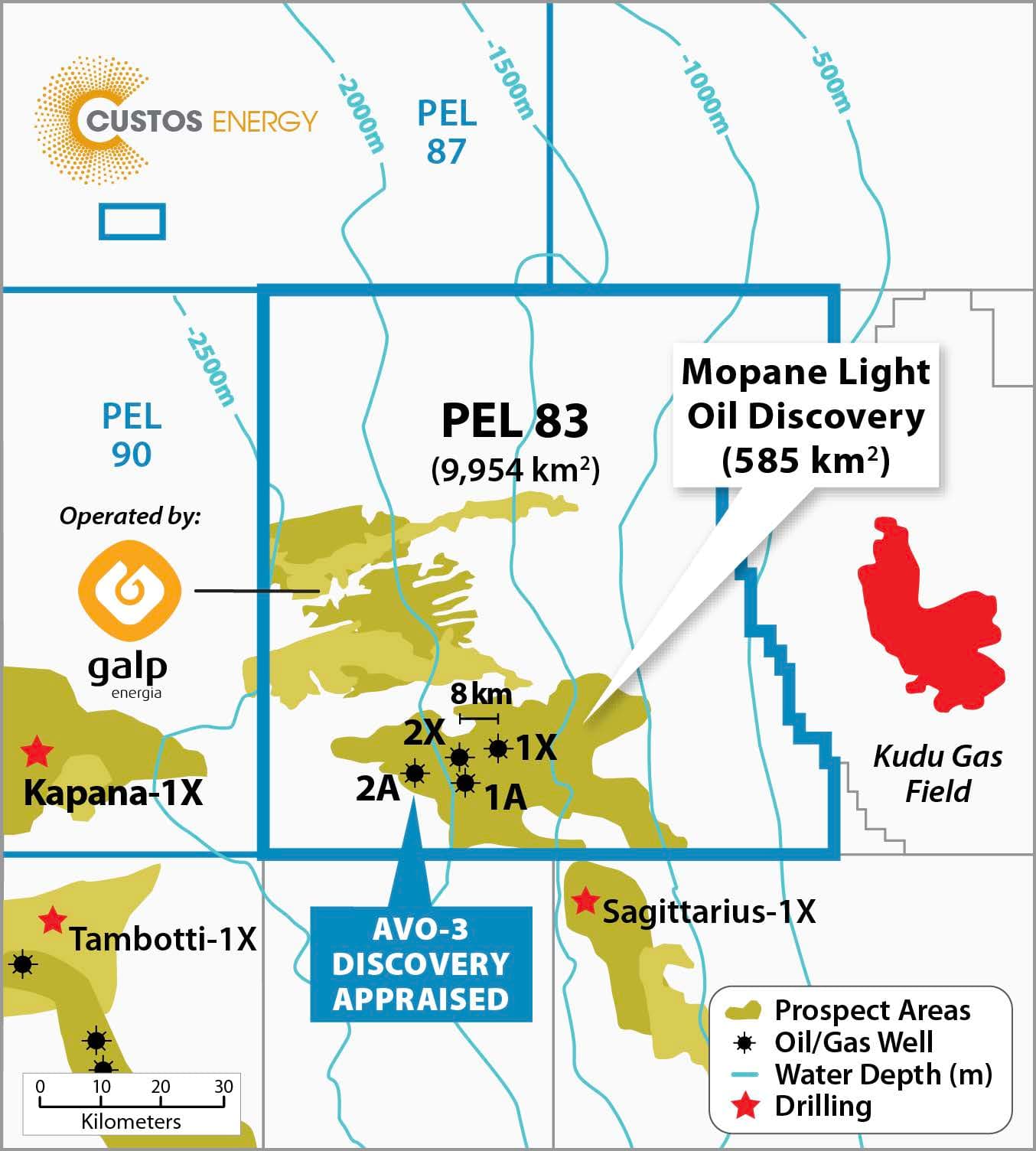
Recent exploration activities in Namibia's Orange Basin have yielded promising results, with successful hydrocarbon discoveries in the Mopane-2A well. This development marks a significant milestone in the ongoing exploration and appraisal campaign conducted by Galp Energia and its partners, including Custos Energy and NAMCOR, in the PEL 83 license area.
The Mopane-2A well, which began drilling on December 2nd, has uncovered a gas-condensate column in the AVO-3 reservoir and a light oil column in the smaller AVO-4 reservoir. Both discoveries exhibit favorable characteristics, including good quality sands, high porosity and permeability, high pressures, and low fluid viscosity. Importantly, the wells showed minimal CO2 content and no H2S, factors that can significantly impact production costs and environmental considerations.
These findings are part of a broader exploration effort in one of the world's most promising oil and gas regions. The Orange Basin, straddling the maritime border between Namibia and South Africa, has attracted increasing attention from major energy companies in recent years. The success of the Mopane-2A well adds to the growing evidence of the basin's potential to become a significant hydrocarbon province.
The implications of these discoveries extend beyond the immediate partners involved. For Namibia, a country with limited oil and gas production history, successful development of these resources could transform its economy, providing a new source of revenue and potentially reducing energy dependence. On a global scale, new significant oil and gas discoveries can impact energy markets, potentially affecting supply dynamics and pricing.
Following the success at Mopane-2A, the exploration campaign is set to continue with the drilling of the Mopane-3X well, targeting two stacked prospects, AVO-10 and AVO-13. This well is expected to spud around January 1st, 2025, further investigating the potential of the Mopane complex. Simultaneously, the joint venture is conducting a high-density, high-resolution 3D seismic survey over the area, which will provide additional data to assess the commerciality of the discoveries.
Knowledge Katti, Chairman and CEO of Custos Energy, emphasized the significance of these findings, stating that the ongoing success "is further evidence of the quality and potential of the Mopane complex." He also highlighted the strategic position of Custos in this emerging hydrocarbon province, suggesting potential long-term benefits for the company and its stakeholders.
As the exploration campaign progresses, industry observers will be closely watching for further developments. The success of the Mopane complex could not only solidify Namibia's position as an emerging player in the global oil and gas market but also attract additional investment to the region. However, it's important to note that the path from discovery to commercial production is often long and complex, involving further appraisal, development planning, and significant capital investment.
The ongoing exploration activities in the Orange Basin also raise important questions about the balance between energy development and environmental concerns. As global efforts to transition to cleaner energy sources intensify, new oil and gas discoveries face increased scrutiny. Future development of these resources will likely need to address these concerns, potentially incorporating technologies and practices to minimize environmental impact.
As the PEL 83 joint venture partners continue to analyze and integrate the newly acquired data, the industry awaits further updates that could provide a clearer picture of the Mopane complex's commercial viability and its potential impact on both the local and global energy landscape.