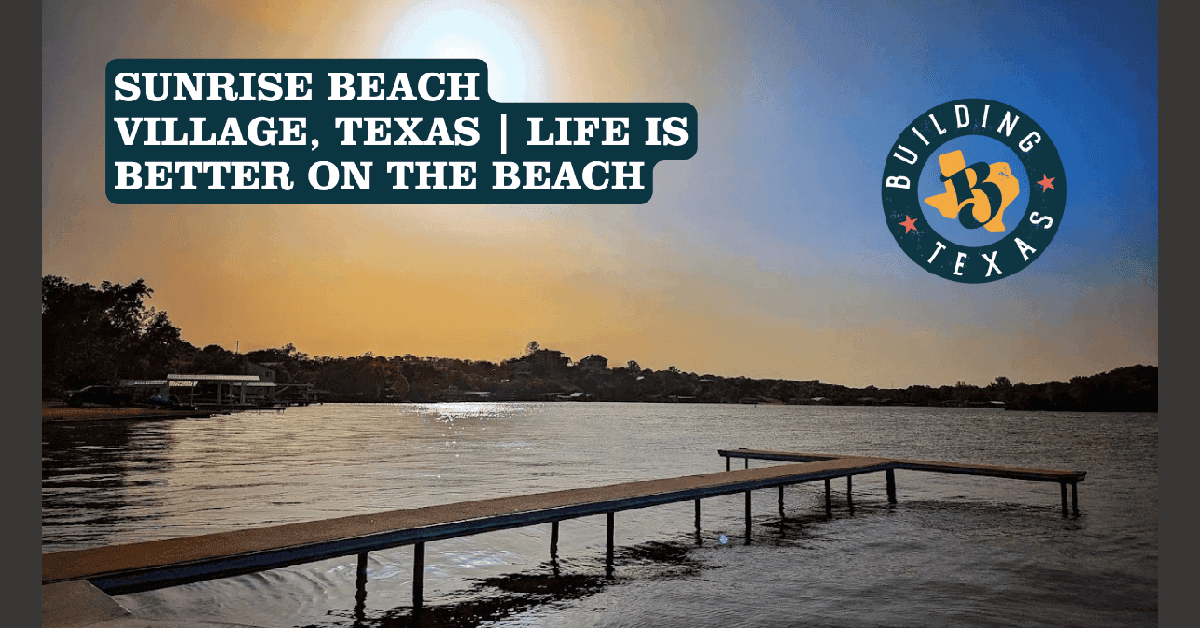
Sunrise Beach Village, a fully incorporated city of approximately 800 residents on the shores of Lake LBJ in Llano County, provides a working model of community-driven governance that prioritizes stewardship over scale. In a recent episode of The Building Texas Show, Mayor Rob Hardy detailed how local control directly impacts building standards, public safety, and quality of life for residents in this rural Texas lake community.
The city maintains its own police department, municipal court, water system, and five public waterfront parks, three of which include boat ramps providing lake access. This infrastructure represents a significant responsibility for a small population. Mayor Hardy, who serves in an unpaid capacity, emphasized that incorporation grants the community essential authority over its development and services, allowing it to protect its character while ensuring resident safety and reliable utilities.
A central challenge discussed is maintaining critical infrastructure amid regional growth pressures. After acquiring its water system from the Lower Colorado River Authority (https://www.lcra.org), Sunrise Beach Village is now investing in long-term upgrades to meet modern state standards. This effort, described as rooted in planning rather than politics, highlights the financial realities facing rural communities. The rising cost of maintaining water and emergency systems requires careful fiscal management, especially when supported by volunteer fire departments through Emergency Service Districts.
The governance approach focuses on preserving the community's unique qualities rather than pursuing rapid expansion. "This isn't about rapid expansion," Hardy stated. "It's about protecting what makes this place special while making sure people are safe, services are reliable, and the community remains livable." This philosophy extends to public access; the city's parks and spaces are designed to allow both residents and visitors to enjoy the scenic lake lifestyle without requiring waterfront property ownership.
The episode, part of The Building Texas Show's (https://www.thebuildingtexasshow.com) mission to highlight Texas communities through local voices, reveals governance realities often unseen in urban contexts. It demonstrates how small towns can exercise meaningful self-determination through incorporation, volunteerism, and strategic infrastructure investment. The model showcases how local control enables communities to manage growth intentionally, balance tourist access with residential character, and maintain essential services despite limited tax bases and rising operational costs.
For other small communities across Texas and similar regions, Sunrise Beach Village's experience offers a relevant case study in sustainable rural governance. It illustrates the tangible benefits of local authority over zoning and building standards, the critical importance of long-term infrastructure planning, and the community cohesion required to support volunteer emergency services. As growth pressures increase in desirable rural areas, this example provides insights into maintaining livability, environmental stewardship, and fiscal responsibility at a local scale.