

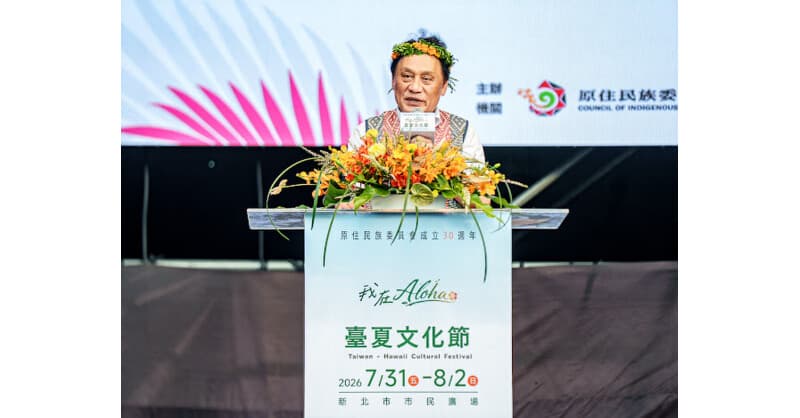
The Council of Indigenous Peoples (CIP) and the State of Hawaii Office in Taipei co-hosted the Formosa-Hawaii Cultural Festival from July 31 to August 2 at the New Taipei City Citizen Plaza, bringing together music, dance, and a marketplace to celebrate the shared Austronesian heritage of Taiwan and Hawaii. This event marks the CIP's 30th anniversary and underscores Taiwan's commitment to fostering international cultural ties.
The festival opened with a ceremony honoring individuals who have made significant contributions to Indigenous affairs, including those who advocated for Indigenous rights internationally, worked to revive endangered languages, and brought global recognition to Taiwan through arts and sports. CIP Minister Ljaucu Zingrur emphasized that cultural experiences can be deeply moving, and that sound policy helps turn that emotion into lasting institutions. He expressed hope that the festival serves as proof that Indigenous culture is thriving in Taiwan and is confidently embracing the world.
The event featured performances by renowned international groups, including Ke Kai O Kahiki from Hawaii, known for its powerful hula dances, and troupes from Palau and Tuvalu, highlighting the deep connections across the Pacific. In the evenings, Golden Melody Award-winning artists took the stage: July 31 featured Usay Kawlu, Utjung Tjakivalid, and Kasiwa; August 1 featured Princess Ai and Abao; and August 2 concluded with Biung and Abus. The performances blended traditional and contemporary styles, showcasing the diversity of Austronesian music.
Attendees also enjoyed an Austronesian-themed marketplace offering Hawaiian Kona coffee, Indigenous delicacies, and crafts. Visitors had the opportunity to try hula dancing and lei making, and participate in daily lucky draws for market vouchers. The festival created a family-friendly atmosphere, allowing people to experience the cultural connections between Taiwan's Indigenous peoples and Hawaii.
This cultural exchange is significant because it highlights the shared roots of Austronesian peoples and reinforces Taiwan's role in preserving and promoting Indigenous heritage. By hosting such events, the CIP aims to strengthen international partnerships and ensure that Indigenous cultures are passed down to future generations. The collaboration with Hawaii serves as a model for cross-cultural dialogue and mutual respect.
The festival's success reflects a broader trend of cultural diplomacy, where nations use arts and heritage to build bridges. For Taiwan, this event is a step toward greater global engagement, showcasing its Indigenous cultures to the world. As Minister Ljaucu Zingrur noted, the celebration is a powerful testament to the vitality of Indigenous culture and its ability to inspire people worldwide.
